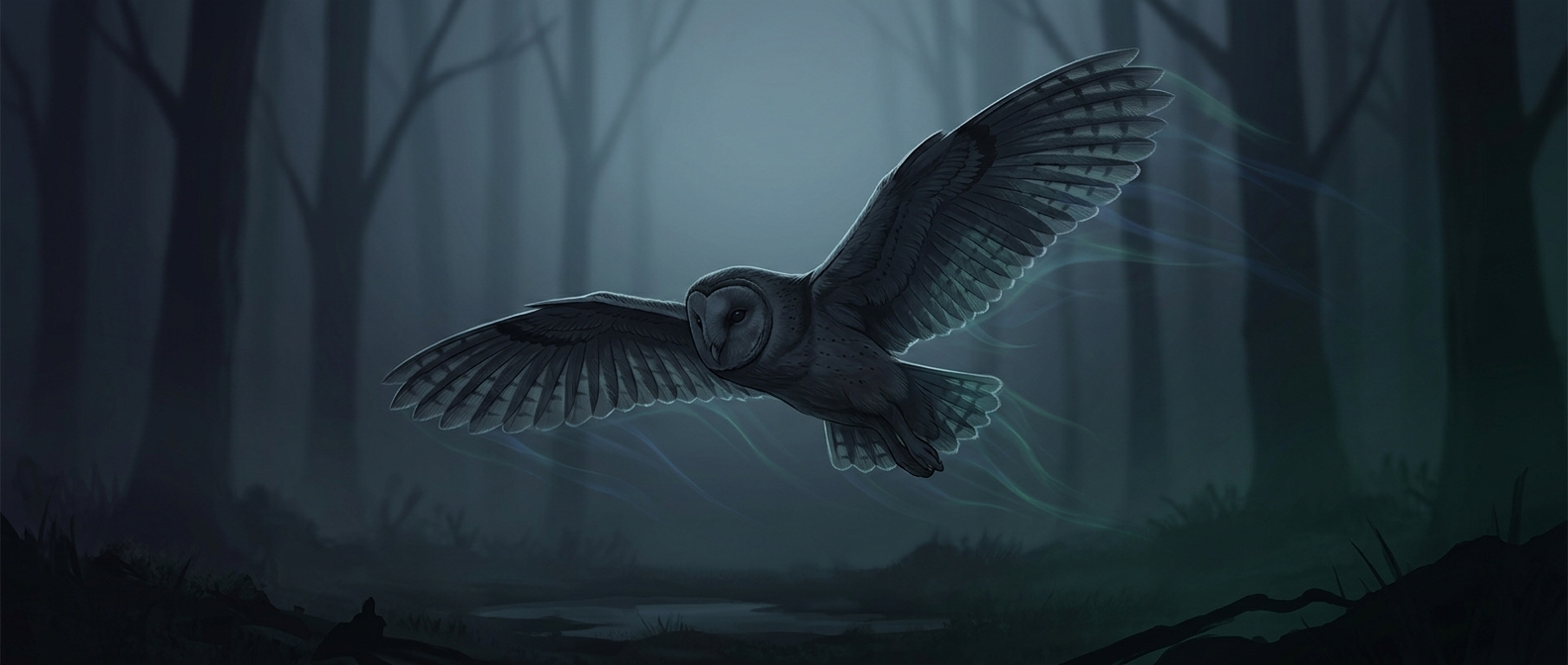
How an owl’s wing quiets the air
A flying bird has to push air out of its way. That disturbed air can form turbulent swirls—irregular motions that create sound. Many birds produce a noticeable rush or flap as those swirls and wing movements reach our ears. Owls reduce that noise by shaping the airflow across their feathers, rather than by eliminating it altogether.
Feathers that soften the rush
Along the front edge of an owl’s wing, fine feather fringes break up the flow of air into smaller motions. This helps prevent the sharper, louder turbulence that can arise when air moves across a broad, firm edge. The feather surface is also unusually velvety; its soft texture absorbs some sound, particularly at higher pitches.
The effects work together: the fringes soften how air meets the wing, while the feather surface dampens some of the sound that remains. This is a physical feature of the plumage, not a special way of moving the wings that makes every flight noiseless.
Quiet, not silent
An owl still moves air, and its flight can still make sound. Its feathers mainly reduce the noise of that movement, making the rush less conspicuous. The practical result is a quieter approach: an owl can get closer before the sound of its flight gives it away.