Ejecting from a helicopter means clearing the rotor first
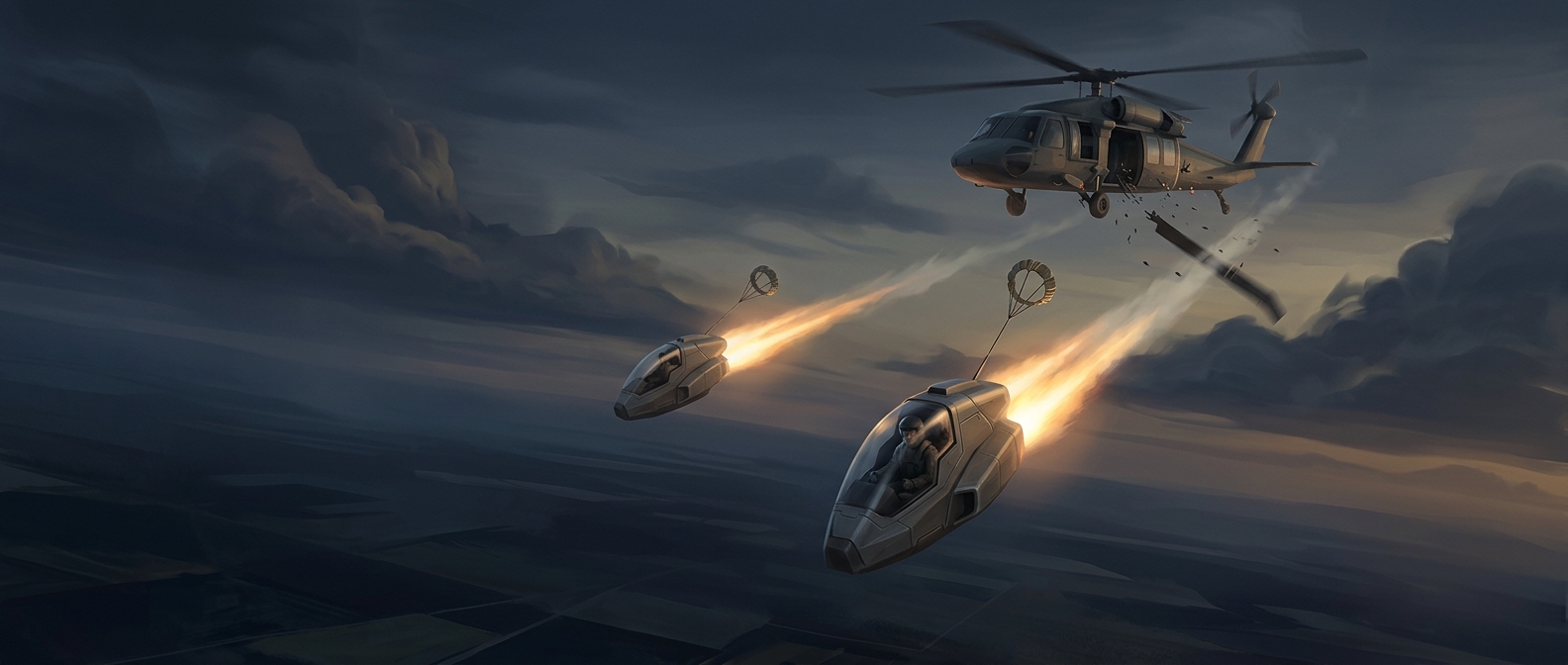
A helicopter pilot cannot simply pull an ejection handle as a fighter pilot might: the spinning rotor occupies the path an ejection seat would take. In helicopters designed for this kind of escape, the seat is therefore part of a carefully timed system that makes room before launching the pilot.
Small explosive charges at the rotor-blade attachments sever the blades from the hub—the central assembly that holds them. The blades are released before the seat fires, reducing the chance that they will hit the pilot. The escape sequence also clears the canopy, the transparent cover over the cockpit, so the seat has an unobstructed exit.
A rare solution to a difficult problem
This arrangement is associated with specially designed aircraft, including Russia’s Ka-50 attack helicopter. It is not a feature helicopters can easily add later: the aircraft must carry the charges, wiring, and ejection equipment, and coordinate them so each step happens in the right order. The system adds complexity and weight, but addresses a danger that ordinary ejection seats cannot solve while a rotor is overhead.
The striking part is also the engineering logic: the helicopter sacrifices its rotor blades to create an escape route. Instead of trying to send a pilot through the machine’s most dangerous moving part, it gets that part out of the way first.