Why a cannonball throws water outward
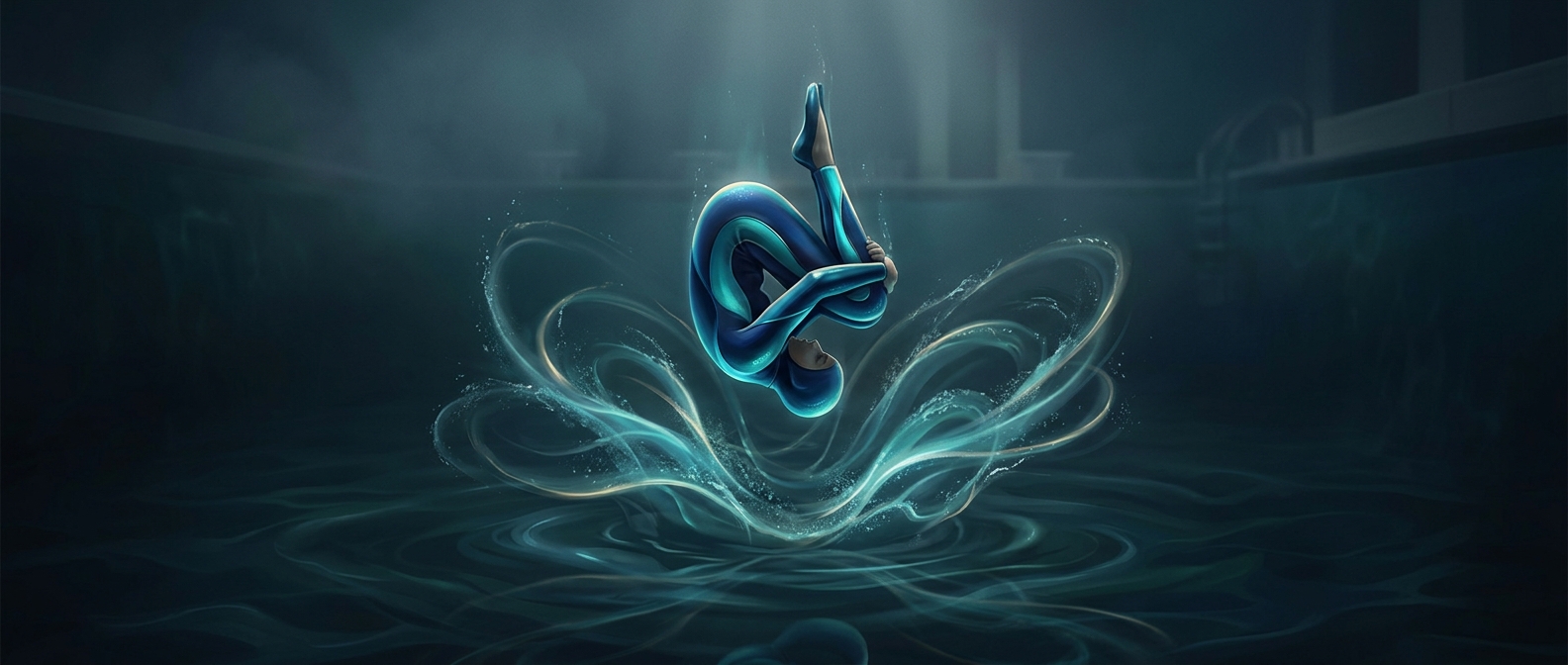
A cannonball’s splash starts with the shape of the impact. Tucking into a ball brings your arms and legs close to your torso, so much of your body reaches the water at once. That sudden entry has to make room quickly: water is pushed down, sideways, and up, where it rises into the familiar crown of a splash.
The water has to move somewhere
Water resists being displaced, especially when a broad surface hits it abruptly. The impact creates pressure that sends water away from the entry point. Some is driven downward, but the pool bottom and the water around the impact constrain that motion, so water also surges toward the surface and outward. The result is a larger, more turbulent splash than a clean, narrow entry typically makes.
A streamlined dive changes the timing. With the body extended and aligned, the hands and head enter first, followed by the rest of the body along roughly the same path. The water can part progressively instead of being struck all at once, reducing the sudden upward surge.
Shape and timing make the difference
The cannonball’s effect is not simply that a round body has more surface area than a diver. What matters is how much body meets the water together, how quickly it arrives, and how the entry directs water. A compact tuck makes a dramatic splash because it concentrates the impact into a short moment while presenting a substantial cross-section.
That is why the same pool can look almost undisturbed after a controlled dive, then erupt when someone drops in tucked tight: the water has not changed, but the impact has asked it to move in a very different way.