The ferry is designed as a through-route
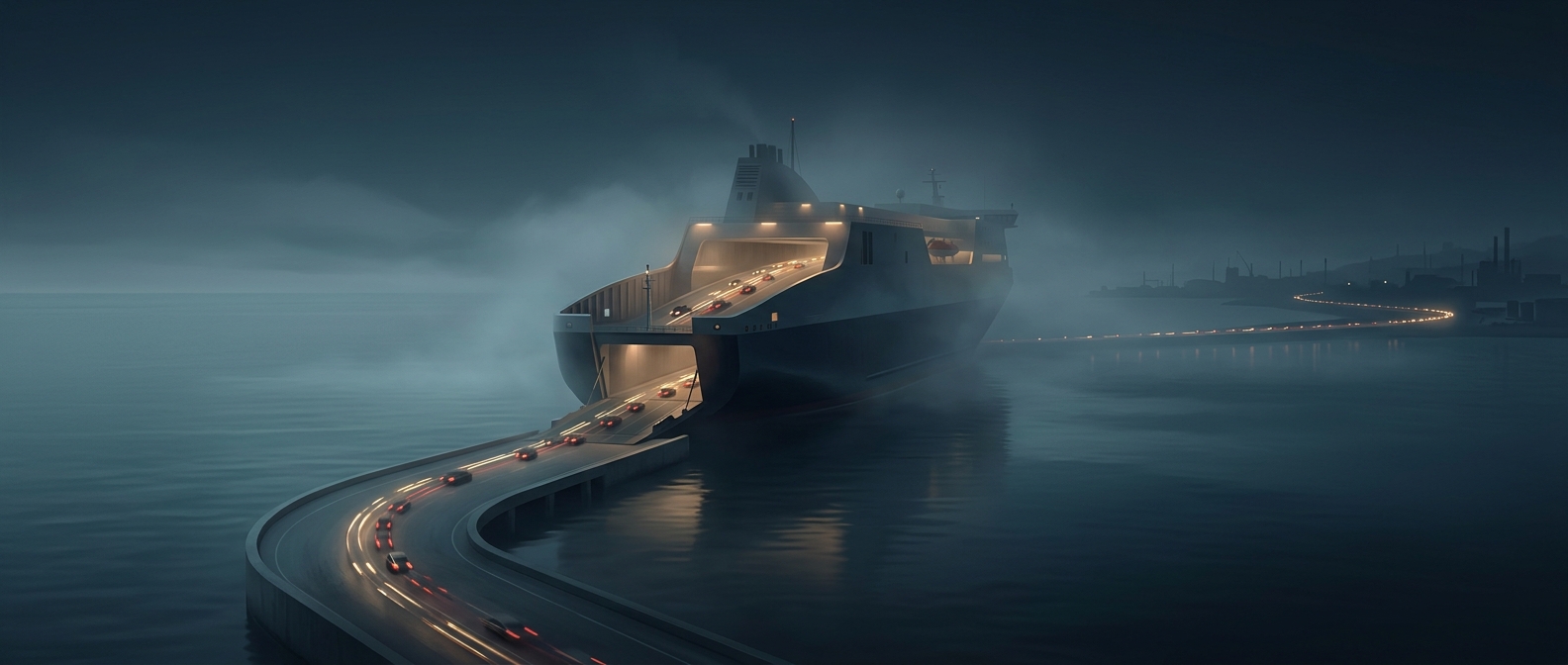
A roll-on ferry works best when vehicles can keep moving in one direction. Its loading ramps at opposite ends let cars enter from one shore and leave at the other, so the deck functions like a short, floating road rather than a parking lot with a single exit.
That layout matters because turning a car around on a crowded vehicle deck is awkward: space is limited, other vehicles may be close by, and drivers may have to reverse while following crew instructions. With a ramp at each end, cars can line up, drive aboard, and continue forward when the ferry reaches its destination.
The ship must meet the shore at both ends
The arrangement depends on more than two doors in the hull. The ferry has to berth with its bow or stern aligned to the appropriate shore ramp, and the ramps must connect safely despite changes in water level and the gap between vessel and pier. On routes where vehicles travel between two landing points, the vessel can make the crossing without turning around at the end.
This is especially useful on short, frequent crossings: avoiding a vehicle turnaround can simplify the flow of cars and help loading and unloading proceed in an orderly sequence. Crew members still direct traffic, and vehicles still need to keep appropriate spacing; the design removes a difficult maneuver, not the need for careful operations.
The practical payoff is simple: drivers can leave the ferry facing forward, instead of having to find room to turn or back out among other cars.