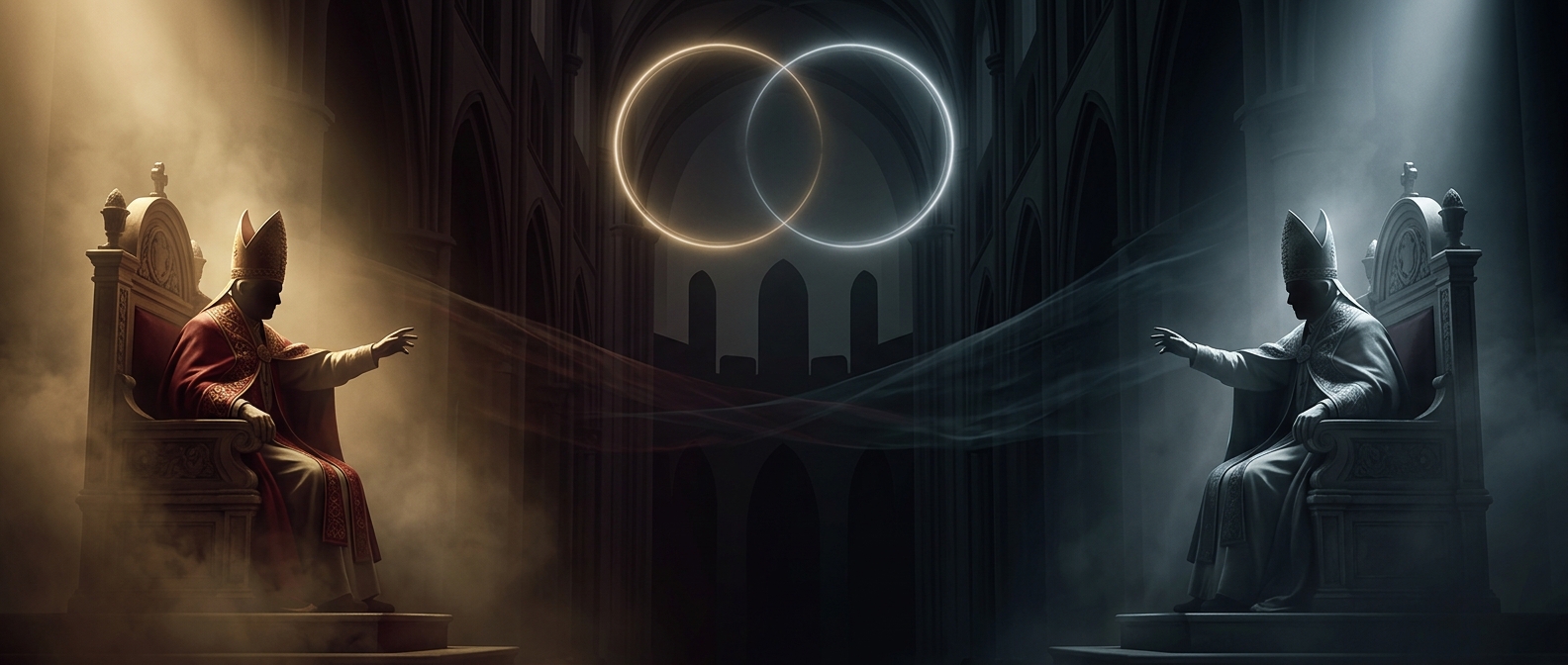
A bishop held two kinds of power
In medieval Europe, a bishop was more than a church official. Bishops led religious communities, but they could also govern lands, collect revenues, and exercise political authority. That overlap made the question of who appointed them a contest over both the church and the empire.
The symbols at the heart of the dispute made the stakes visible. A ring and staff represented a bishop’s spiritual office; the emperor’s grant of a territory or its associated rights represented his secular authority. If one ruler controlled both parts, he could shape not only church leadership but also the administration of valuable lands.
One ceremony, divided authority
The Concordat of Worms, agreed in 1122 between Emperor Henry V and Pope Calixtus II, separated those powers in the appointment ritual. The church conferred the spiritual symbols, while the emperor could grant the bishop the symbols of secular authority. This distinction is called investiture: the formal act of installing someone in an office by giving its recognized signs of power.
The arrangement did not make either side the sole chooser of bishops. It instead separated a bishop’s religious office from the political rights attached to it. In the German kingdom, the emperor retained a role in the process and could be present when a bishop was elected; the church’s part was no longer simply an imperial appointment followed by spiritual recognition.
A compromise with lasting tension
The settlement ended the immediate confrontation between Henry and Calixtus, but it could not erase the practical overlap between church and government. A bishop who held land and political rights still mattered to the emperor, while the church needed to protect its authority over spiritual leadership.
That is why the split ceremony mattered: it turned an abstract argument about supremacy into a workable boundary. The same person could remain both a religious leader and a territorial power, but neither emperor nor pope could claim every symbol—and therefore every dimension—of his office.