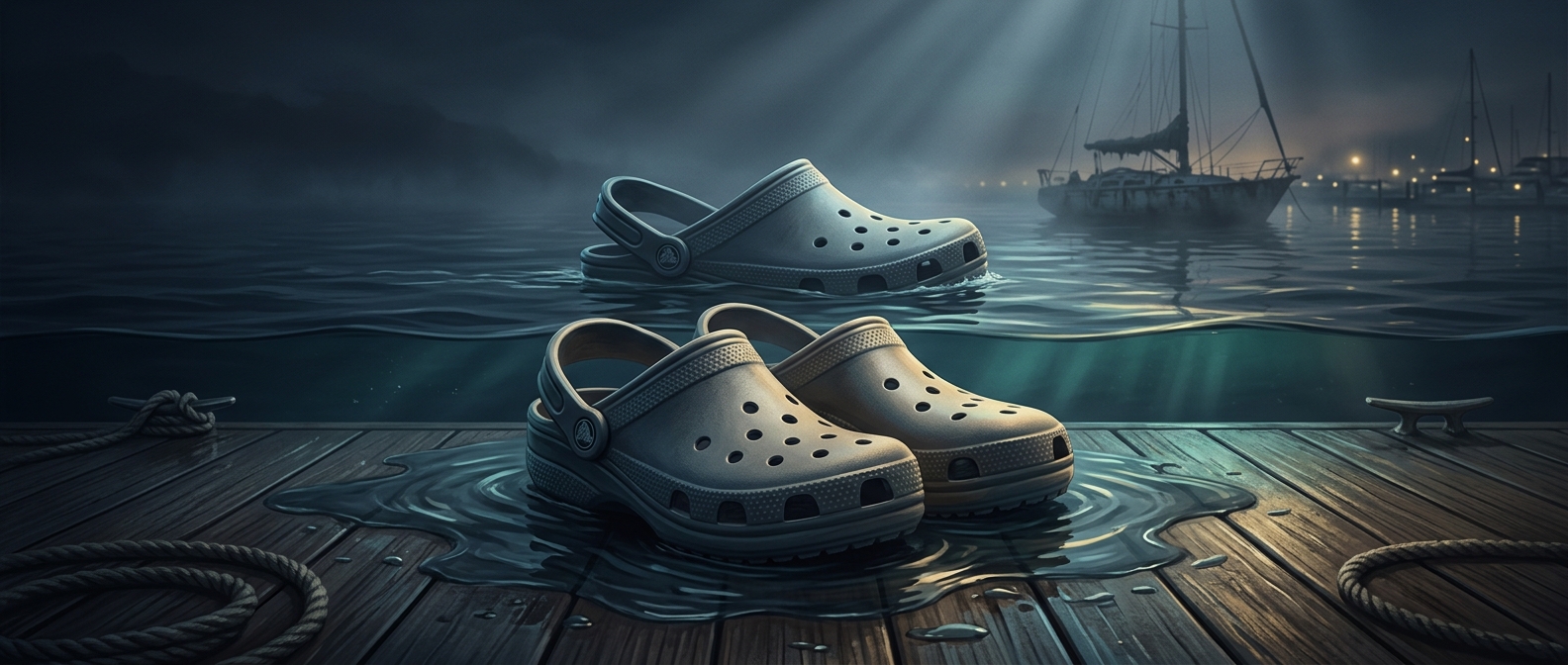
A shoe built for a wet deck
Crocs started with a practical boating problem: footwear on a boat should not become a heavy, waterlogged burden. Their lightweight foam construction helps the shoes float, so one that slips overboard is easier to retrieve than a waterlogged shoe that sinks.
The foam also keeps the shoe light on the wearer’s foot. That matters on a slick deck, where people need to move around without carrying unnecessary weight. The shoe’s boating origins shaped its materials and form before its distinctive look became familiar far beyond the water.
The holes have a job
The openings across the upper let water drain instead of pooling inside. They also make the shoe breathable, though that comes with a tradeoff: water can enter through the same holes, so the shoes are not waterproof.
That simple design choice suits a shoe meant to get wet and shed water quickly. On a boat, the goal was not to keep every drop out; it was to avoid trapping water and to make footwear that stayed light and manageable when splashed.