When “typewriter” meant the worker
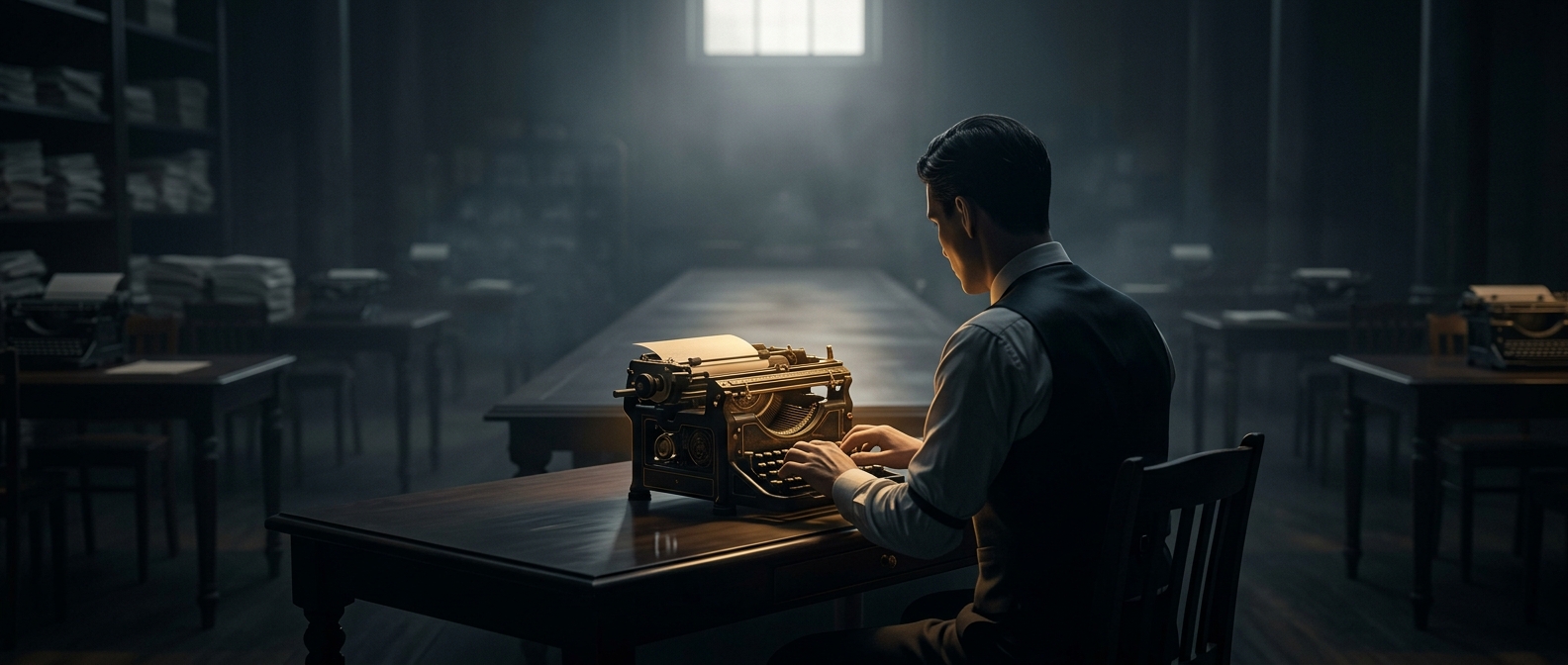
In the late 19th century, “typewriter” could refer either to a typing machine or to the person operating one. The word followed a familiar pattern: names for new technologies sometimes also named the people trained to use them. A company seeking a “typewriter” might therefore mean a clerk at the keys, not a piece of office equipment.
A machine created a new clerical job
Before typewriters became common in offices, business letters and records were usually written by hand. The machine made it possible to produce legible copies more quickly, but offices still needed someone to compose, format, and type the words. The new equipment thus brought a new kind of clerical work with it.
Some employers recruited women for these jobs, helping typing become associated with female office workers. That association reflected hiring practices and the organization of clerical labor—not an inherent connection between women and the machine. As typing became a recognizable occupation, “typewriter” could identify the worker as well as the device.
The overlap captures a small but telling change in office life: the machine was new, but its name could still point to the person whose hands made it useful.