A Small Warning Built Into the Carriage
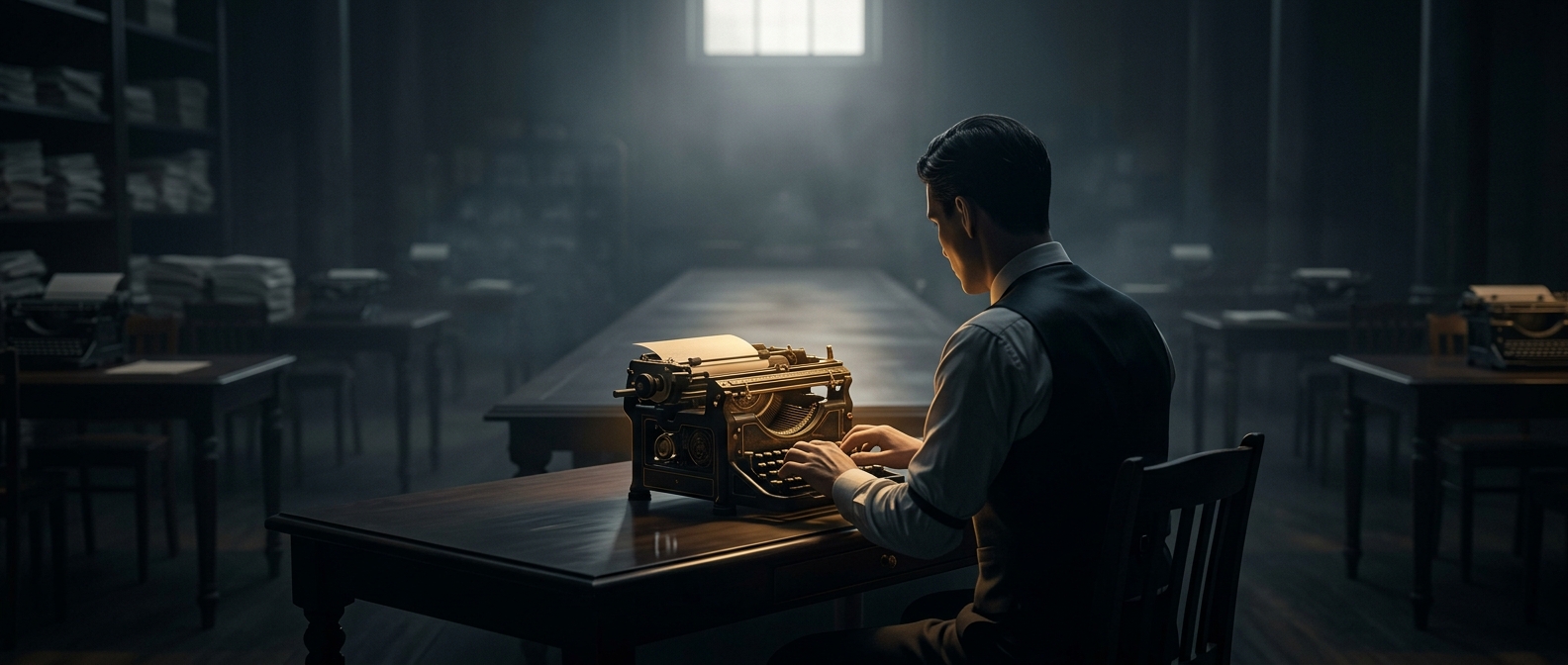
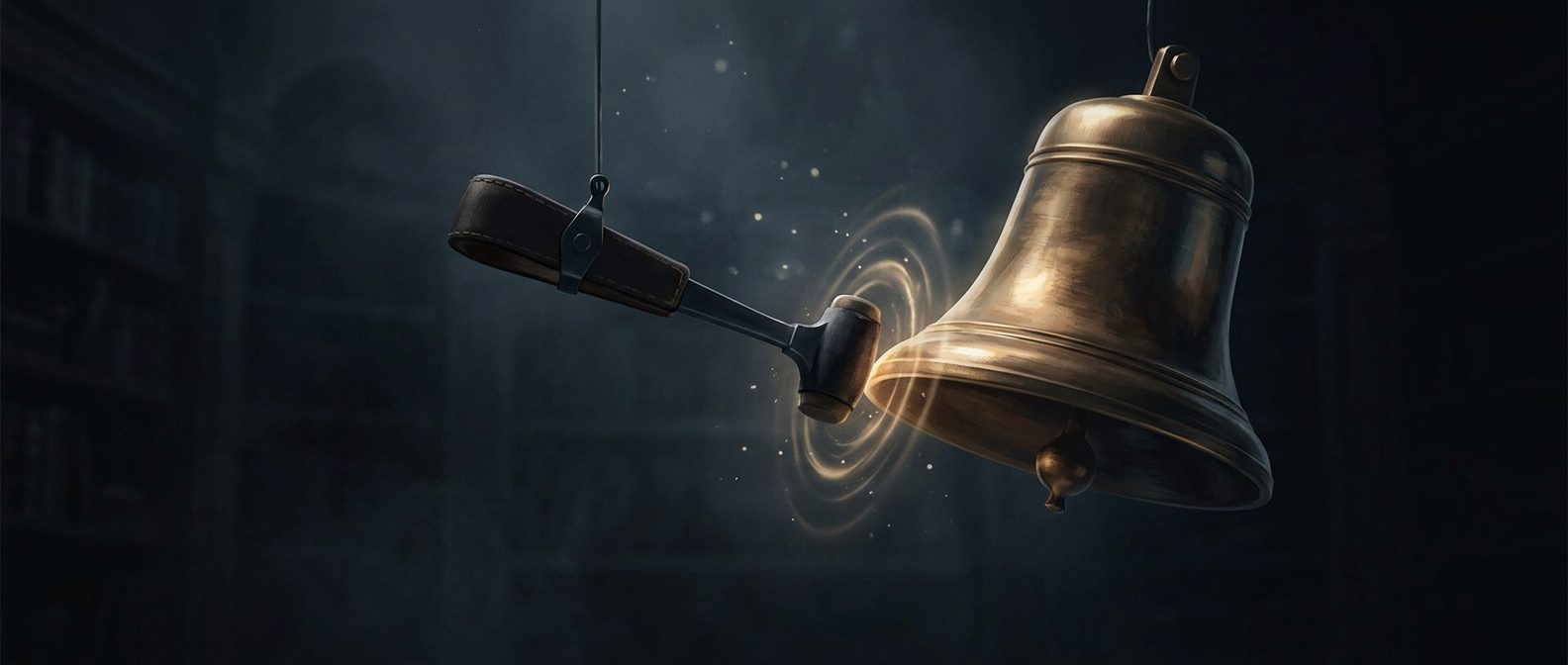
On a manual typewriter, each keystroke moved the carriage—the assembly carrying the paper—one space to the left. Near the end of the line, a mechanism on the carriage reached a preset point and released a spring-loaded striker. The striker hit a small bell, giving the typist a few characters’ warning before the carriage reached its right-hand stop.
That warning mattered because the machine did not wrap words onto a new line. The typist had to finish the line, then pull the carriage-return lever. This swept the carriage back to the left margin and turned the platen, the rubber cylinder holding the paper, to advance it by one line.
A Sound That Managed the Typist’s Attention
The bell turned an invisible limit into an immediate signal. Instead of watching the margin constantly, a typist could keep looking at the page being copied or at the keys and respond when the warning rang. It also helped prevent the carriage from striking its stop while the typist continued typing.
The bell was therefore more than a decorative sound: it was a simple mechanical alert built into the writing process. On a manual machine, the moment it rang marked the shift from composing the line to preparing the next one.