Why Different Speeds Suggest Distance
When you move through the world, nearby objects seem to slide across your view faster than distant ones. A fence post can zip past while a mountain barely shifts. Your visual system uses that difference—called motion parallax—as a clue about how far away things are.
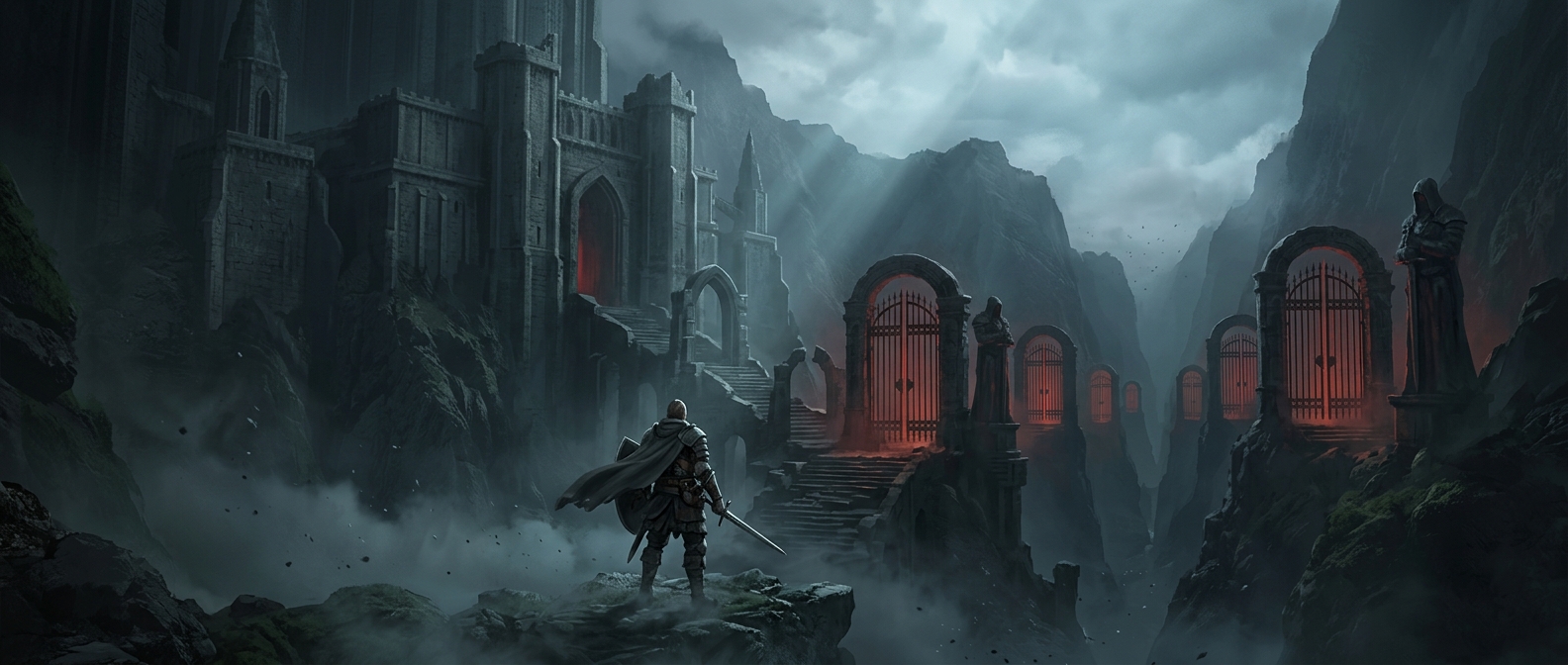
A flat screen has no actual distance between its pictures. Instead, an animation assigns separate layers different movement rates. As the viewer scrolls or a game camera moves, a foreground layer travels farther across the screen than a background layer. The mismatch supplies the depth cue your brain expects, so a stack of flat images can feel like a landscape with space behind it.
Building Depth Without Building a World
Designers can create the effect with painted or illustrated layers rather than fully modeled 3D scenery. That can make a scene visually rich while keeping its geometry simple. It also gives the creator precise control over the mood: slow-moving distant clouds can make a setting feel expansive, while fast foreground branches make a camera glide feel more immediate.
The illusion works only while the layers move in a convincing relationship. If distant scenery shifts too quickly, it can seem close; if every layer moves together, the scene may look flat. And because a background must cover the area revealed as the view moves, designers need enough artwork—or a carefully repeating pattern—to prevent empty gaps. The result is not infinite space, but a practical trick: a few coordinated motions can make a screen feel much deeper than it is.