How an Iron Lung Draws Breath
Polio can damage the nerves that control the diaphragm and other breathing muscles. When those muscles are too weak to expand the chest, a person may need a machine to move air in and out of the lungs.
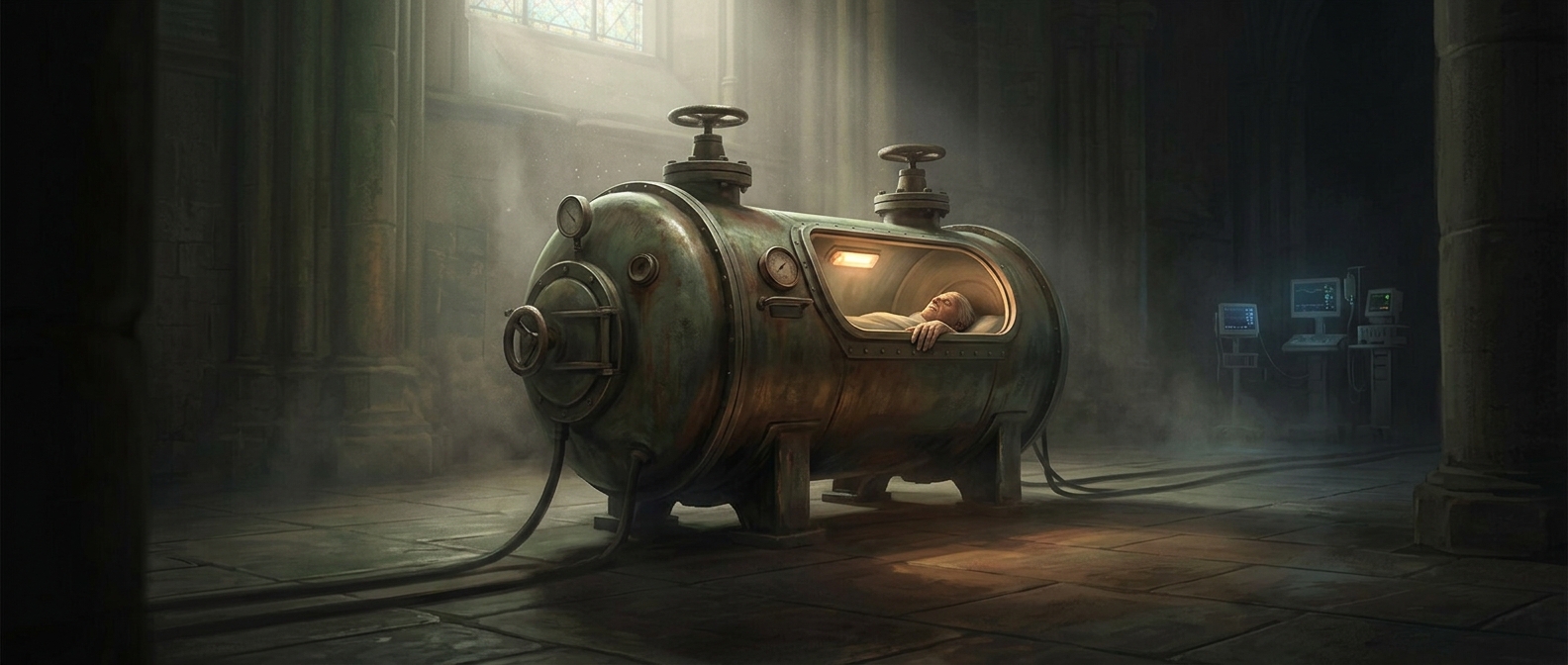
An iron lung works by changing the air pressure around the body. The person lies inside a sealed chamber, with the head outside. A pump lowers the pressure inside the chamber, so the chest rises and air flows into the lungs. When the pressure returns to normal, the chest relaxes and air flows back out. The machine does not push air down the throat; it makes breathing happen by moving the chest from the outside.
Why the Difference Still Matters
Many modern ventilators work in the opposite way: they push air into the lungs through a breathing tube or a mask. That approach can provide effective breathing support, but it is not the same physical experience as having the chest gently drawn open by lower pressure around the body.
For a small number of people who have used iron lungs for decades, the chamber remains a form of support they know and can tolerate. Replacing it is not simply a matter of choosing a newer machine; the alternative has to meet that person’s breathing needs in a way they can live with. The iron lung’s continued use is a reminder that medical technology is not always interchangeable: how a device delivers support can matter as much as the support itself.