A philosophical passage turned into visual noise
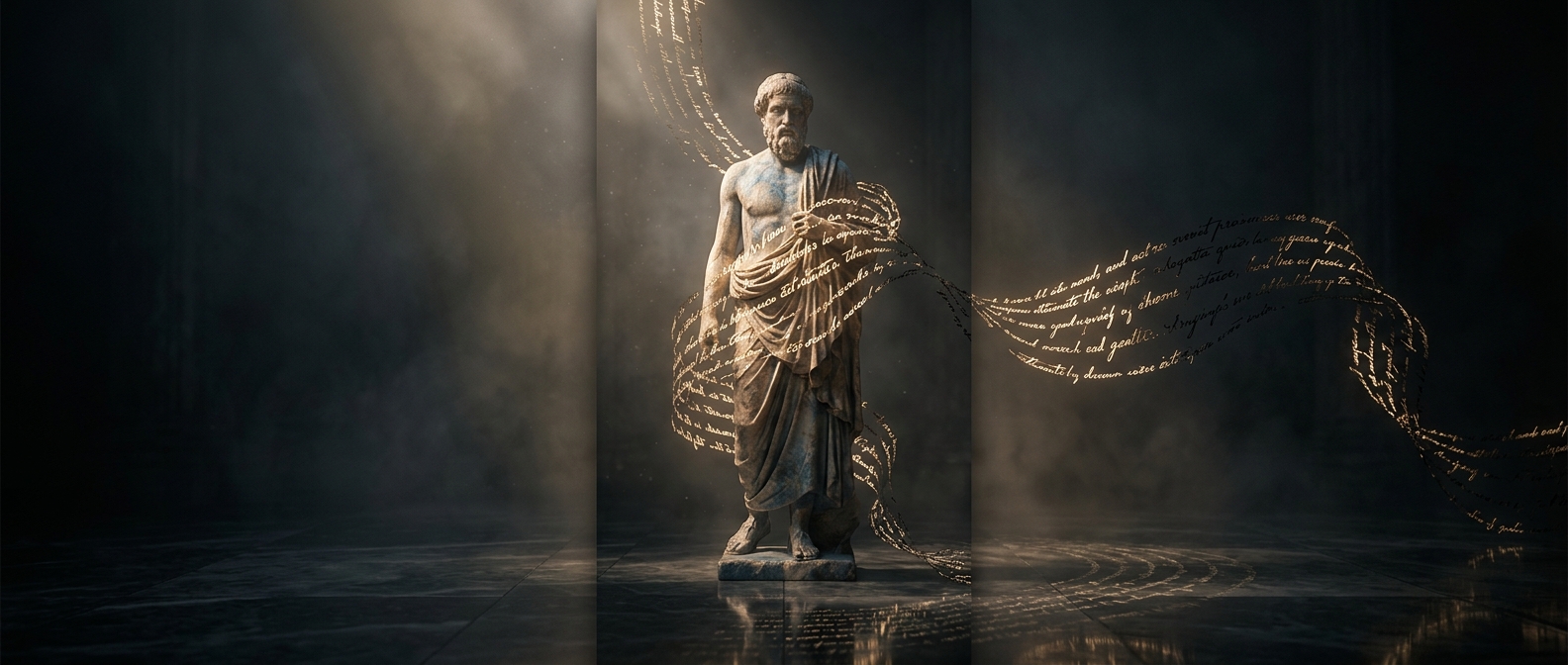
The familiar opening, “Lorem ipsum dolor sit amet,” is not meaningful Latin as it appears on a page. It comes from a passage in De finibus bonorum et malorum (“On the Ends of Good and Evil”), a work by the Roman writer and statesman Cicero. The passage considers competing ideas about the good life; over time, its words were altered, rearranged, and cut into fragments. What remains sounds plausibly Latin without reading like a sentence readers can follow.
Why designers use words that almost make sense
A page needs text to show how its design will behave. Paragraphs reveal whether a column feels crowded, headings show how much space titles take, and uneven word lengths create more realistic line breaks than repeated placeholder characters would. Lorem Ipsum supplies that visual texture while keeping readers from getting absorbed in the meaning.
That distinction matters during layout. If a draft uses a vivid news story or a real product description, people may focus on the copy and overlook a cramped margin or an awkward gap. Nonsense text keeps attention on the page’s structure. Once the design is approved, it must be replaced with the actual writing, whose length and wording can change the layout again.
The result is an unlikely afterlife for a Roman argument: fragments of a discussion about how to live well now help designers judge whether a page looks balanced before its real words arrive.