What the Ball Makes Your Muscles Do
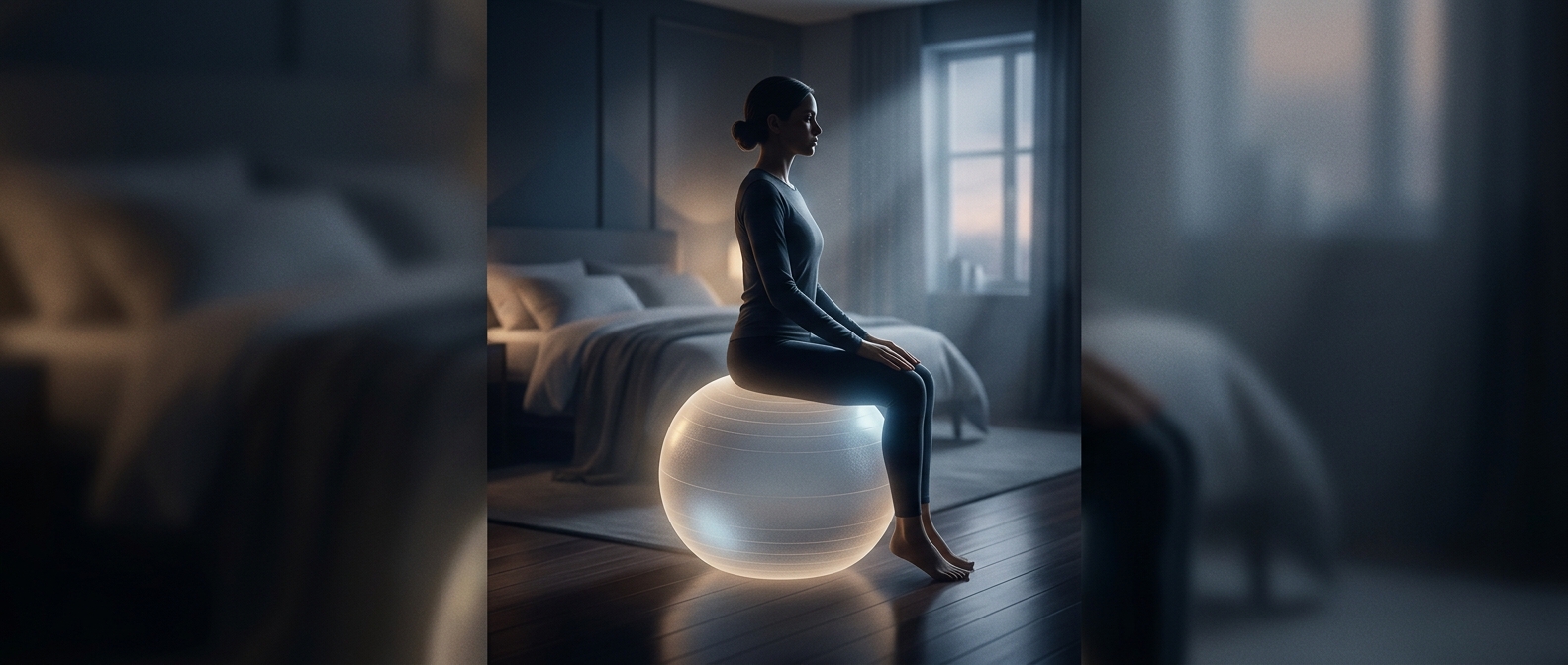
A sitting ball shifts the job of keeping you steady onto your body. Because the surface can move, your trunk muscles make small adjustments to keep your balance. Those corrections may make sitting feel more active, but they do not automatically place your spine in a healthy position. You can balance while rounded forward or leaning to one side.
Balance Is Not the Same as Support
A chair backrest provides a surface to lean against, reducing how much effort your muscles need to hold your upper body upright. A ball has no such support: you must keep adjusting as long as you sit on it. That can feel manageable briefly, but holding a position also takes attention and effort. As you tire or focus on something else, the ball does not guide you back into alignment; it can move with you as you slump.
The ball therefore changes the way you sit, not the need to choose and maintain a comfortable posture. Its movement may make slouching less fixed, but it cannot make slouching impossible.
Why the Novelty Fades
At first, the small shifts can make sitting feel noticeably different from sitting in a chair. Once that feeling becomes familiar, it is less likely to keep your attention on posture. If the seat demands more effort than you can comfortably sustain, a backrest may be more useful for ordinary desk work.
The practical lesson is simple: a balance challenge is not a posture aid by itself. A ball can keep you moving, but it cannot take over the steady work of arranging your body comfortably.