The gel that light has to cross
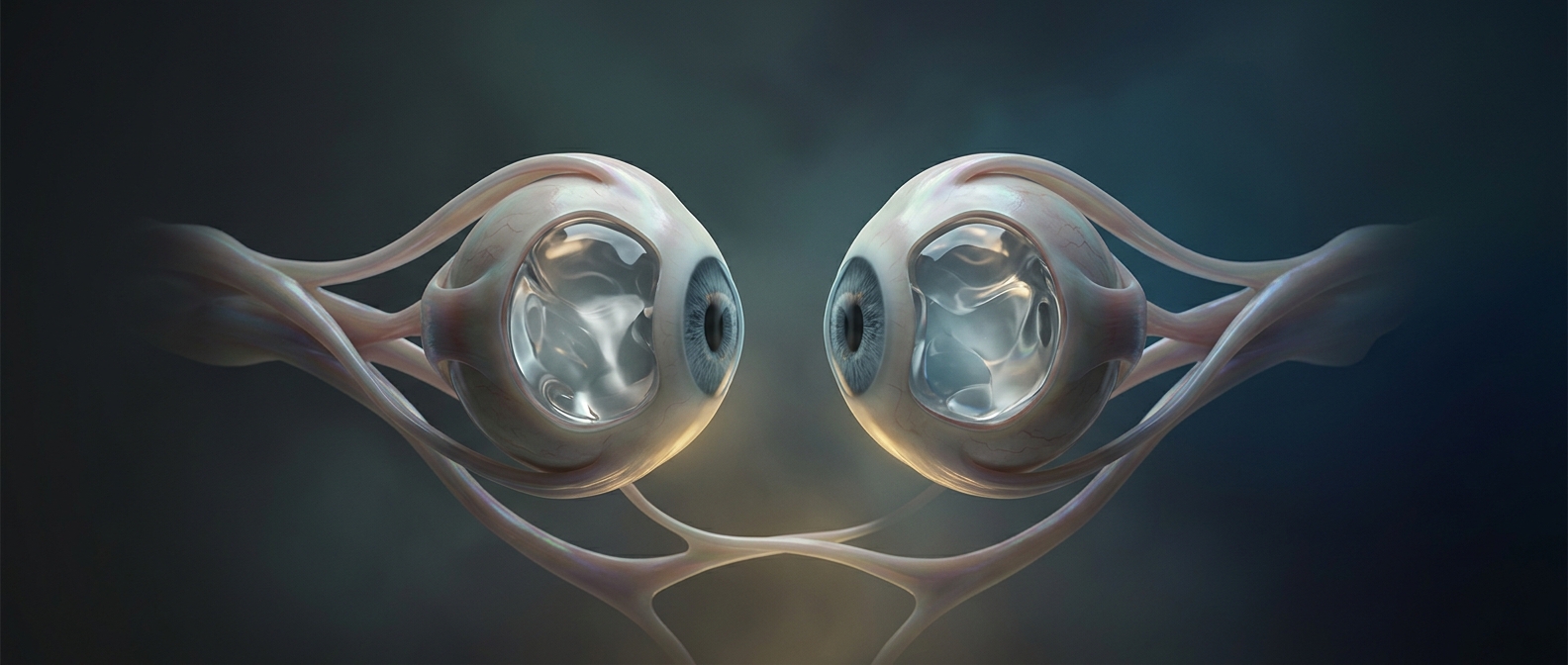
After passing through the lens, light travels through the vitreous before reaching the retina, the light-sensitive layer at the back of the eye. The vitreous is mostly water, but a fine framework of collagen fibers and water-binding molecules gives it a gel-like consistency. That mixture keeps the space behind the lens clear enough for light to pass while helping the eye maintain its form.
Unlike a rigid support, this gel can shift and change. In childhood and early adulthood it is usually fairly uniform; over time, its internal fibers can clump and parts of the gel can become more watery.
Why spots can appear in your vision
Clumped fibers may cast tiny shadows on the retina. The brain perceives those moving shadows as floaters—specks, threads, or cobweb-like shapes that drift when the eye moves. They may be easiest to notice against a bright, plain background, when the shadows stand out more clearly.
With age, the vitreous can also pull away from the retina, a common change called posterior vitreous detachment. It often causes new floaters or brief flashes of light. But a sudden burst of floaters, persistent flashes, or a dark curtain across vision can signal a retinal tear or detachment, which needs urgent eye care. The same transparent gel that lets light reach the retina is also close enough to it that changes in the gel can affect what you see.