Why New York’s trash changes vehicles
A collection truck is useful on a narrow city street, but it is a poor way to haul waste over a long distance. It carries a limited load, burns fuel on every mile, and would add still more heavy-vehicle traffic if it drove all the way from a neighborhood to a distant disposal site. New York’s transfer system separates those two jobs: trucks gather refuse locally, then larger freight vehicles move it out of the city.
The transfer station is the hinge
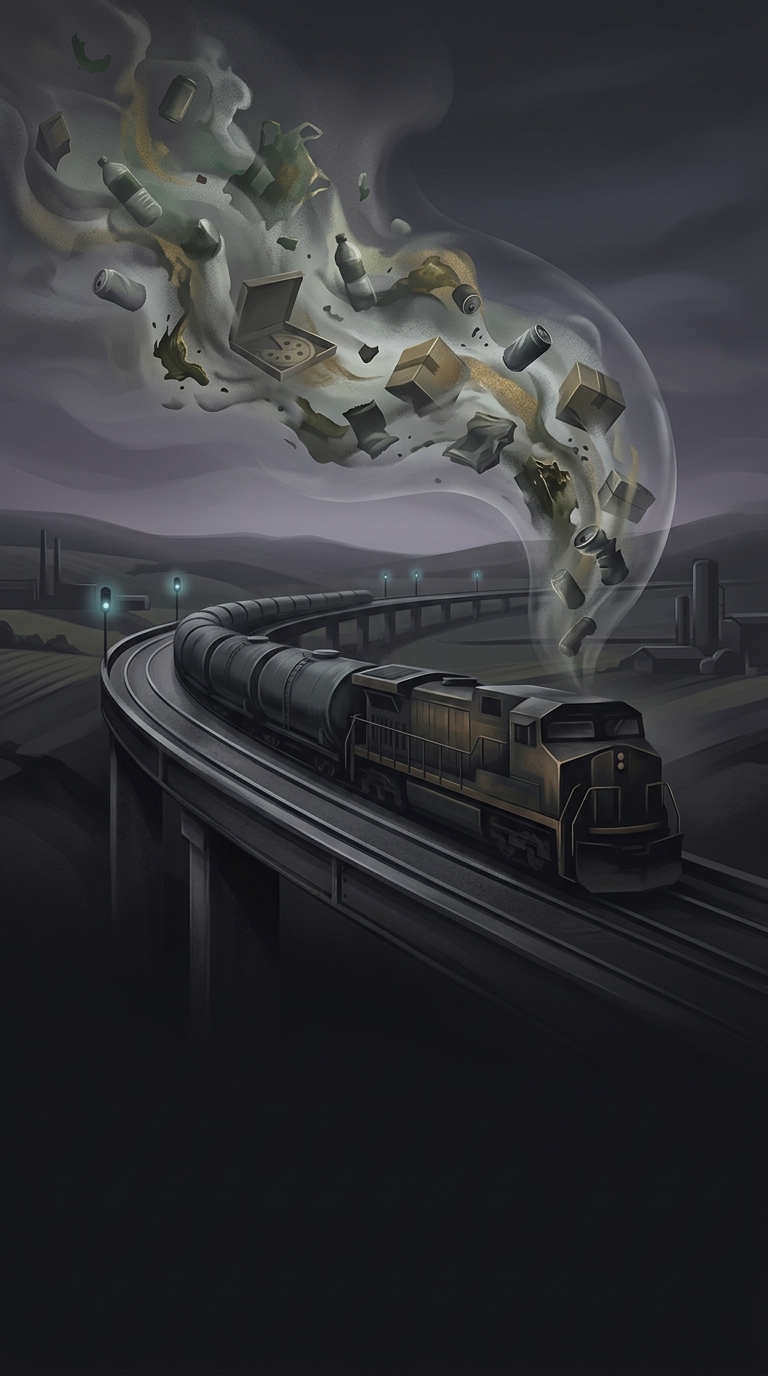
At a transfer station, incoming waste is consolidated—often compacted into sealed containers. Compaction reduces the space the trash occupies, while sealed loads help contain odors and loose material during handling and transport. Crews can then move those containers onto railcars or barges, depending on the route and facility.
This is a form of freight transfer: waste moves from the vehicle suited to pickup to one suited to carrying a heavy load farther. The station is not the final destination. It is a handoff point between the city’s collection network and the regional transport network that takes refuse to disposal sites beyond the boroughs.
A quieter tradeoff, not an invisible one
Rail and water transport can carry much larger loads per trip than neighborhood collection trucks, reducing the need for long-haul truck journeys through and around the city. But the system still depends on trucks to bring waste to transfer facilities, and its work is concentrated at industrial sites and along freight corridors rather than on ordinary streets.
That division of labor is the reason the journey can seem to disappear: residents see the bin emptied, while the bulk movement happens later, in sealed loads on routes most people do not use. The city’s waste has not vanished; it has been handed off to a transport network built to move heavy cargo beyond the places where it is collected.