Perception takes time to assemble
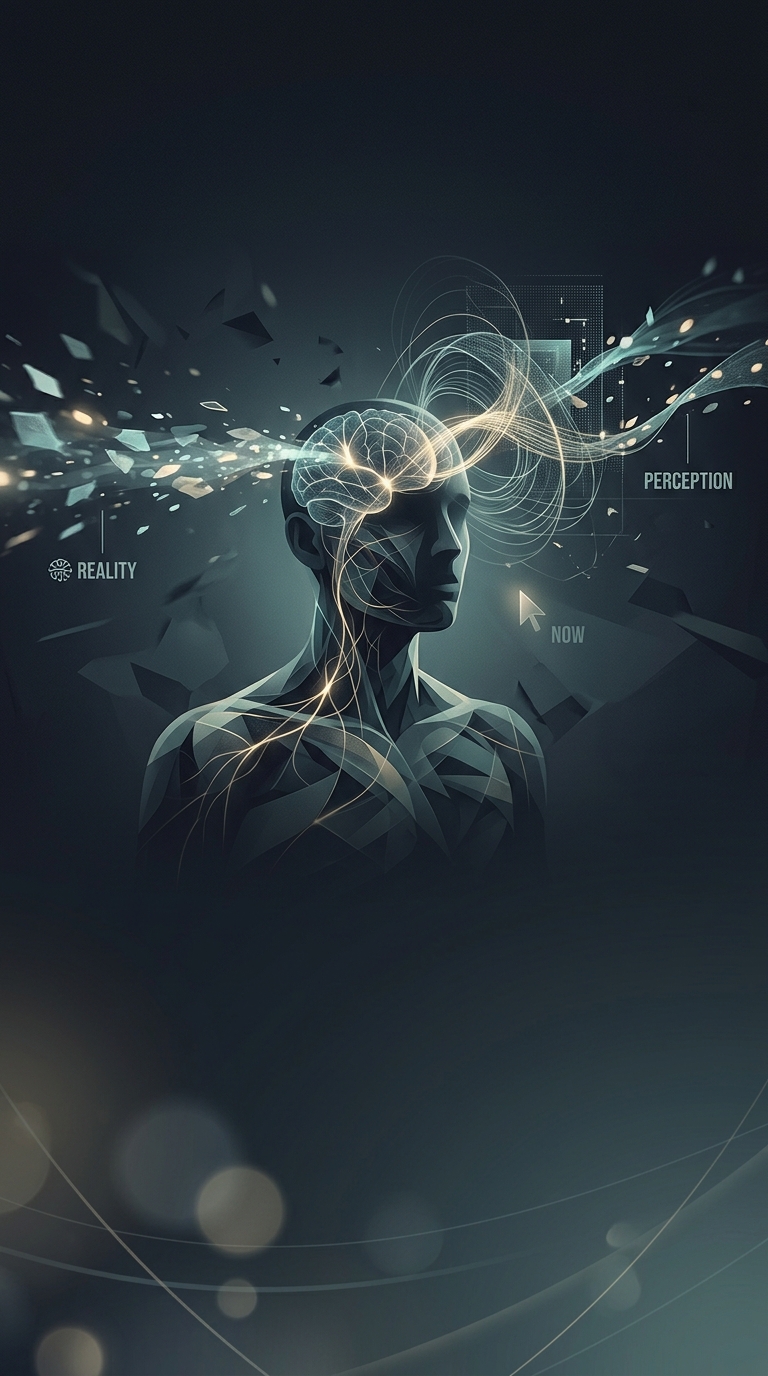
Light reaches the eyes, sound reaches the ears, and signals travel through nerves before the brain can interpret them. The steps happen quickly, but not instantaneously. The brain also has to combine information arriving at different speeds: a flash is processed differently from a sound, yet we usually experience them as parts of one event.
Rather than present a live feed, the brain gathers and organizes incoming signals into a usable scene. Some visual information is pooled over a short interval, helping smooth out noisy or changing input. As a result, what feels like one sharply timed moment is partly the brain’s construction from signals that arrived across a span of time.
The brain also anticipates what comes next
Waiting for every signal to finish processing would leave perception lagging behind a changing world. The brain can use recent information and learned patterns to estimate what is happening now. When you reach for a moving cup, for instance, you act on where it seems to be—not on a report that arrives only after the movement is over.
This prediction helps make experience feel immediate. It is not a perfect advance view: when events are unexpected, the estimate can be wrong, and later information can alter how an event is perceived. Perception is therefore a blend of incoming evidence and the brain’s best current interpretation.
“The present” is not a single instant
The claim that we never experience the present is best understood as a point about timing, not as proof that experience is unreal. There is no single mental snapshot that captures every part of the outside world at exactly the same instant. Conscious awareness depends on processing, integration, and prediction, all of which take time.
That is why the moment you experience is not a perfectly synchronized window onto the world. It is a coherent account assembled quickly enough to guide your next action—even while the world has already moved on.