How “I Spy” Turns a View Into a Sorting Task
In a color-based round of “I spy,” the clue gives a child a rule for searching: find something red, blue, or another visible color. That changes the job from simply naming whatever catches the eye to checking several objects against the same feature. A red sign, a car, and a shirt may be unrelated in what they are, but they belong in the same group for this round because they share a color.
This is categorization: grouping things by a feature they have in common. The child has to hold the clue in mind, scan the scene, and decide which objects fit. If the first guess is wrong, the search continues; if the clue changes, the child must use a different rule.
Why the Clue Matters
Color offers a simple starting point because it can be noticed across many kinds of objects. It also lets the adult adjust the challenge without changing the game. A broad clue such as “something green” may have several possible answers, while a more specific clue asks the child to narrow the search. Adults can make the round easier by choosing a clearly visible object, or harder by picking a less obvious one.
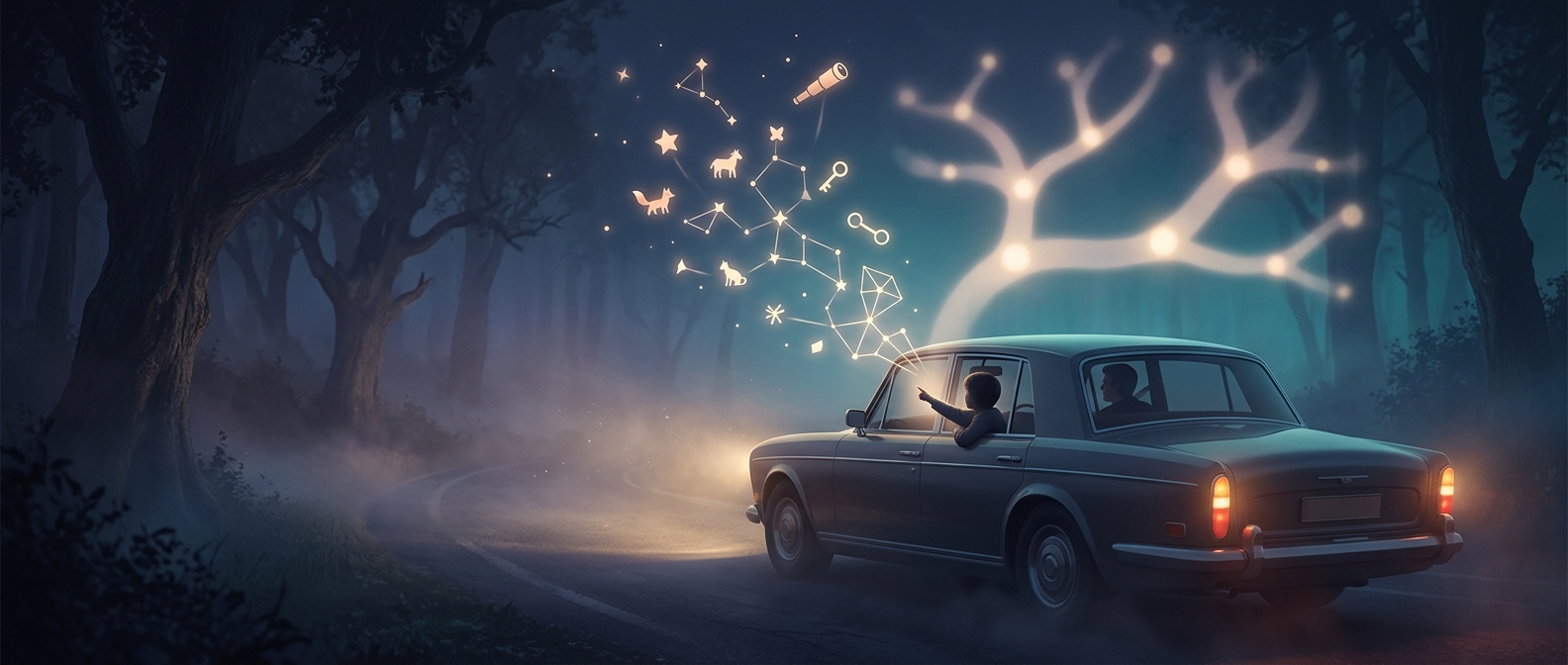
The game works best when the clue is visible from the child’s seat and there is no single answer the child is expected to guess. If several objects fit, that is part of the point: the child is practicing how one shared feature can connect things that otherwise have little in common. On a long drive, a passing landscape becomes a collection of possible matches—and every new clue offers another way to sort it.