How a Drop Becomes a Food Web
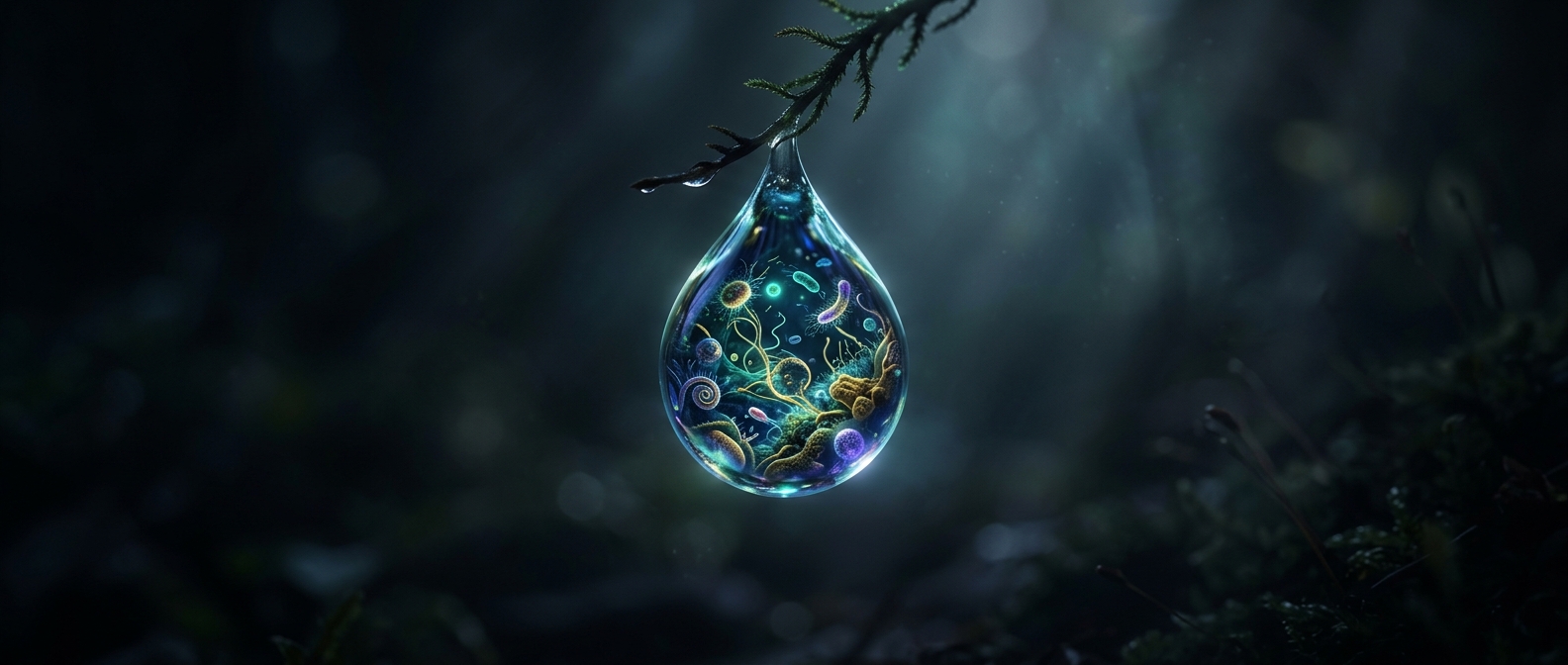
Pond water carries more than dissolved chemicals. It can contain bits of algae and decaying plants, along with bacteria and tiny organisms that live on or around that material. The organic debris supplies food and shelter; bacteria break it down, and other microbes graze on the bacteria or on one another. The result is a chain of meals, not simply a collection of unrelated specks.
An Amoeba Eats by Changing Shape
An amoeba has no jaws or fixed mouth. When it encounters a suitably small food particle or organism, it extends part of its flexible cell membrane around it. The membrane closes, bringing the prey inside in a tiny compartment where the amoeba can digest it. This engulfing process is called phagocytosis—literally, cell eating.
That meal links two levels of the web: the prey has taken in or fed on something else, and the amoeba gains nutrients by consuming it. Other microscopic grazers and predators create additional links. Who eats whom depends on the organisms present and their sizes, so the cast of a drop can vary from one sample to another.
A Moving Scene, Not a Miniature Pond Set
Under a microscope, the water’s apparent stillness disappears. Cells swim, drift with currents, or crawl across particles; food and waste move with them. A slide also changes the scene: water spreads into a thin layer, and the organisms visible in one field of view are only a small sample of what the drop contained.
That makes a drop less like a tiny, complete pond than a snapshot of a living network. Its most revealing detail may be an ordinary one: a single amoeba’s meal shows how energy can pass from microscopic prey into a predator too small to see unaided.