Why Listeria Can Grow in the Cold
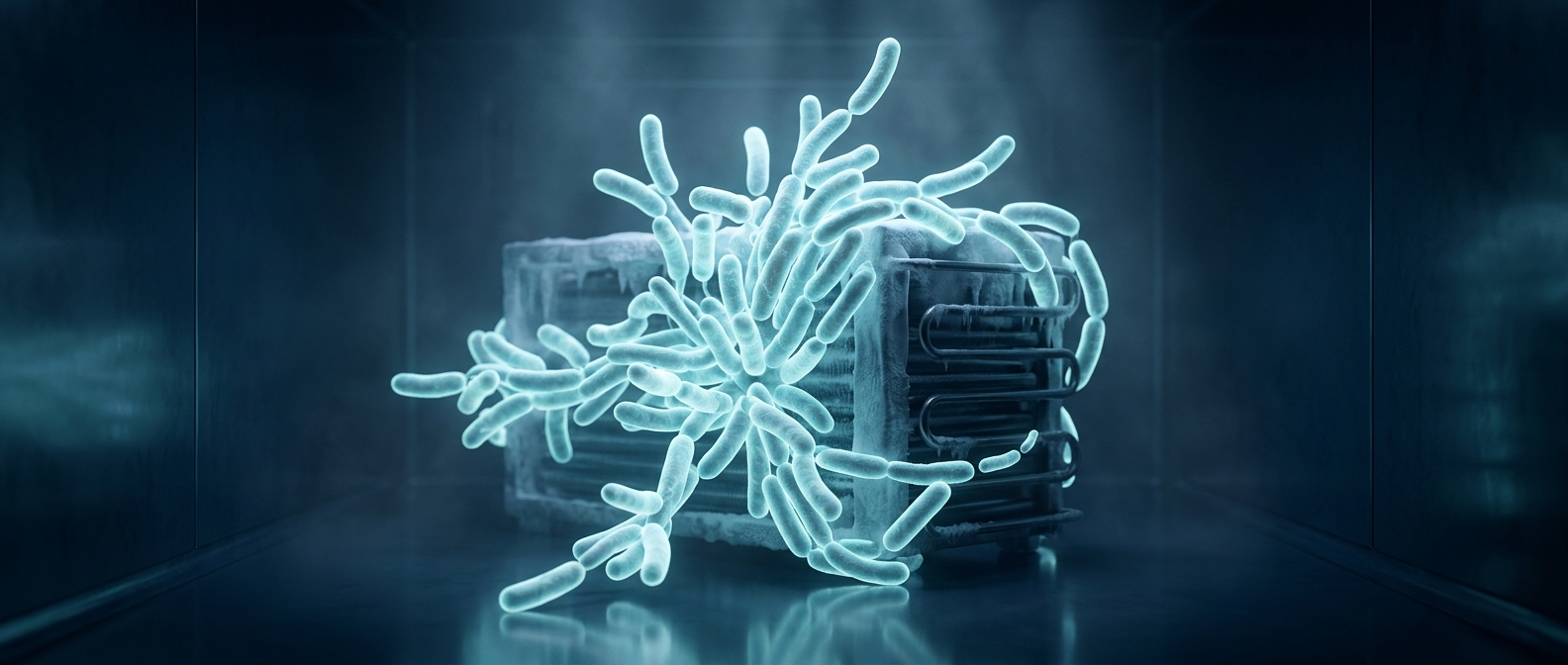
Most food-poisoning bacteria multiply fastest in warmth, so refrigeration makes many foods safer by slowing their growth. Listeria monocytogenes is unusually tolerant of cold: its cellular machinery can still function at refrigerator temperatures, though much more slowly than at room temperature. Cold buys time; it does not sterilize food.
The Risk Builds During Storage
The practical concern is food that is eaten without another cooking step, such as deli meat or some soft cheeses. If Listeria gets onto a food, it may survive and gradually increase while the food sits in the refrigerator. That means a contaminated item can become riskier over time even when it has been kept cold and still looks and smells normal.
A refrigerator’s temperature still matters: colder conditions slow Listeria’s growth more than warmer ones. But refrigeration cannot undo contamination that has already happened. Keeping the fridge cold, following use-by guidance, and preventing raw foods or their juices from contacting ready-to-eat foods all reduce opportunities for the bacteria to persist and spread.
Why Cooking Changes the Equation
Unlike chilling, thorough cooking can kill Listeria. That is why heating foods that will be cooked before eating is a different safeguard from simply storing them in the fridge. For ready-to-eat foods, careful handling and timely use matter because there may be no final cooking step to eliminate bacteria that grew during storage.