Why a wolf pack often looks like a family
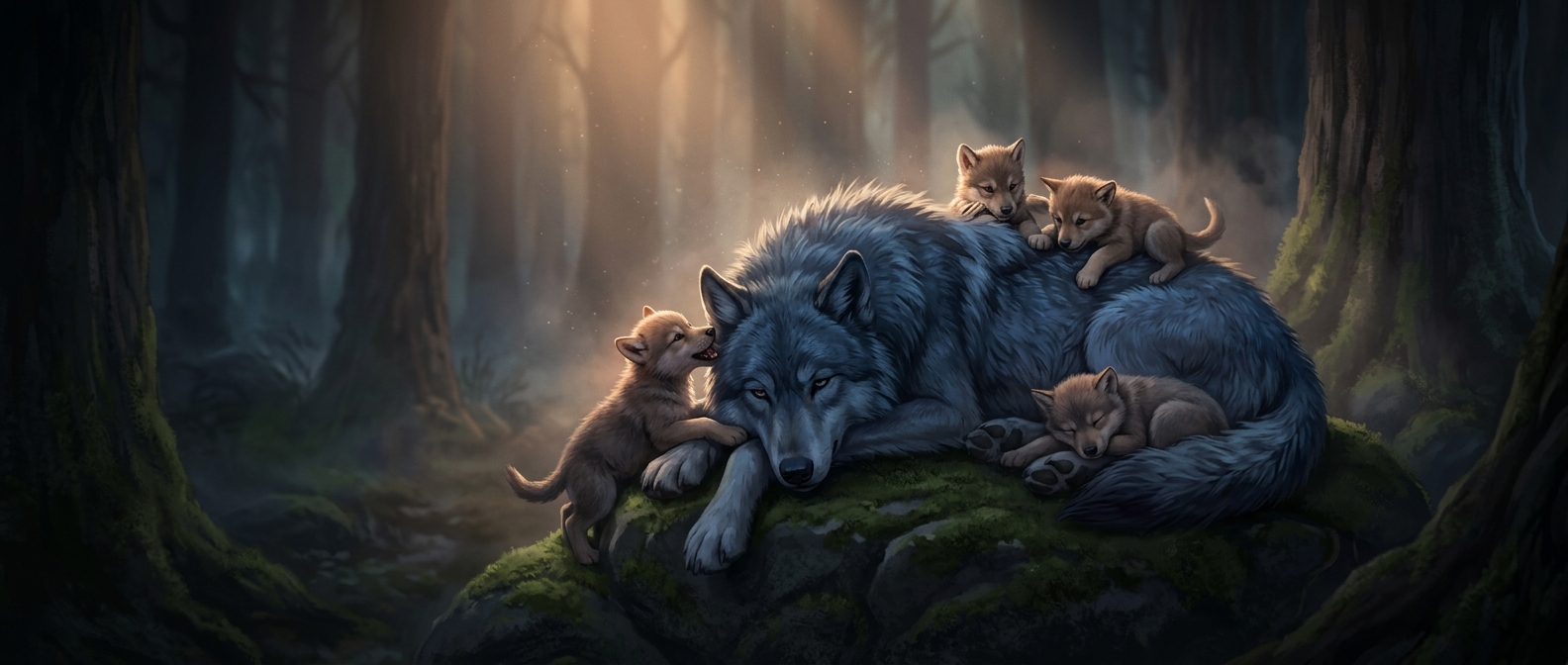
A typical wild pack is not a crowd of unrelated wolves competing for a permanent top spot. It is usually a family group: a breeding pair and their offspring from one or more years. Young wolves may stay with their parents for a time, helping the group travel and hunt before eventually leaving to find mates and establish packs of their own.
That family structure changes how leadership works. The adults are not simply winners of repeated fights; they are the animals around which the group’s daily life is organized. They can influence when the pack moves, where it rests, and how it approaches prey. Their offspring follow because the parents have experience and because the group’s survival depends on coordinating its members—not because every decision must be settled by a dominance contest.
Where the “alpha” image came from
The popular picture of wolves constantly battling for rank was shaped in part by observations of captive wolves assembled from unrelated individuals. Unlike a family living together in the wild, such a group has no ordinary parent-offspring structure, and social tension can make rank struggles more visible. That setting encouraged researchers and the public to treat “alpha” as a general rule for wolf life.
In wild packs, relationships still matter, and conflict can occur. But a parent leading offspring is a better description of the usual arrangement than a permanent tournament for control. The distinction also explains why a pack can move as a coordinated unit: its leaders are not strangers who seized a title, but parents whose young depend on them.