How One Container Changes Modes
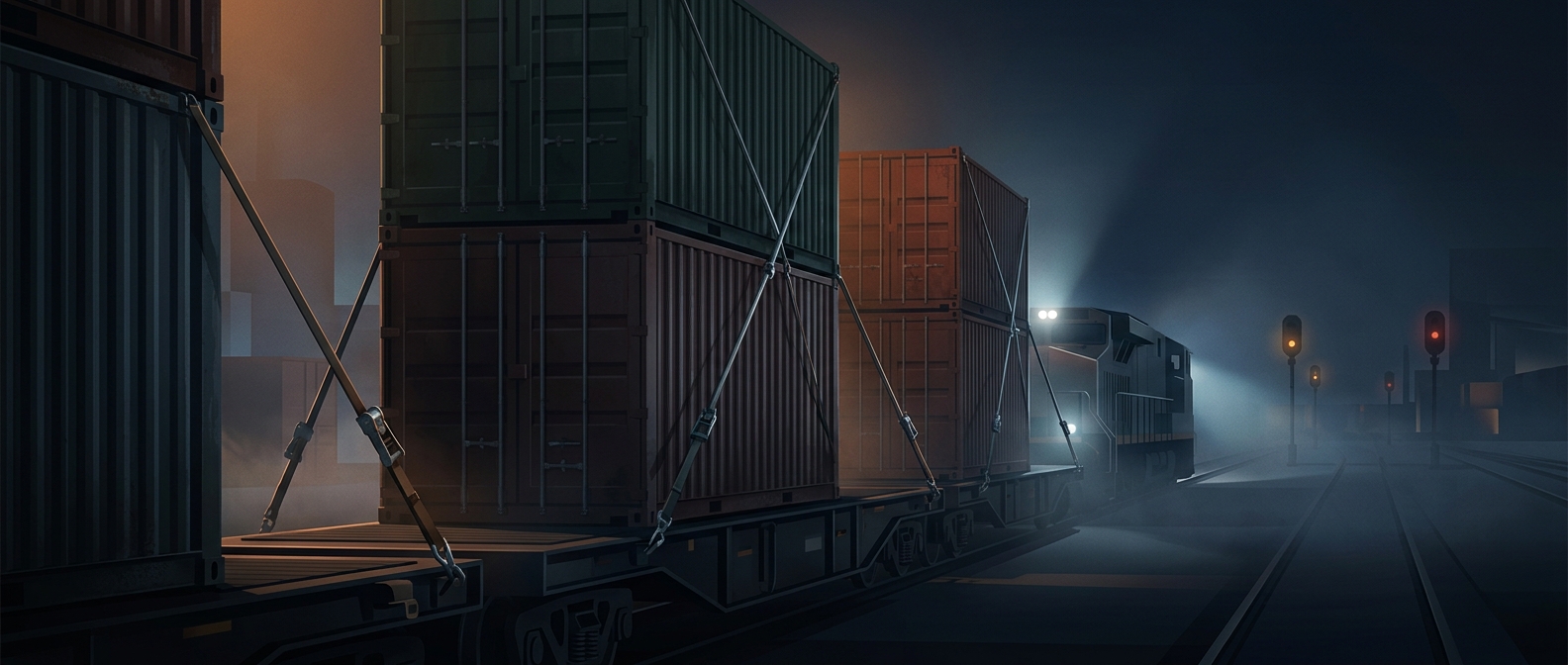
An intermodal yard is a transfer point where freight stays inside the same steel container as it moves between rail and road. Keeping the goods in the box avoids unloading and repacking them at every change of transport, but the container still has to be moved from a train car to a truck chassis.
A gantry crane spans the tracks and nearby truck lanes. Its lifting frame, called a spreader, is lowered onto the container and locks onto fittings at its four upper corners. The crane raises the box clear of the railcar, moves it across the yard, and lowers it onto a chassis that can carry it on the highway. The equipment handles the weight; the operator’s precision matters because the container must land squarely on the truck’s supports.
Why the Yard Must Work in Sequence
A crane cannot move a box efficiently if the right truck or railcar is not in position. Yard staff coordinate where containers are placed, which railcars are ready to be unloaded, and which trucks are waiting to collect them. A misplaced container can mean extra lifts and reshuffling before it reaches its next vehicle.
The transfer also has to fit the limits of each mode. Trains carry many containers over long distances, while trucks can take individual loads to destinations beyond the rail network. At a busy Chicago yard, the crane is the visible link between those two systems: it turns freight arriving in a long train into separate loads that can head out by road, without opening the containers or handling their contents.