A rebellion turned into a warning
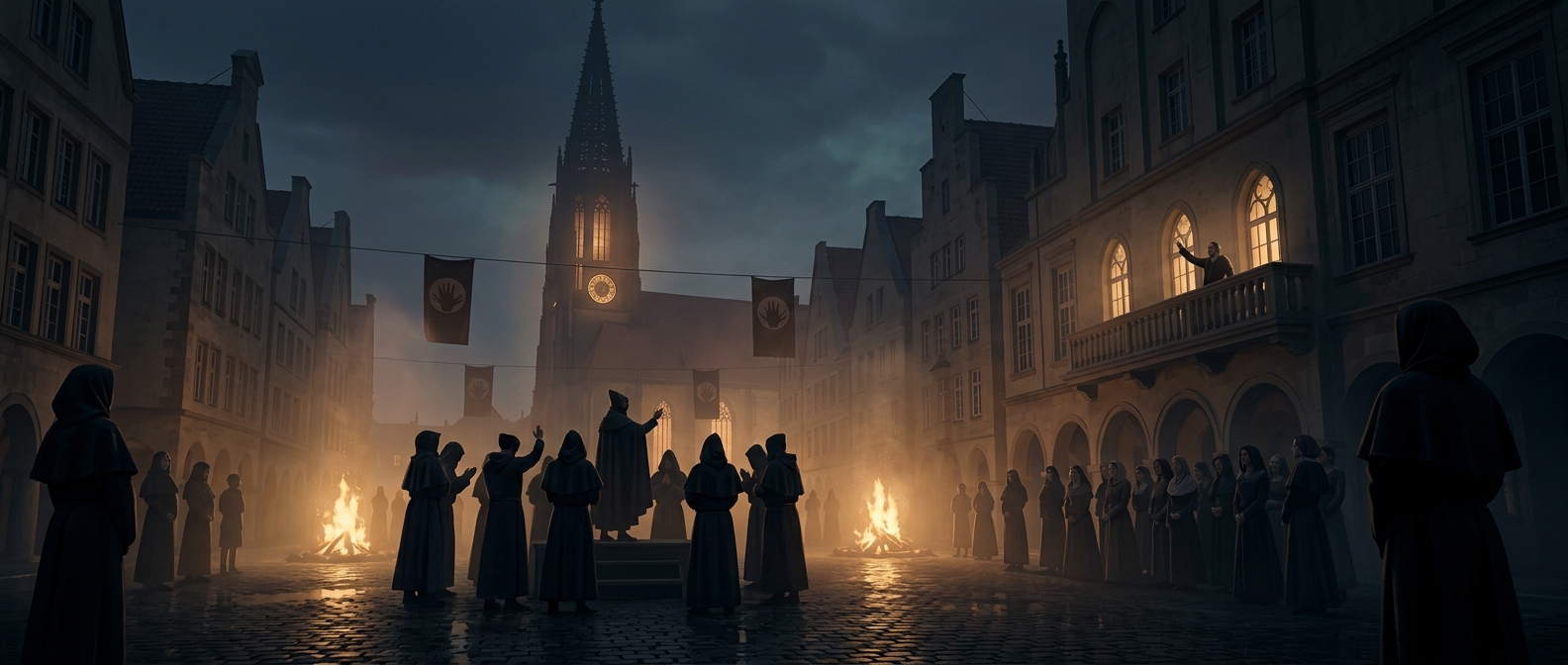
Münster’s takeover unfolded amid the upheaval of the Protestant Reformation, when religious authority and civic power were being contested across Europe. The Anabaptist regime was not simply a new church service in city hall: its leaders claimed the right to reshape public life according to their religious convictions. Their rule, including the requirement of plural marriage, provoked fierce opposition within the city and beyond it.
The prince-bishop of Münster, whose authority the rebels had displaced, laid siege to the city. Once his forces retook it in 1535, the rebellion’s leaders were captured. Their execution the following year was meant to do more than punish individuals. In an era when public executions were political theater, displaying the leaders’ bodies made the defeat visible to anyone approaching the city.
Why the cages stayed
The iron cages were suspended from St. Lambert’s Church, a prominent landmark. Their height and setting turned the church tower into a permanent-looking announcement: the authorities had restored control, and another challenge could bring the same fate. The bodies are long gone, but the cages remain as physical evidence of how rulers used spectacle to enforce power.
Their presence also preserves a tension in Münster’s history. The uprising failed, yet its leaders’ punishment became part of the city’s own silhouette. A visitor looking up at the church sees not just an unusual piece of ironwork, but a message once designed to be impossible to ignore.