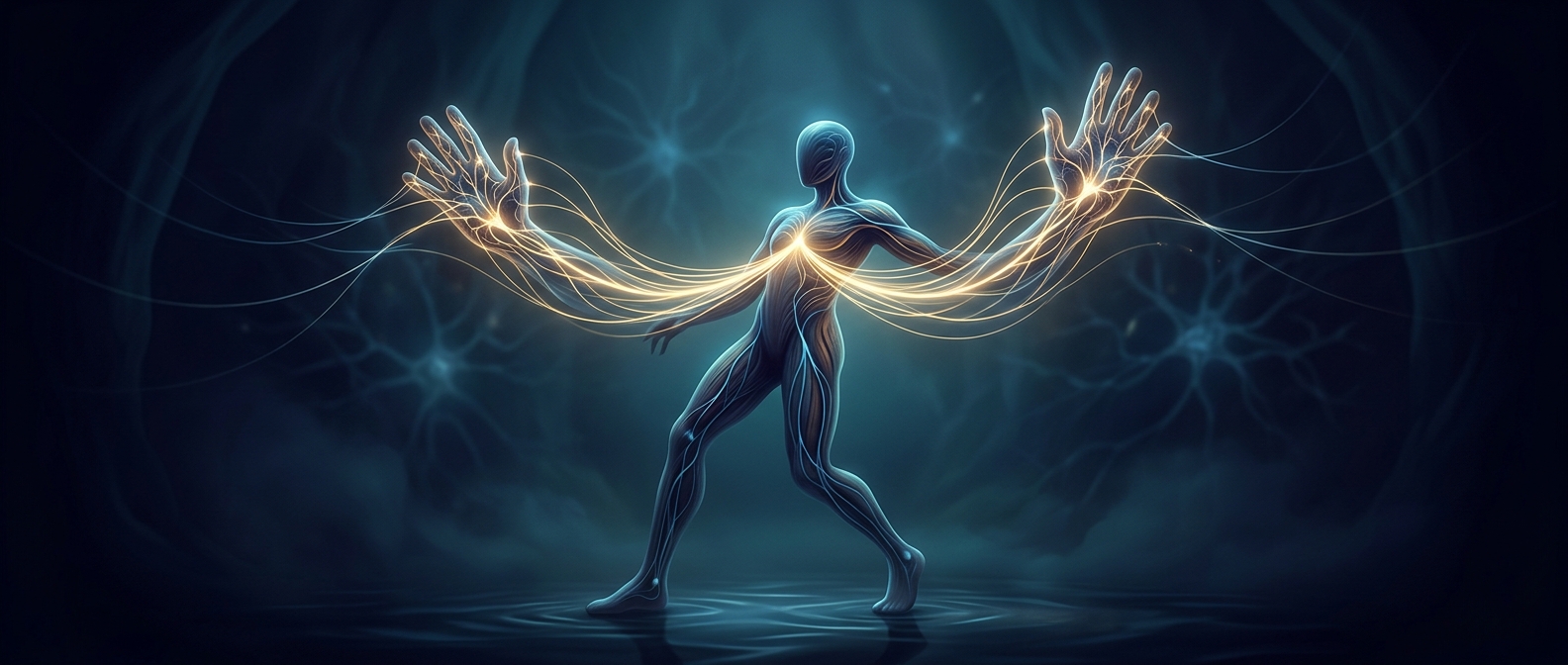
Why the Left Hand Answers to the Right Hemisphere
A command to move a hand begins in networks that plan and prepare an action, then reaches the spinal cord through pathways from the brain’s motor areas. Many of the fibers in the main pathway cross over before they reach the body. As a result, the right side of the brain has a leading role in controlling precise movements of the left hand, while the left side generally leads for the right hand.
The crossover is not an absolute division of labor. Both hemispheres contribute to many movements, and some nerve fibers do not cross. A familiar action—buttoning a shirt, for example—can involve one hand doing the precise work while the other stabilizes the fabric, with the brain coordinating both sides.
Hand Preference Is Not a “Right-Brained” Personality
Favoring one hand reflects how the brain organizes and coordinates movement, not a general dominance of one hemisphere over a person’s thinking. Handedness is one visible sign of the brain’s larger pattern of lateralization: certain tasks are handled more strongly by one side, while many others rely on both. The development of hand preference is complex; the crossed motor pathway explains how the favored hand is controlled, not by itself why a person favors that hand.
The practical consequence is simple: when a left-handed person reaches for a cup, the movement’s leading motor instructions come chiefly from the hemisphere on the opposite side—not from a single brain side acting alone.