A Genetic Trail Left by an Empire
The estimate rests on a distinctive pattern in the Y chromosome, the stretch of DNA usually passed from father to son. Because it changes relatively slowly, researchers can use shared Y-chromosome features to trace paternal lineages backward through generations.
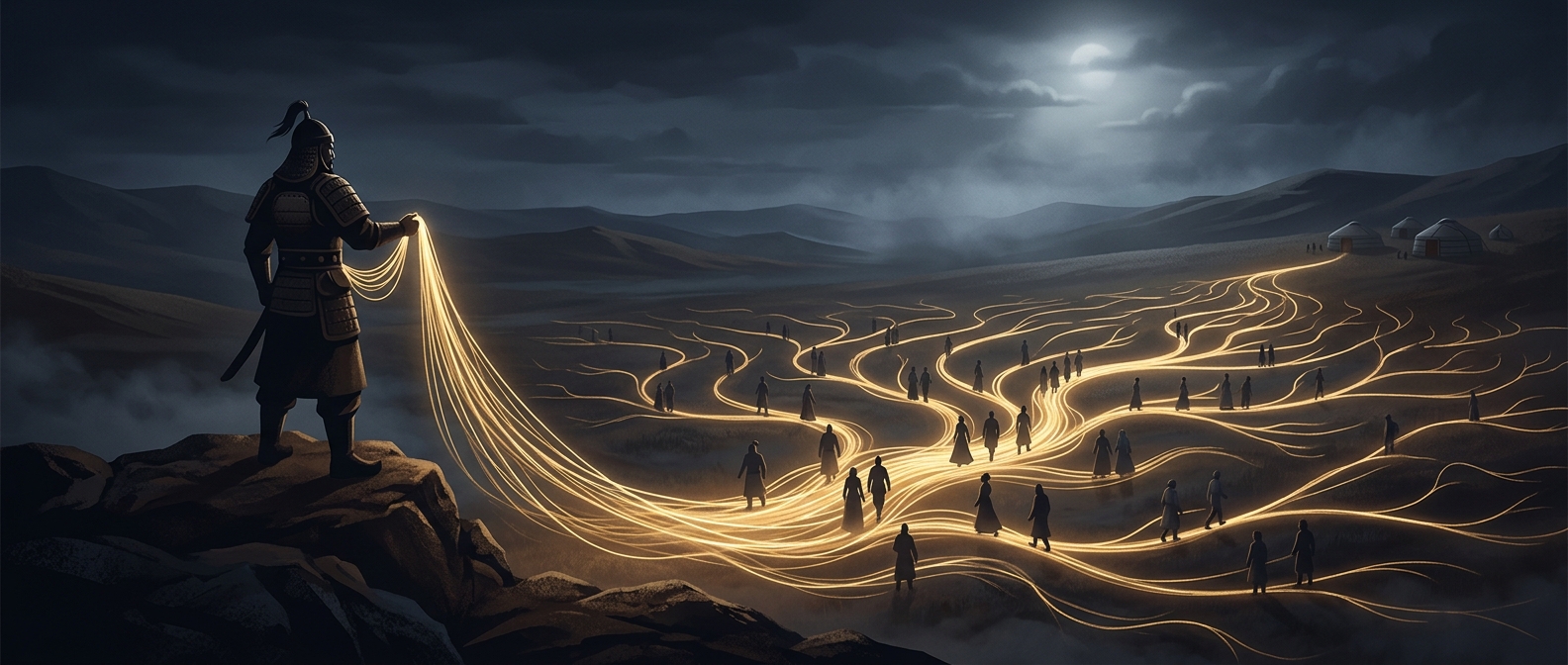
A particularly widespread lineage in Central Asia appears to have expanded rapidly around the time of the Mongol Empire. Its reach is striking: millions of men may carry a paternal line that grew from a small number of ancestors during that period.
Why Power Could Shape a Family Tree
Conquest alone does not spread genes; descendants do. A ruler and his male relatives could have children across a large territory, while their sons inherited status, land, and influence that made it easier for their own lines to continue. Over generations, that advantage could turn one paternal lineage into a genetic pattern visible across a vast region.
The Y chromosome captures only this one narrow route through ancestry: father to father to father. It says nothing by itself about a person’s full ancestry, which comes from many thousands of ancestors, or about how closely two men are related overall.
A Powerful Clue, Not a Name Tag
The genetic pattern is commonly associated with Genghis Khan’s dynasty, but no verified DNA sample from Khan establishes that the lineage was his. The estimate connects a broad Y-chromosome cluster to a historical period and ruling family; it cannot identify a particular man as the source with certainty.
So “sharing his DNA” is shorthand, not a claim that millions of men carry an identical genetic copy. What persists is a paternal line—one thread in a much larger human family tree—whose extraordinary spread may reflect the political advantages of empire as much as biology.