A flower turns into a cluster of fruits
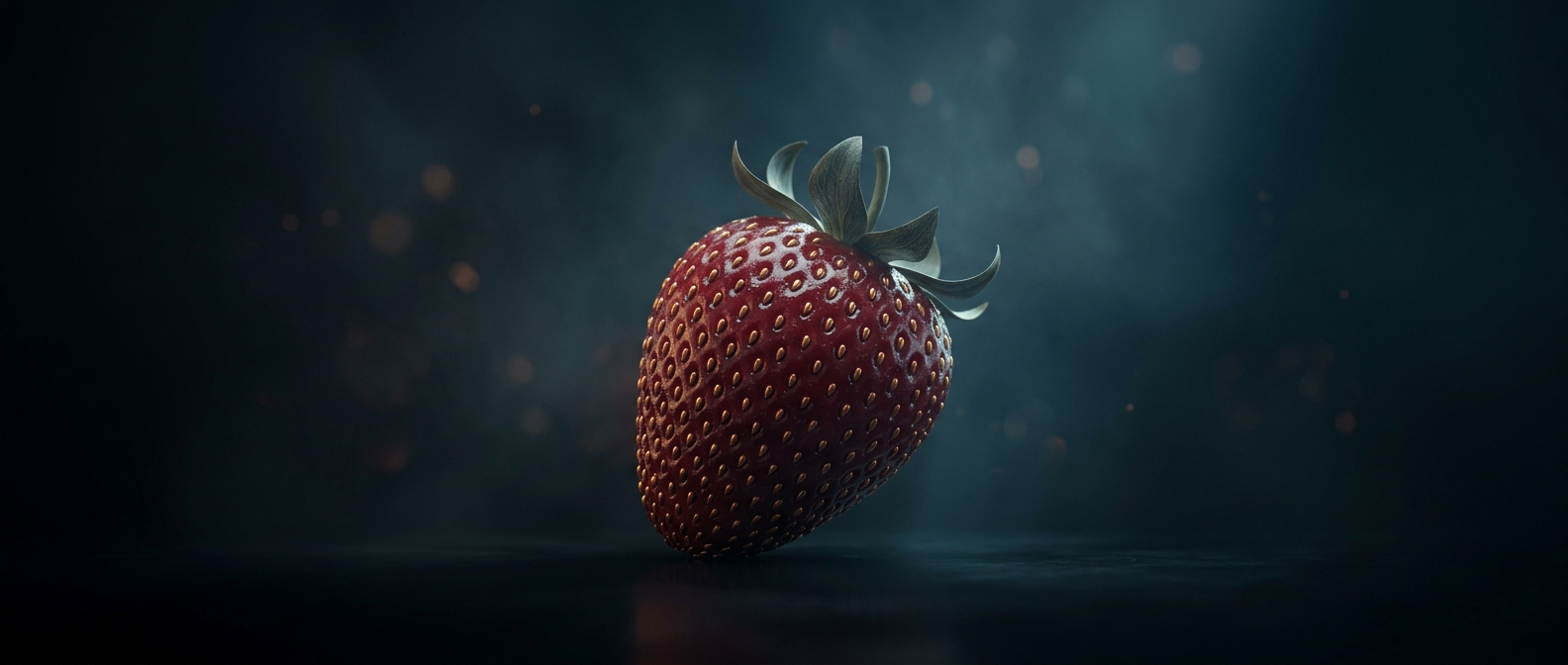
A strawberry begins as a flower with many separate pistils—the structures that contain its ovules, which can develop into seeds after fertilization. Each pistil sits across the surface of a shared, dome-shaped base called the receptacle. After pollination and fertilization, the pistils mature into achenes, while the receptacle enlarges into the soft, colorful part people eat.
That arrangement explains the fruit’s unusual look: its many small fruits remain distributed over the outside rather than being enclosed in one fleshy ovary. Botanists call strawberries accessory fruits because much of their edible flesh comes from tissue outside the ovaries.
Why the pattern matters
The achenes are not just decorations. As they develop, they help regulate the growth of the receptacle beneath them. If fertilization is poor in one part of the flower, the achenes there may develop less fully, and the surrounding tissue may not swell as much. That can leave a strawberry lopsided or dimpled.
So the familiar surface is a record of how one flower’s many reproductive parts developed: a field of tiny fruits, each influencing the larger fruit-like structure around it.