What rose from the mixture
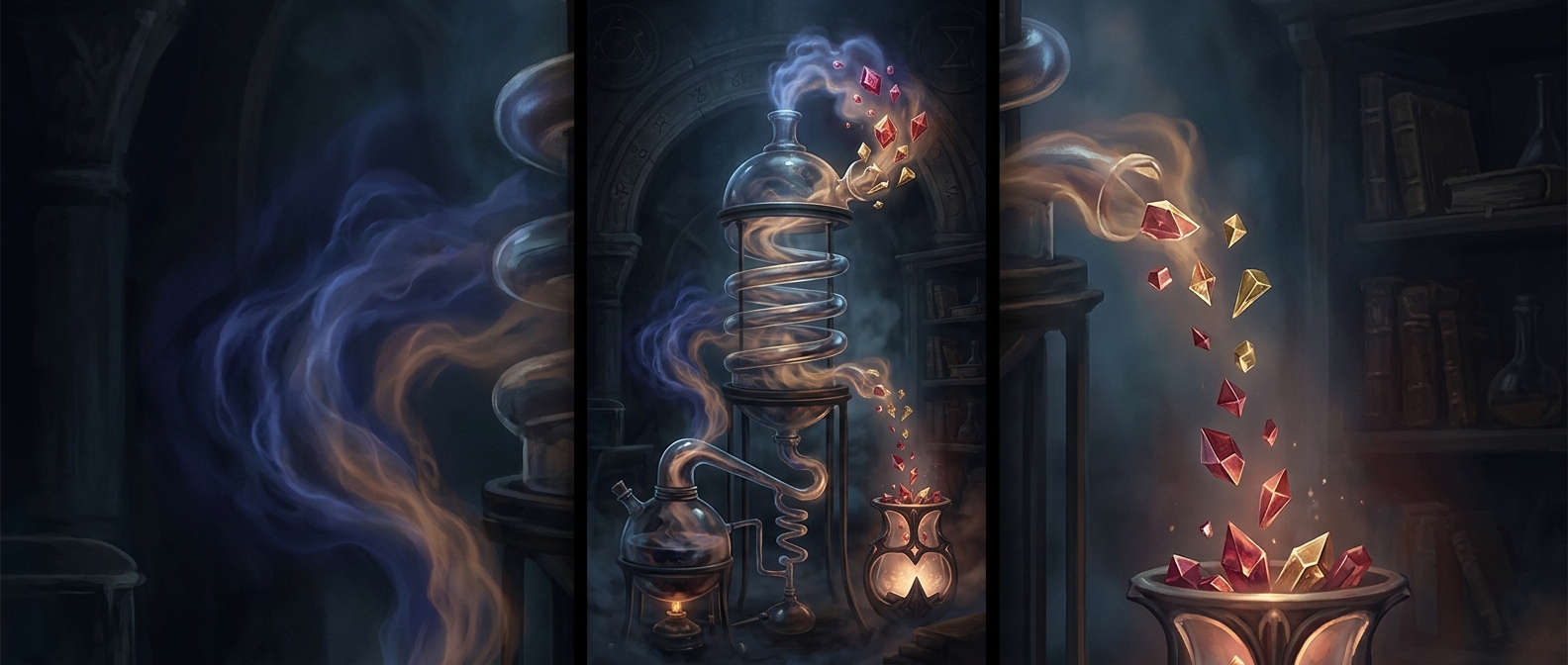
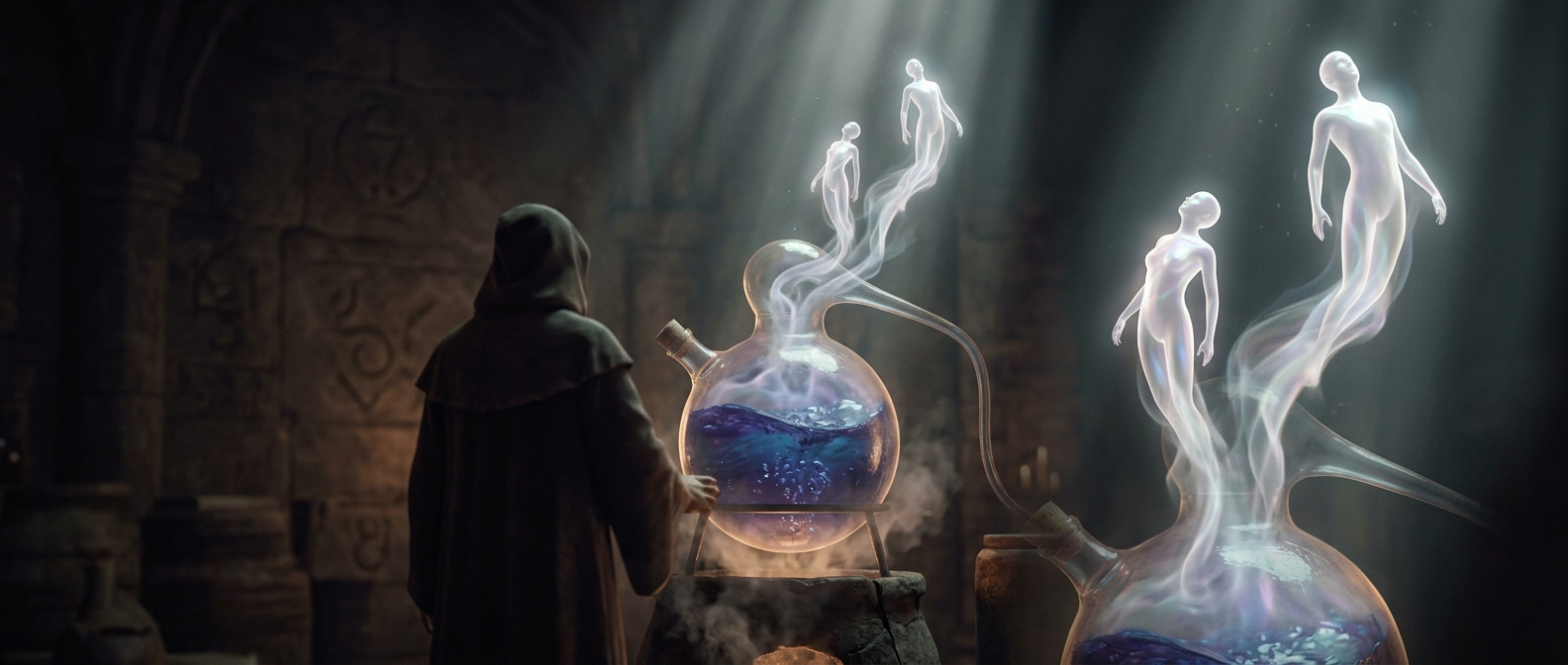
In distillation, heating turns some of a liquid mixture into vapor. That vapor travels into a cooler part of the apparatus, where it condenses back into liquid. Because different substances evaporate and condense more readily than others, the collected liquid can have a different composition from what remained behind. It is a way to separate or concentrate ingredients—not to extract a hidden life-force.
For alchemists, the visible change gave the process symbolic force. A substance seemed to shed its heavier body as vapor climbed away, leaving a residue below; the returning liquid could be treated as the mixture’s refined “spirit” or “soul.” The metaphor joined a physical transformation to the hope that careful operations could reveal a substance’s essential nature.
When the vessel became dangerous
That transformation depended on directing hot vapor through an apparatus. If vapor had no safe way to escape—for example, if an outlet was blocked or a vessel was effectively sealed—pressure could build as heating continued. Glass under pressure could crack or burst, turning the same process meant to refine a liquid into a sudden hazard.
The practical lesson was built into the metaphor: vapor could rise, but it had to be given a path onward. Distillation’s “soul” was not something floating free of matter; it was material carried through a fragile system of heat, passage, and condensation.