Coal gave early railways a reason to exist
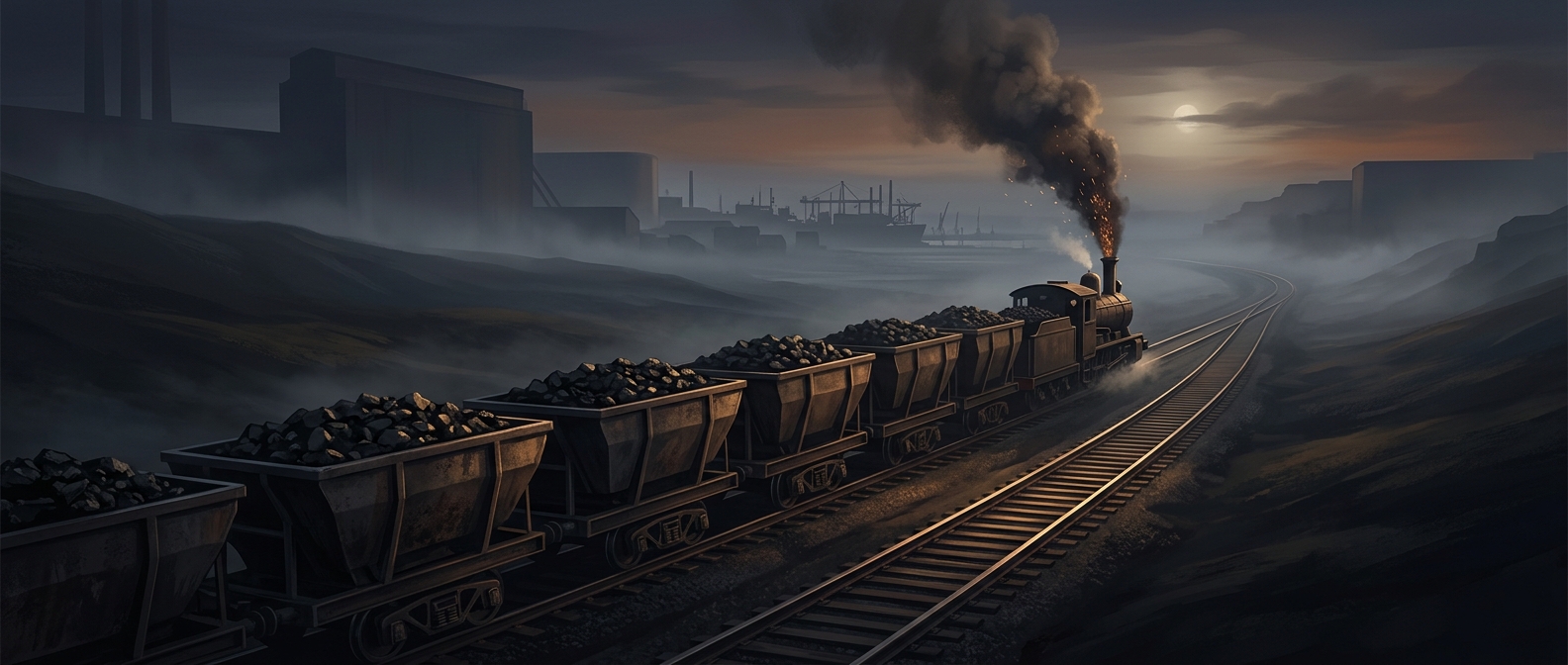
Before railways became a way to travel, they solved a stubborn industrial problem: moving heavy loads from mines. Coal was bulky, and hauling it by cart over rough roads was slow and costly. Mines also needed dependable routes to rivers, canals, or ports, where fuel could continue its journey to factories and towns.
Early wagonways used guided tracks—often with horse-drawn wagons—to keep loads moving along a fixed path. Rails reduced the resistance that wheels faced on uneven ground, so a horse could pull more than it could on an ordinary road. These were railways in a practical sense, even before steam locomotives transformed them.
Freight shaped the technology
Steam engines did not instantly create a passenger network. Their first railway work fit the same industrial task: hauling heavy mineral loads. The track, vehicles, and engines had to withstand substantial weight, while the route connected places where coal was dug, processed, or shipped. A line could earn its keep carrying freight without needing a steady stream of travelers.
That commercial use mattered. Regular coal traffic demonstrated that a railway could move large quantities reliably enough to justify the expense of building and maintaining a dedicated route. It also created pressure to improve locomotives and track—not as abstract inventions, but as tools for moving more material with less delay.
Passengers followed a proven route
Once railways had demonstrated their value for freight, carrying people became a more plausible extension. Passenger service required different considerations, including carriages designed for comfort and schedules travelers could use, but it could build on an existing corridor and operating system.
The shift was not a single moment when railways suddenly changed purpose. It was a progression: industrial tracks first connected mines to markets, and the networks and machinery developed for that trade helped make passenger travel possible. The modern railway began, in large part, as a way to get coal moving.