The hidden structure that makes a puppet perform
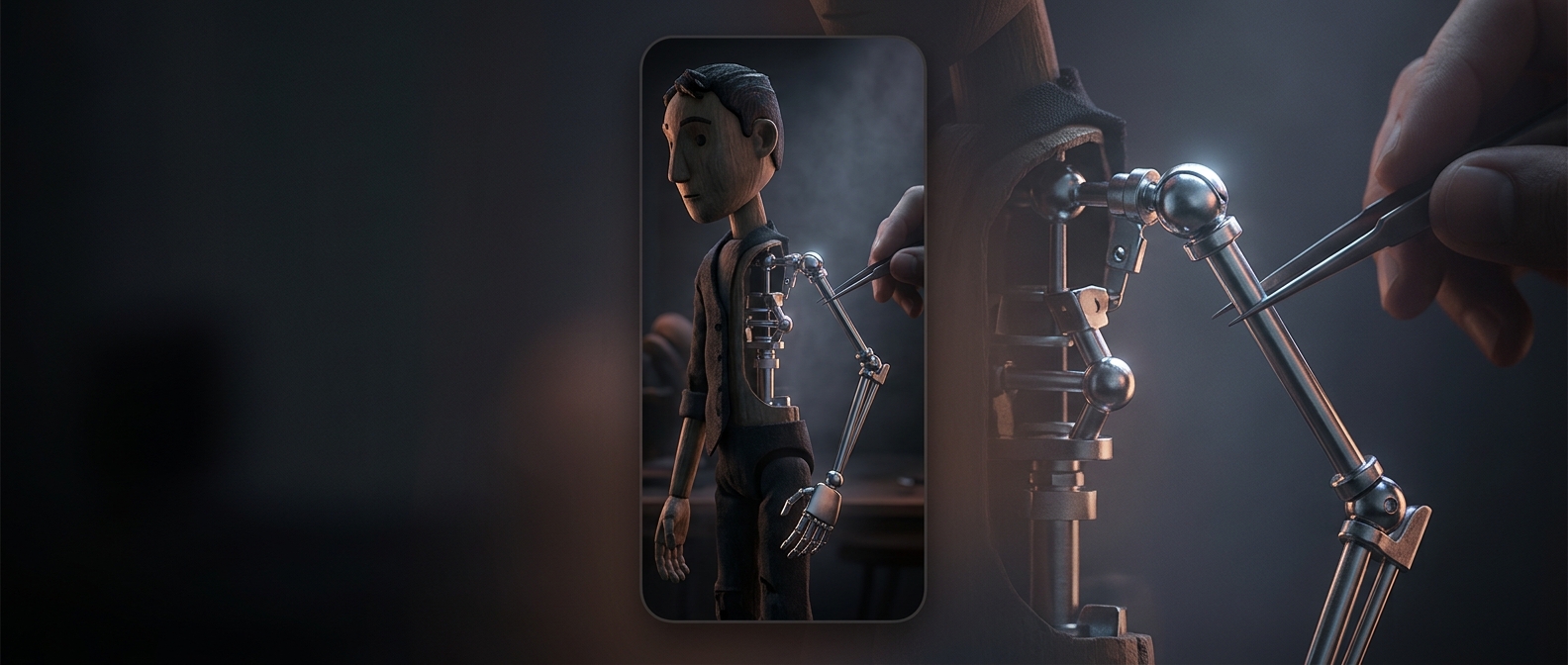
A stop-motion puppet has to stay still while a camera records one frame, then hold a slightly different pose for the next. Its metal armature—the internal framework—does the job a skeleton does in a living body, but with a crucial difference: it must resist gravity and the animator’s touch rather than move on its own.
Joints turn tiny adjustments into controlled motion
At a ball-and-socket joint, a rounded metal end sits inside a matching socket. The fit creates enough resistance to keep a limb in place, while still allowing an animator to reposition it by hand. That controlled friction is the key: a loose joint would sag between frames, while an overly tight one could make fine adjustments difficult or strain the surrounding puppet.
The framework also gives the animator a dependable route for movement. A wrist can rotate, or a knee can bend, without the whole figure shifting unpredictably. The puppet’s outer materials—such as foam, fabric, or a modeled face—supply its visible shape; the armature carries the forces of posing beneath them.
Why small movements matter
Animation is built from separate still images. When those images are played in sequence, the audience perceives motion, so an animator may alter a pose only slightly before taking the next frame. If a puppet slips after the camera is set, the change can appear as a distracting jump. A stable armature makes deliberate movement repeatable and lets the animator concentrate on expression, timing, and gesture.
The metal skeleton is therefore not merely a support inside the character. It is the mechanism that makes a performance possible one frame at a time—and keeps a carefully arranged pose intact until the camera captures it.