A deadline turned into a household rule
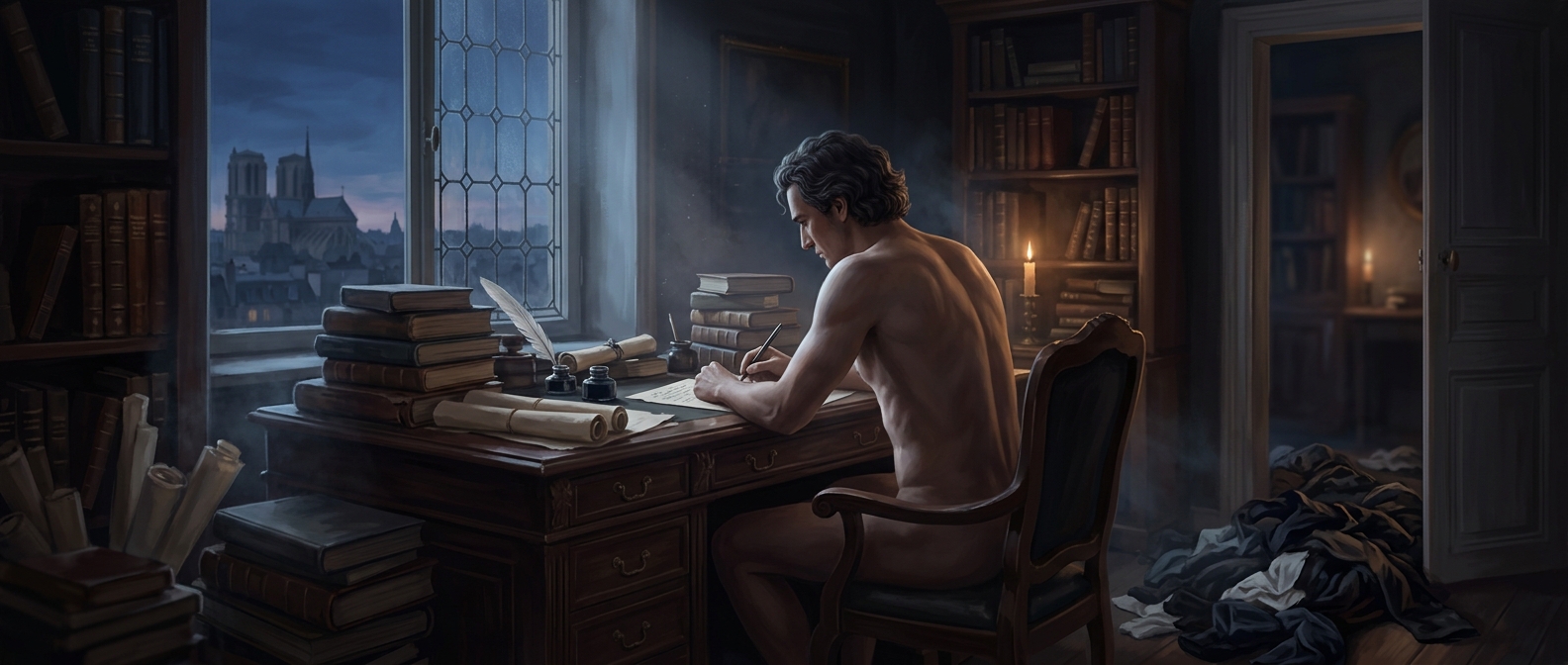
Victor Hugo’s strategy for finishing The Hunchback of Notre-Dame was less about finding inspiration than removing an easy escape. By putting his clothes out of reach, he made leaving the house inconvenient enough to support the work he had already committed to doing.
That is a form of self-binding: choosing in advance to limit your own options because you expect a later temptation to distract you. Hugo did not need to decide whether to go out each time the urge arose; the missing clothes made the decision for him.
The room became part of the writing plan
A novel requires long stretches of attention, but a writer can interrupt them with errands, visits, or other diversions. Hugo’s arrangement turned his wardrobe into a practical barrier between intention and distraction. It was an unusually literal way to make staying home the path of least resistance.
The trick did not write the book for him. It changed the conditions under which he had to work, using an everyday inconvenience to keep a deadline in view. The memorable detail is that his commitment was enforced not by a grand literary ritual, but by the simple fact that going out meant first finding something to wear.