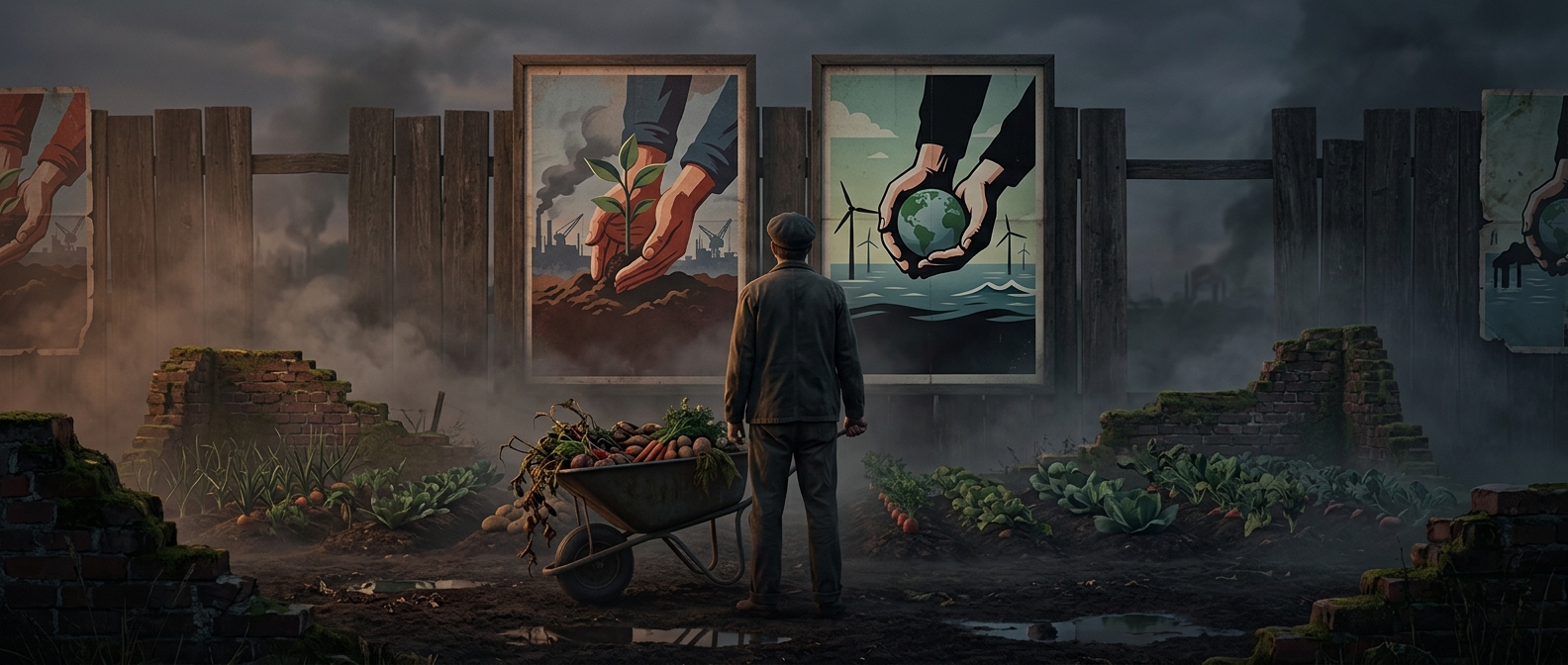
Why posters made a national effort feel personal
A wartime shortage was a large, distant problem; a vegetable bed was something a household could actually manage. Victory Garden posters connected the two. They framed planting, tending, and preserving food as useful contributions to a shared effort, giving people at home a practical role while food supplies and labor were under pressure. The garden could help stretch what was available, but it also made participation visible and purposeful.
That was the persuasive trick: turn a collective challenge into a task within reach of one household. Instead of asking viewers to solve the whole crisis, a poster could point toward a next step they could take themselves.
The same scale shift in climate messaging
Climate campaigns use a similar structure, even though the stakes and circumstances differ. A broad goal such as lowering emissions can feel abstract; growing some food, wasting less, or changing how a home uses energy gives the goal a familiar scale. The household becomes a place where a person can see what action looks like, not just a spectator to a national or global problem.
The resemblance is rhetorical, not a claim that gardening alone can address climate change. Home-scale actions can make a larger effort concrete, but their effects depend on how they fit alongside decisions by governments, businesses, and communities. A slogan or poster compresses that complexity into an invitation to participate.
From duty to sustainability
The wartime appeal tied household action to immediate need and collective morale. Modern climate messaging more often connects it to long-term environmental consequences. In both cases, the image of an ordinary person doing something practical helps bridge the distance between a vast public challenge and everyday life.
That is why the visual language still feels familiar: the poster gives a large cause a human-sized first step.