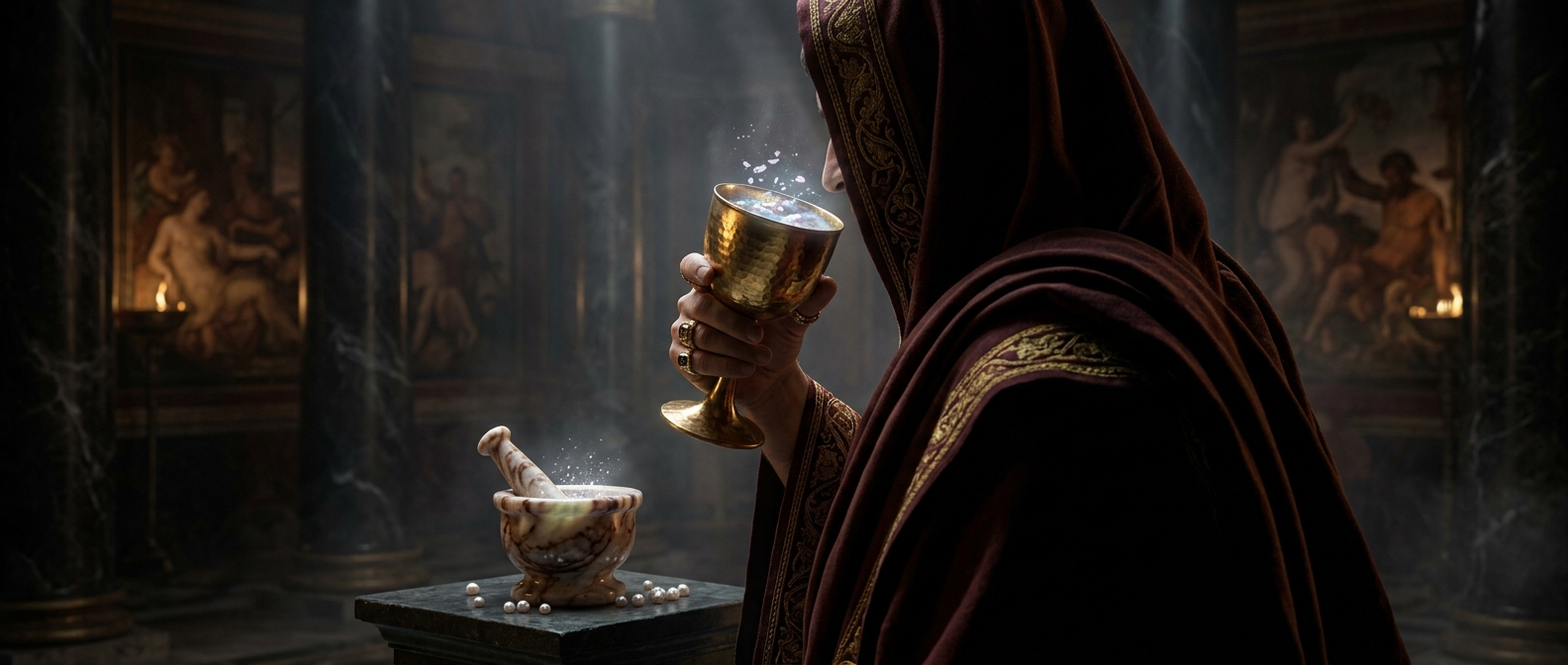
Turning a jewel into a drink
A pearl’s value came from its beauty, rarity, and the labor required to obtain it. Dissolving one in a cup of vinegar turned that prized object into something that could be consumed and never worn or sold again. The gesture’s point was not refreshment; it was to show that the drinker could afford to destroy wealth for a moment’s spectacle.
What the vinegar did
Pearls are made mostly of calcium carbonate, the same mineral found in chalk and limestone. Vinegar contains acetic acid, which reacts with calcium carbonate. The reaction can wear the pearl down and release bubbles of carbon dioxide, though vinegar is a weak acid and the process would not be an instant vanishing trick. The result would be sour and chalky, not a delicacy in any ordinary sense.
Extravagance as a public message
Stories of rulers consuming pearls belong to a wider ancient language of display: lavish feasts and costly ingredients made status visible to guests. A jewel worn on the body signaled wealth; a jewel swallowed in a drink made the message more startling, because the expense was visibly spent in one irretrievable act. The spectacle was the waste itself. A pearl that might have passed from hand to hand became, instead, a memorable sign of power and excess.