A tomb had to be built before it could protect a ruler
A monumental tomb was more than a burial chamber. In societies that treated a ruler as divine or closely connected to the gods, the tomb could make that authority visible in stone and provide a lasting setting for burial rites. Its scale turned a private death into a public statement: the ruler’s power, and the community’s capacity to serve it, would endure beyond a lifetime.
That ambition created a problem of coordination as much as one of construction. Stone had to be quarried, shaped, moved over land that might be rough or uneven, and placed in a deliberate sequence. Each block depended on earlier work being completed accurately. A delay at the quarry or along the route could leave workers at the building site waiting, so planners had to organize materials, labor, and timing together.
Moving stone was a system, not a single feat
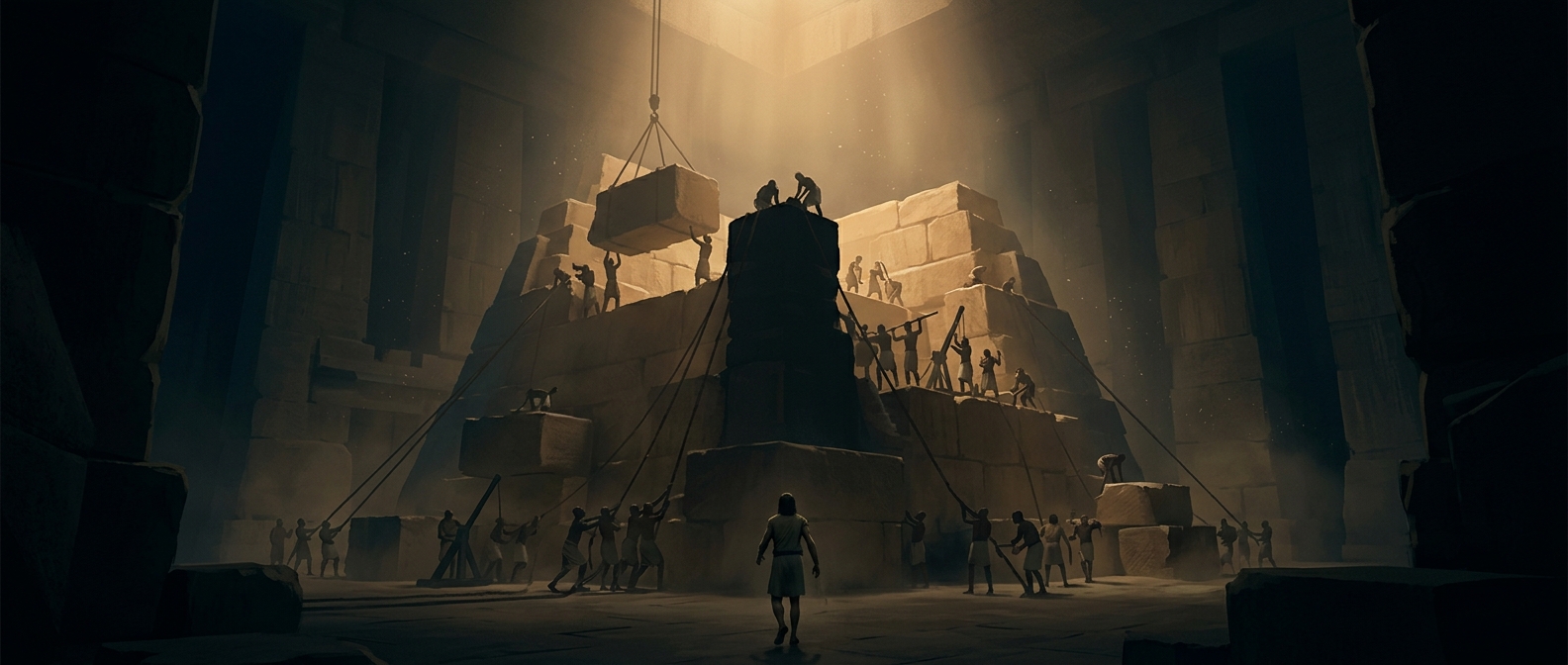
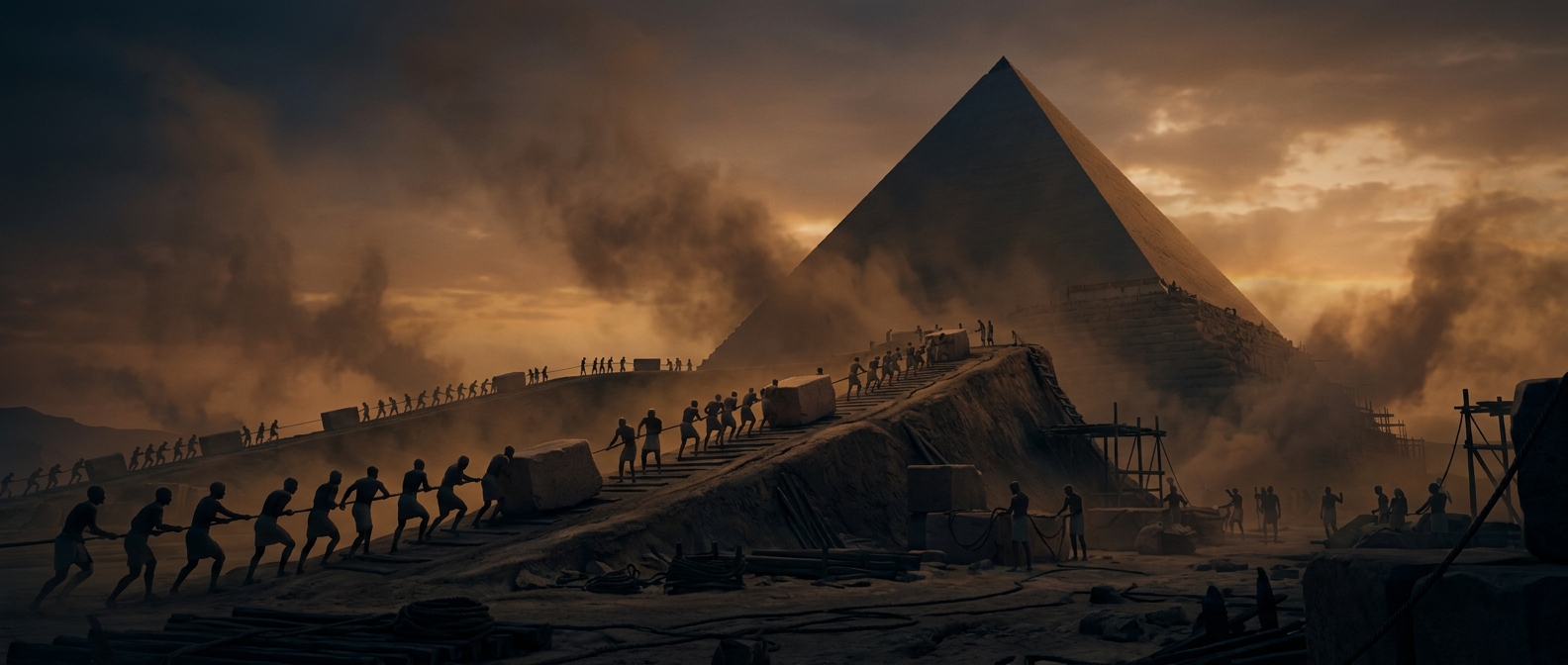
Workers could not simply lift massive blocks into position. Depending on the site and period, builders used combinations of hauling, prepared paths, sledges, ramps, and careful positioning. A ramp—a sloped surface leading upward—could help raise a block, while ropes and coordinated teams controlled its movement. The particular methods varied, and the evidence does not always reveal every step.
The most striking achievement was therefore not just the weight of any one stone. It was the repeated sequence: extract a block, move it across difficult ground, deliver it when needed, and fit it into a structure that had to remain stable as it grew. The tomb’s monumentality was produced by organization repeated at enormous scale. Each finished course of stone recorded that coordination, turning the ruler’s burial place into a visible trace of the work that built it.