How Muons Turned a Pyramid into a Shadow
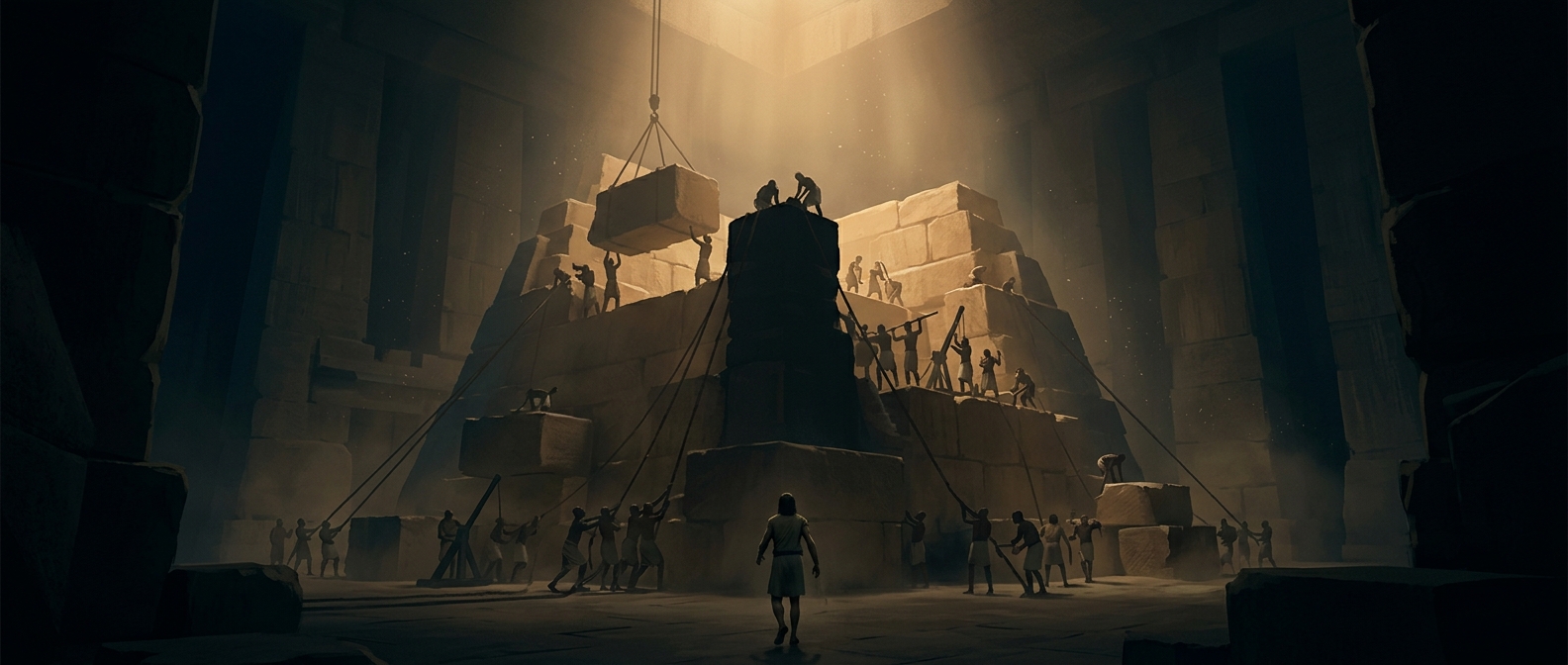
A pyramid’s stonework is not equally solid everywhere. When particles called muons cross it, they are more likely to reach a detector along a route with less stone in the way. By comparing how many muons arrive from different directions, researchers can spot places where the structure is unusually less dense.
Muons are produced when cosmic rays—energetic particles from space—strike Earth’s atmosphere. They rain down continuously, and some can pass through hundreds of meters of rock. A detector records their direction and arrival rate. The resulting pattern works somewhat like a shadow image: dense masonry blocks more muons, while an open space lets more through.
From a Signal to a Suspected Passage
The method is called muon imaging. Researchers place detectors where muons passing through the pyramid can be measured, then let them collect enough tracks to reveal a pattern. The process takes time because the useful signal is a small difference in the flow of particles, not a photograph captured all at once.
A detector does not produce a labeled map of rooms. It identifies an area that appears less dense than the surrounding stone; readings from different positions can help locate and estimate the extent of that anomaly. Archaeologists must then interpret what it might be. A signal consistent with a passage or chamber does not, by itself, establish its shape, purpose, or age.
Why the Method Matters
Finding an internal feature traditionally could require probing or opening the masonry, risking damage to an ancient structure. Muon imaging offers a way to investigate first, without moving a block. Its value is both discovery and restraint: it can point archaeologists toward a place worth studying while leaving the pyramid intact as they decide what, if anything, to do next.