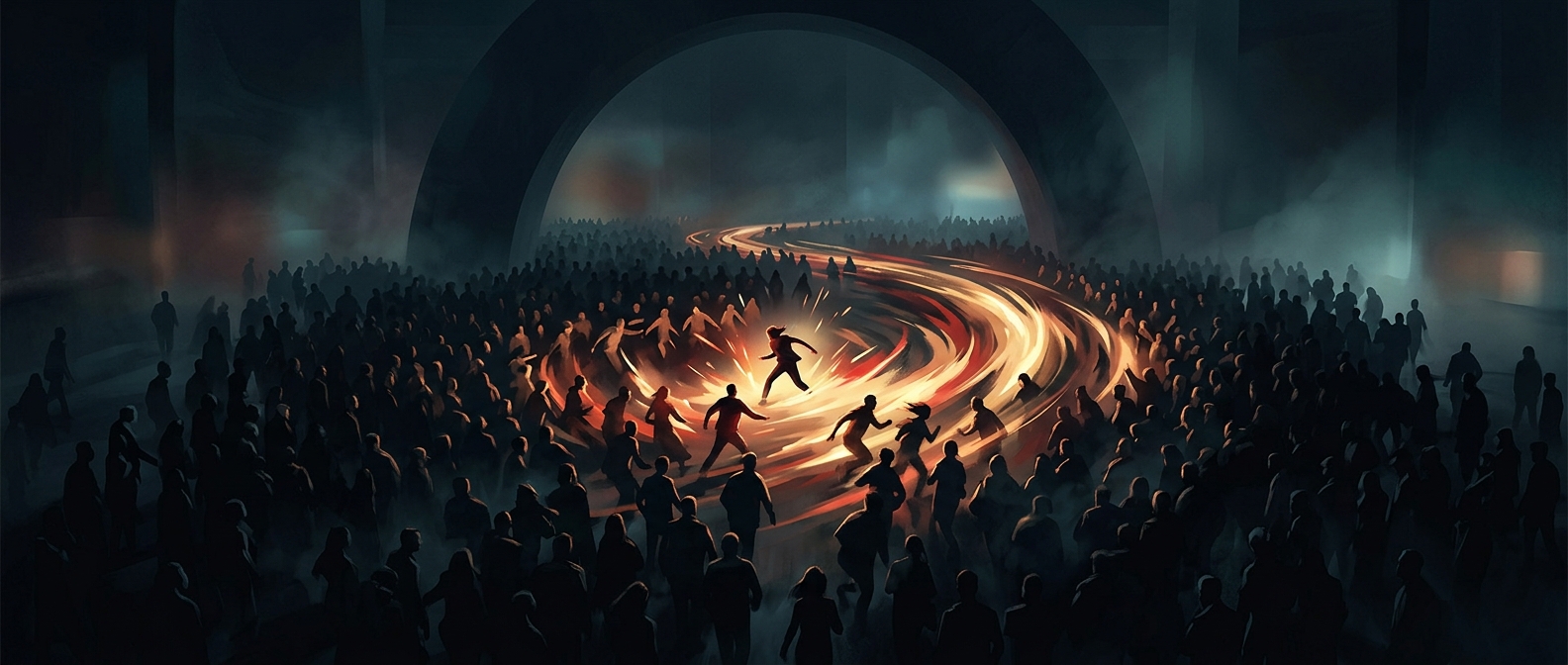
How panic can feed on itself
A panic response can become a loop: a racing heart, tight chest, or sense of breathlessness feels alarming, and the fear of those sensations can make the body feel still more on edge. Attention narrows toward signs of danger, so every new bodily sensation may seem like evidence that something is wrong.
Why singing can interrupt the loop
Singing gives attention a sequence to manage: hear or recall a tune, shape words, match pitches, and carry a phrase to its end. These concrete demands can compete with the stream of frightening thoughts—not by proving them false, but by making them less dominant for a moment.
It also changes the pattern of breathing. A sung phrase is usually produced on an outgoing breath, which can encourage a slower, more deliberate rhythm than quick, shallow breathing. The voice provides immediate feedback: a person can hear the phrase continue and feel the breath supporting it. The combination of focused attention and paced exhalation may help loosen the panic loop.
A tool, not a guaranteed cure
The effect is not identical for everyone. Singing may feel grounding to one person and uncomfortable or impractical to another, especially when breathing feels difficult. It is best understood as a simple way to redirect attention and regulate breathing in the moment, not as a test of willpower or a substitute for care when panic is frequent or overwhelming.
The useful detail is that the tune need not be performed well: following a familiar melody can give both attention and breath a steady next step.