How pressure travels through a crowd
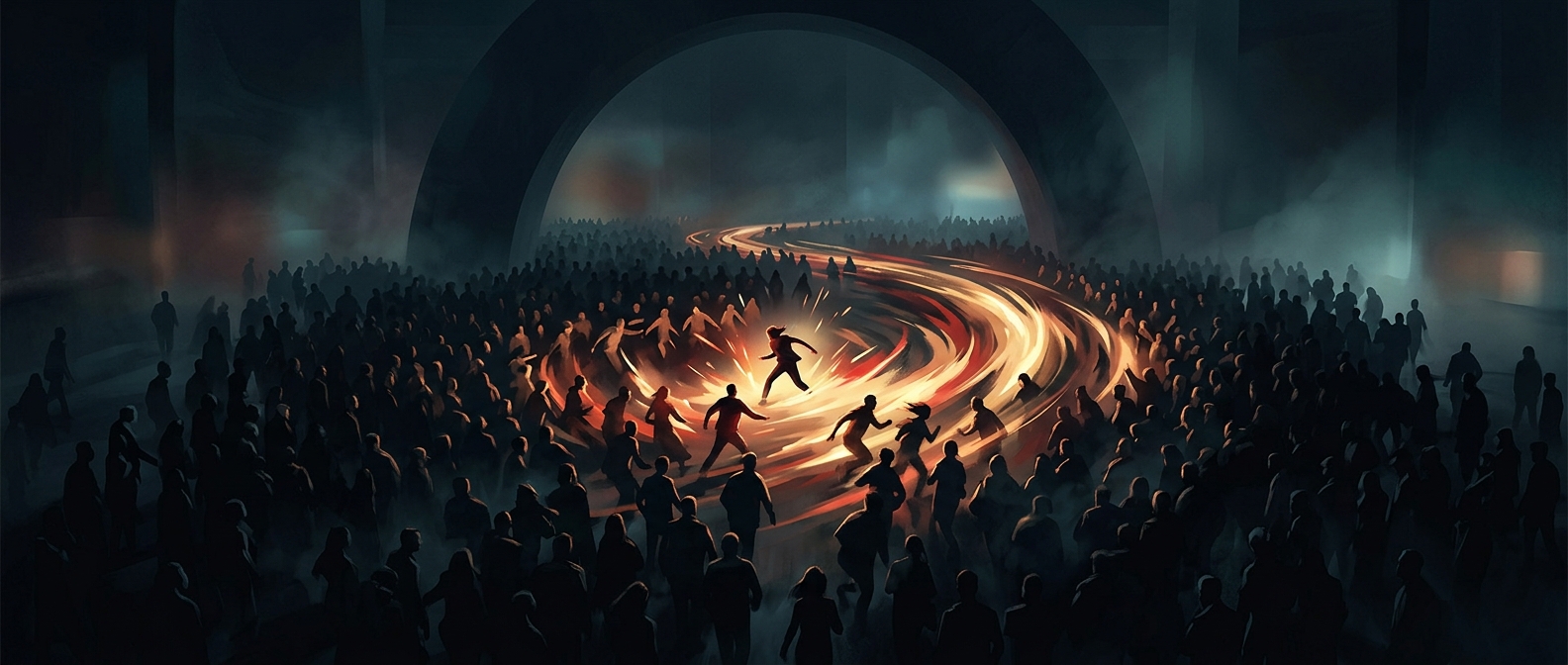
When people are packed tightly together, there is little room to take an independent step. A person pushed from behind may stumble into someone ahead; that person, in turn, presses on the next. The result is a chain of physical contact that can carry motion across a crowd, even to people far from where the push began.
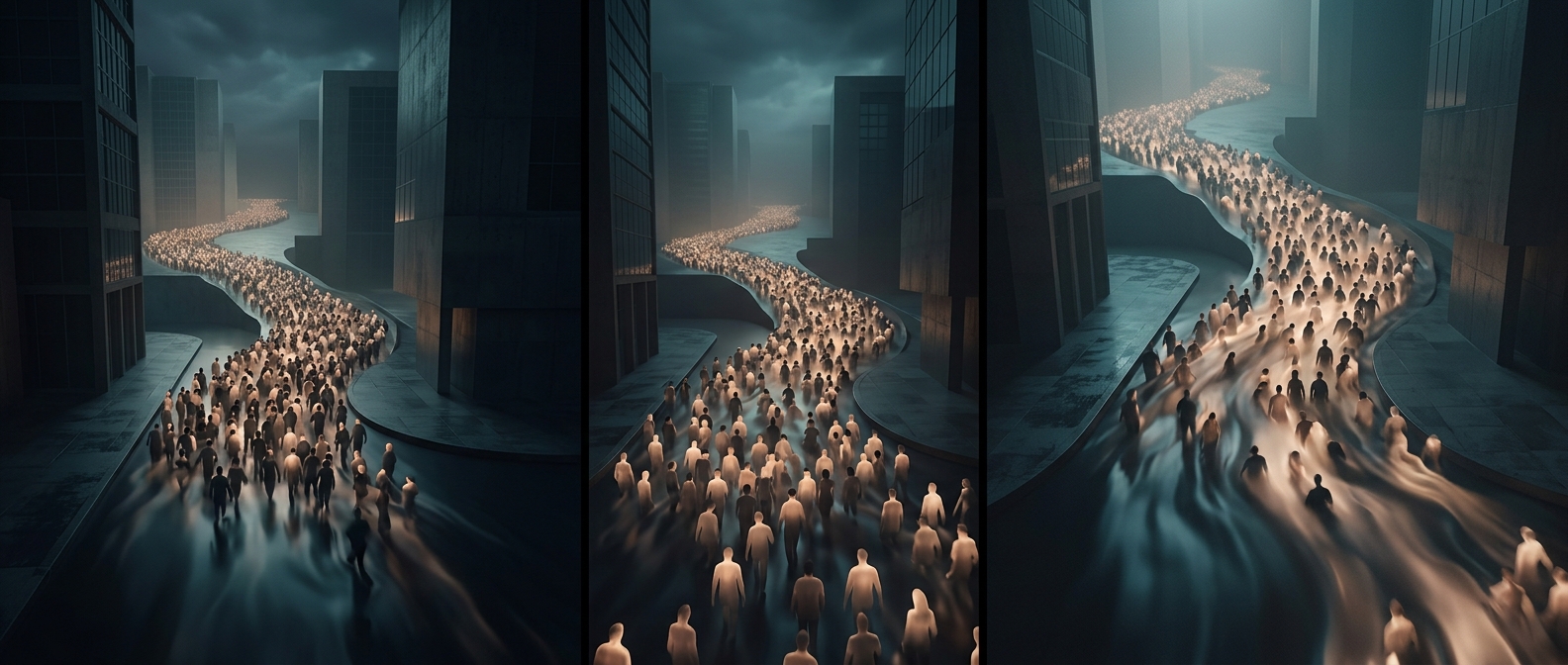
This is why dense-crowd movement can resemble a wave in water. The comparison is about how motion spreads, not about people literally flowing. Individuals still have bodies and react to what is happening, but under strong pressure they may be unable to choose where to move—or to stop moving.
Why a small surge can become dangerous
In an open space, someone who loses balance can usually step aside or recover. In a tightly packed crowd, there may be no free space to move into. A body that tips can be pushed along by surrounding people, while the same pressure makes it harder for others to help or create room. A surge can therefore pass through the group without each person deciding to advance.
The crucial factor is the loss of room to respond. Fear may make a crowd feel panicked, but the immediate danger in a crush is mechanical: bodies are pressed together, and forces travel through that contact. Someone can be carried off balance or pinned even while trying to stand still.
Why the motion is hard to control
A person can control their own steps only when there is enough space to place them. Once the crowd is compressed, movement at one point can shift the people around it, who then affect those beside them. The consequence is unsettlingly simple: in a dense crush, an individual may be moved by the crowd before they can decide how to move themselves.