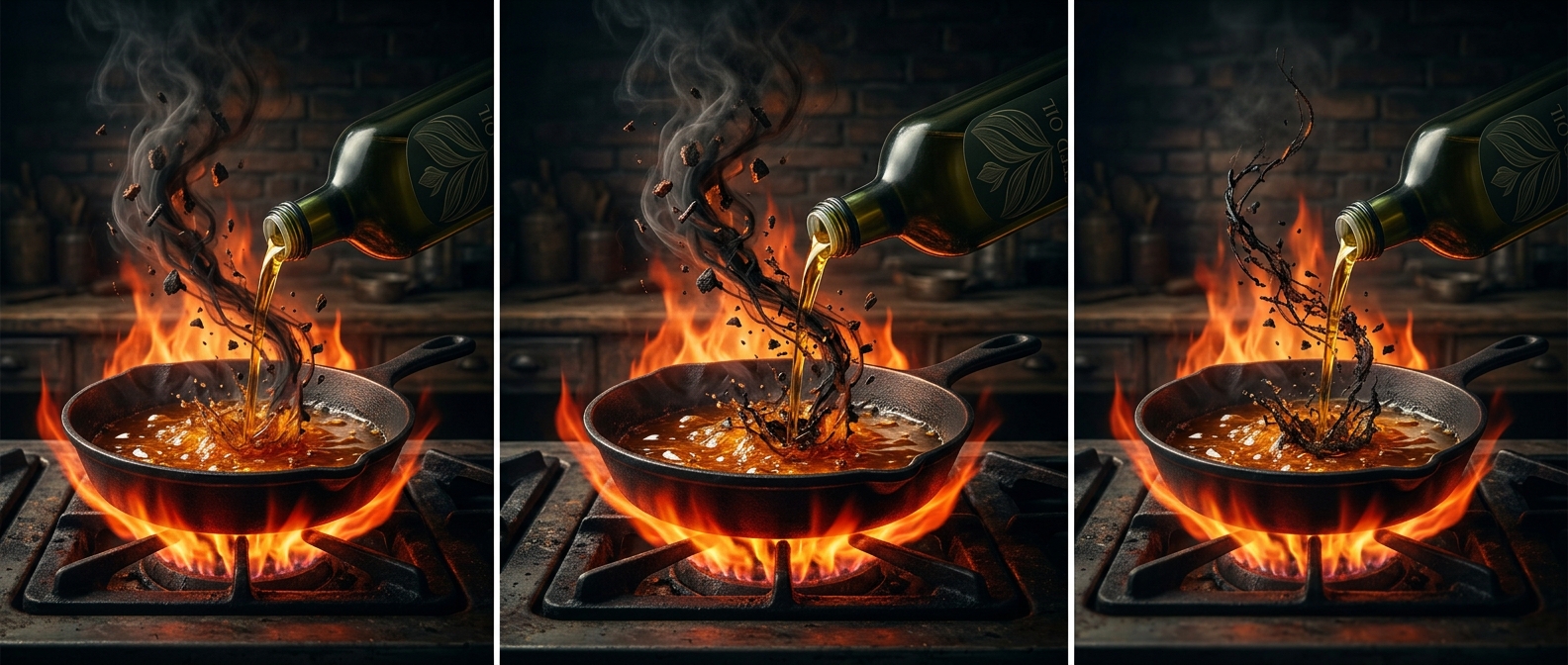
What Happens When Oil Reaches Its Smoke Point
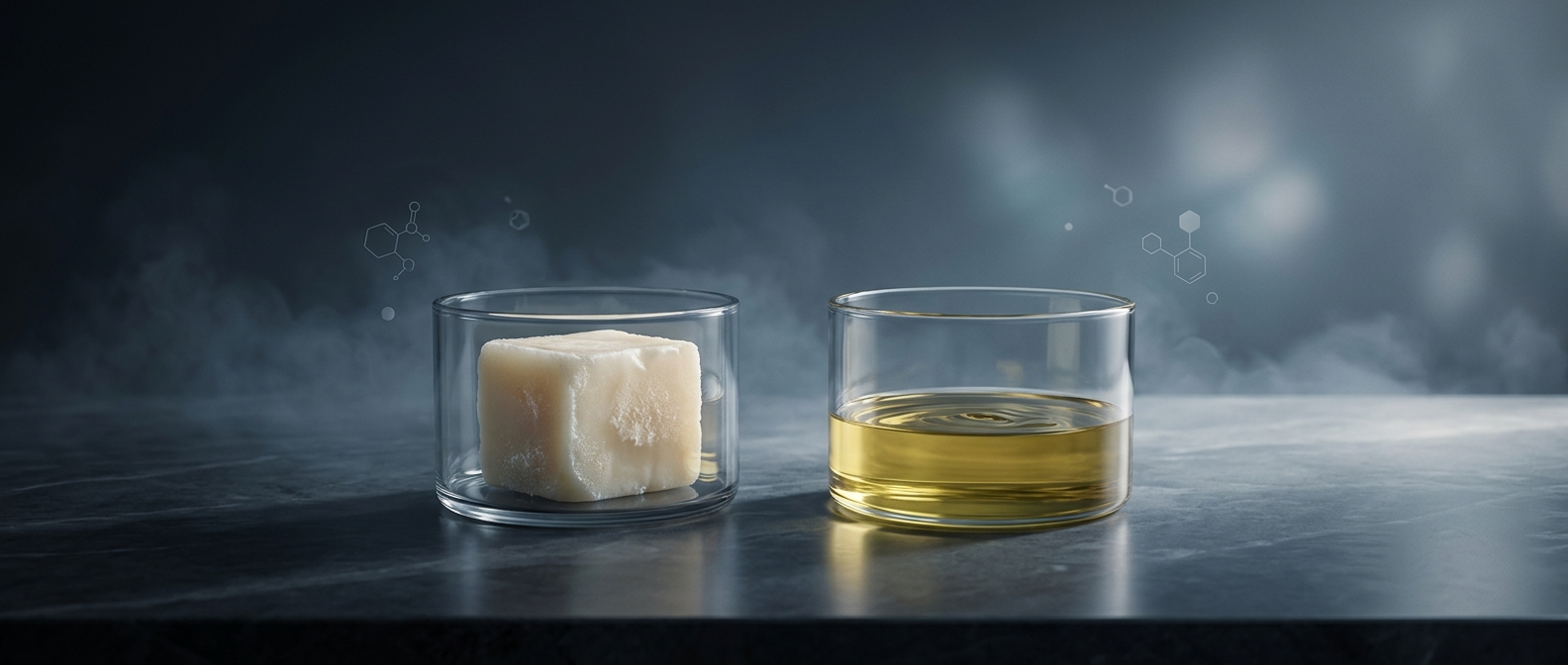
An oil’s smoke point is the temperature at which it starts producing visible smoke. It is not a precise boundary between harmless and harmful cooking. Rather, smoke signals that heat is driving chemical changes in the oil quickly enough to release substances into the air and leave the oil itself more degraded.
Heat Changes the Oil’s Molecules
Cooking oils are made mostly of fats, and their molecules respond differently to heat depending on the oil’s composition and condition. As heating continues, fat molecules can break apart or react with oxygen. These reactions form a changing mix of smaller compounds; some are volatile, meaning they readily enter the air, while others remain in the oil. The visible plume is only part of the process, not a complete measure of everything happening in the pan.
The longer oil is heated—especially if it is repeatedly used—the more opportunity there is for these breakdown reactions to accumulate. High heat can therefore affect both the smell and flavor of food and the quality of the oil. Smoke is a practical cue that the pan is too hot for that oil or that it has been heated too long.
A Warning, Not an Instant Switch
A brief wisp of smoke does not mean the food suddenly becomes poisonous. The smoke point is useful in the kitchen because it marks a point of noticeable breakdown, not a magical threshold at which oil changes from safe to toxic. If oil begins smoking, lower the heat or take the pan off the burner; if it smells acrid or looks badly degraded, replacing it is sensible.
The key distinction is between a momentary temperature and the overall history of the oil: how hot it gets, how long it stays hot, and whether it has been used before. A smoking pan is a signal to adjust, not a reason to panic.