How an unfertilized egg can begin developing
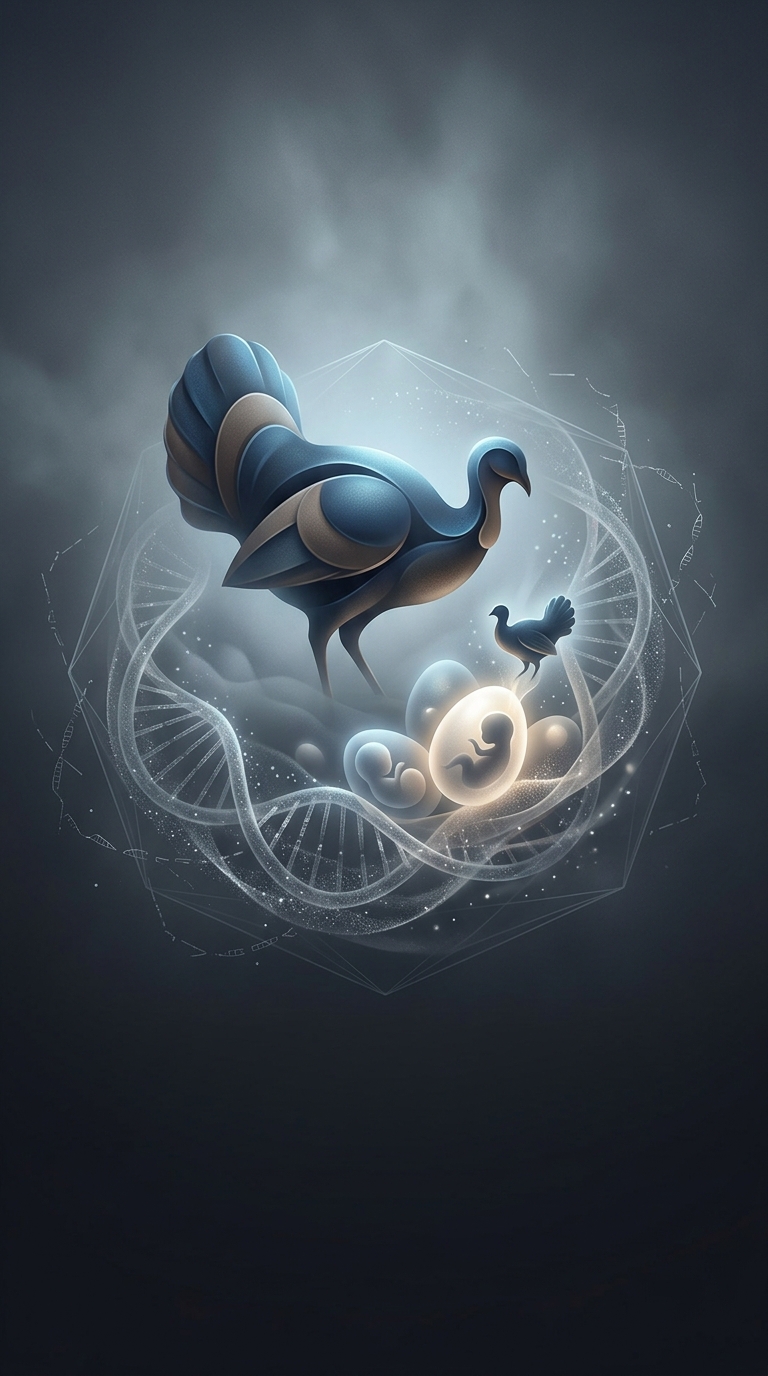
A turkey egg normally starts with one set of chromosomes from the hen and a second set from a sperm cell. In parthenogenesis, development begins without that paternal contribution. The egg’s maternal chromosomes somehow end up in a configuration that allows the embryo to develop with two sets of chromosomes—a condition called diploidy, which most body cells need.
This is not self-fertilization: the hen does not provide sperm, and no second egg joins the first. The precise chromosome-restoring route can vary across forms of parthenogenesis, but the result is an embryo whose genetic material comes entirely from its mother.
Why the poults are not simple copies
A parthenogenetic poult inherits no genes from a father, but that does not make it a straightforward clone. As eggs form, the hen’s chromosomes are shuffled through a process called recombination, in which matching chromosomes exchange segments. The egg also receives only a particular combination of the hen’s genetic material. Restoring a second chromosome set changes that combination further, so the offspring can differ genetically from the mother and from one another.
That process can also leave embryos with genetic problems. With no paternal set to balance the maternal one, harmful versions of genes may be present in duplicate. Many embryos therefore fail to develop; successful development is unusual.
Why viable turkey offspring are male
In birds, sex is determined by sex chromosomes: males usually have two Z chromosomes, while females have a Z and a W. A parthenogenetic turkey embryo that develops successfully is male, consistent with receiving two Z chromosomes from the hen’s egg-forming cells. A ZW combination is not produced in the same way by this process.
The result is a striking biological limit: an unfertilized egg can sometimes launch development, but it does not give the hen a viable daughter. The rare poult is a son carrying only maternal genetic material.