A chair built around a specific problem
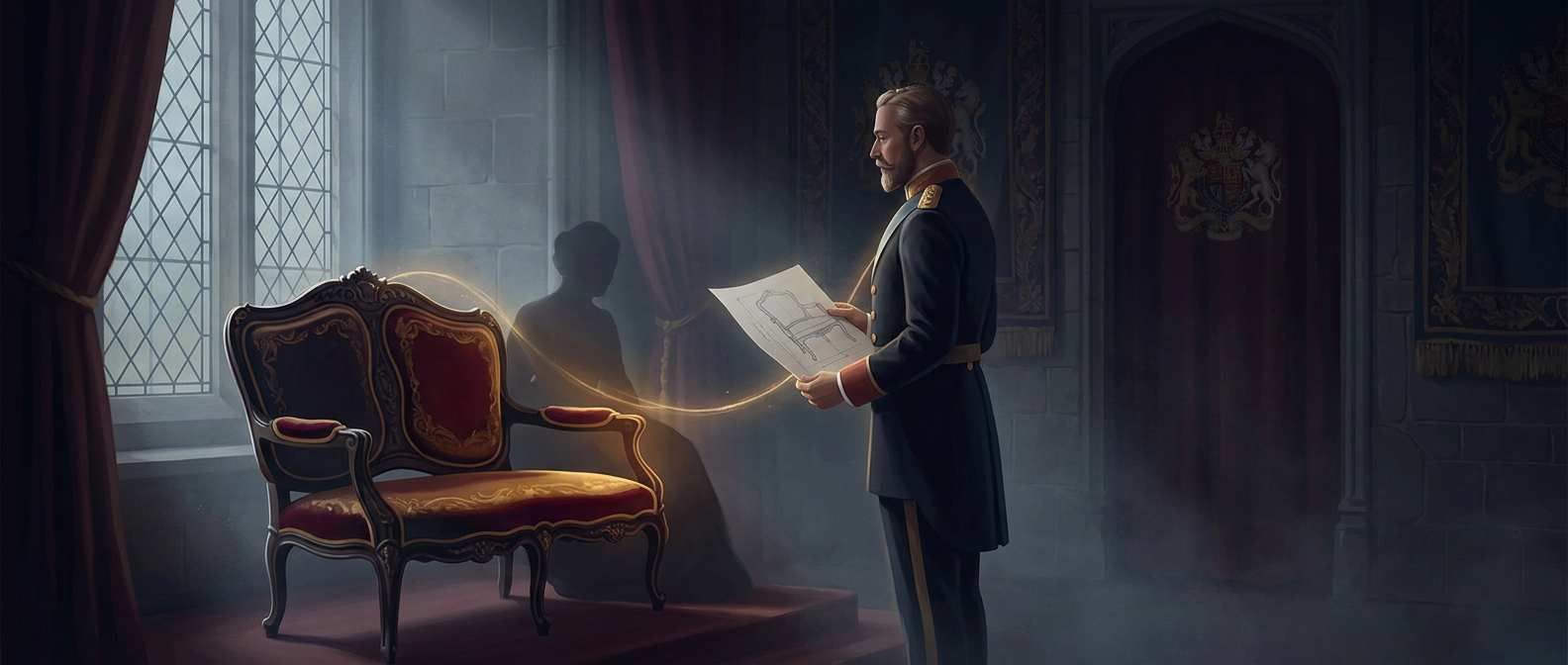
Edward VII’s “love chair” was bespoke furniture: instead of asking its users to adapt to an ordinary seat, it was designed to accommodate a particular physical constraint. The reported aim was to support the future king’s weight without placing it on his partners.
That changes the way to picture the chair. It was not simply a sturdy armchair with an extravagant reputation. Its shape and reinforcement were meant to let bodies rest in different positions while the furniture carried the load. In practical terms, the design treated weight-bearing as an engineering problem—one with unusual requirements and a private setting.
From royal patronage to Parisian spectacle
The commission is associated with a Paris brothel, where specialized furnishings could serve both function and display. A custom chair there was not public infrastructure or a model intended for ordinary homes; it was an object made for one well-connected client and a particular use. Its novelty helped turn a private request into a story that could circulate well beyond the room it was built for.
Edward was Prince of Wales when the chair was commissioned; he became king in 1901. The contrast between royal status and the chair’s intimate purpose is part of its enduring appeal. But the object also illustrates a less sensational point about design: furniture can encode the needs of the people who commission it, even when those needs are far outside the assumptions of everyday manufacture. In this case, the memorable feature was not simply its setting, but the fact that a royal client could have a piece of furniture engineered around a problem most makers would never encounter.