Why a navel heals into its own shape
Before birth, the umbilical cord carries blood between a fetus and the placenta. After delivery, the cord is clamped and cut, leaving a short stump that dries and falls away. The remaining spot does not grow back as ordinary, unmarked skin: it heals as a small scar, with connective tissue beneath the skin anchoring the area to the abdominal wall.
Small differences leave visible marks
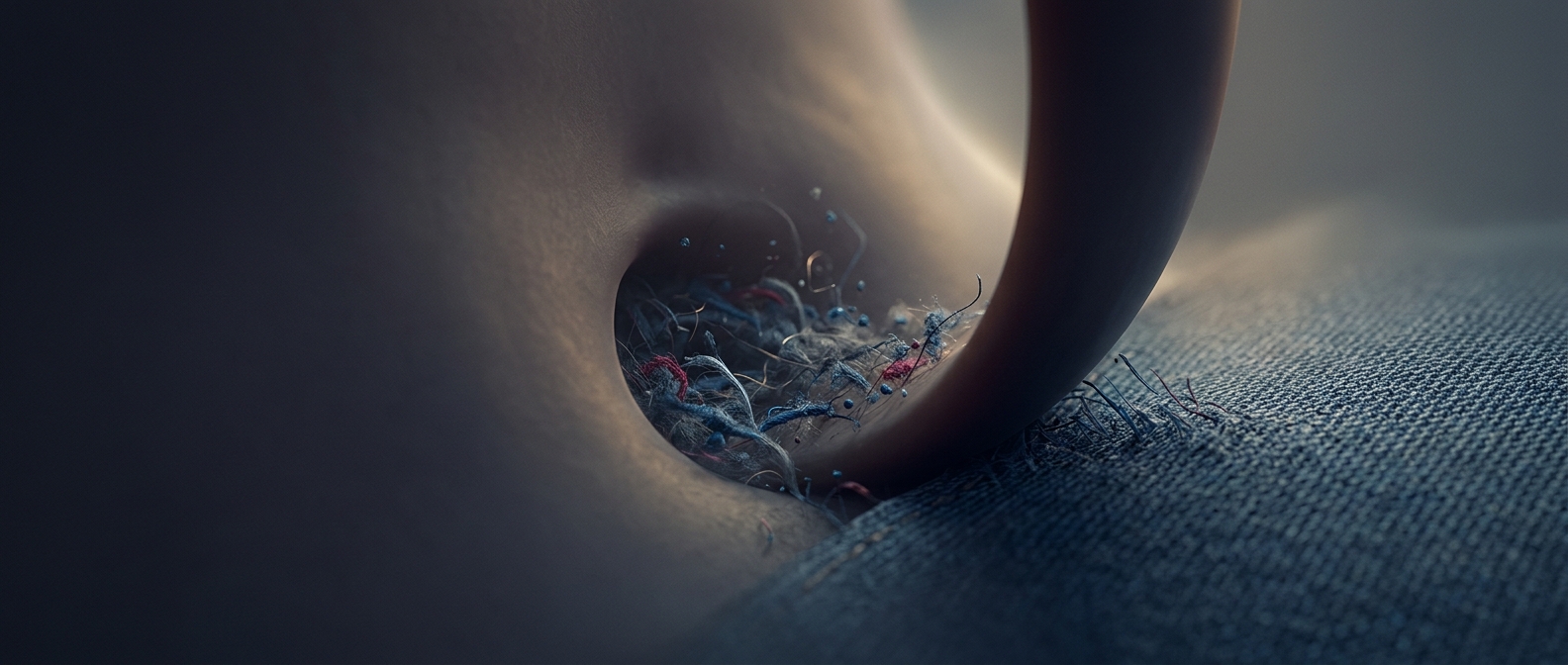
Healing is not a perfectly uniform process. The amount and arrangement of scar tissue, the way the surrounding skin folds, and the shape of the underlying tissue all affect the final contour. Those subtle differences can produce a shallow hollow, a deeper indentation, or a navel that projects outward. An outward navel can also occur when tissue near the opening pushes forward, as with an umbilical hernia; it is not simply a different kind of cord scar.
Because the navel forms through this individual healing process, its folds and contours can be distinctive—more like a personal scar than a feature stamped from a standard mold. The familiar “innie” and “outie” labels capture only the broad outline; the smaller creases and slopes are what give each belly button its particular appearance.