How the Stomach Keeps Its Acid on the Right Side of the Lining
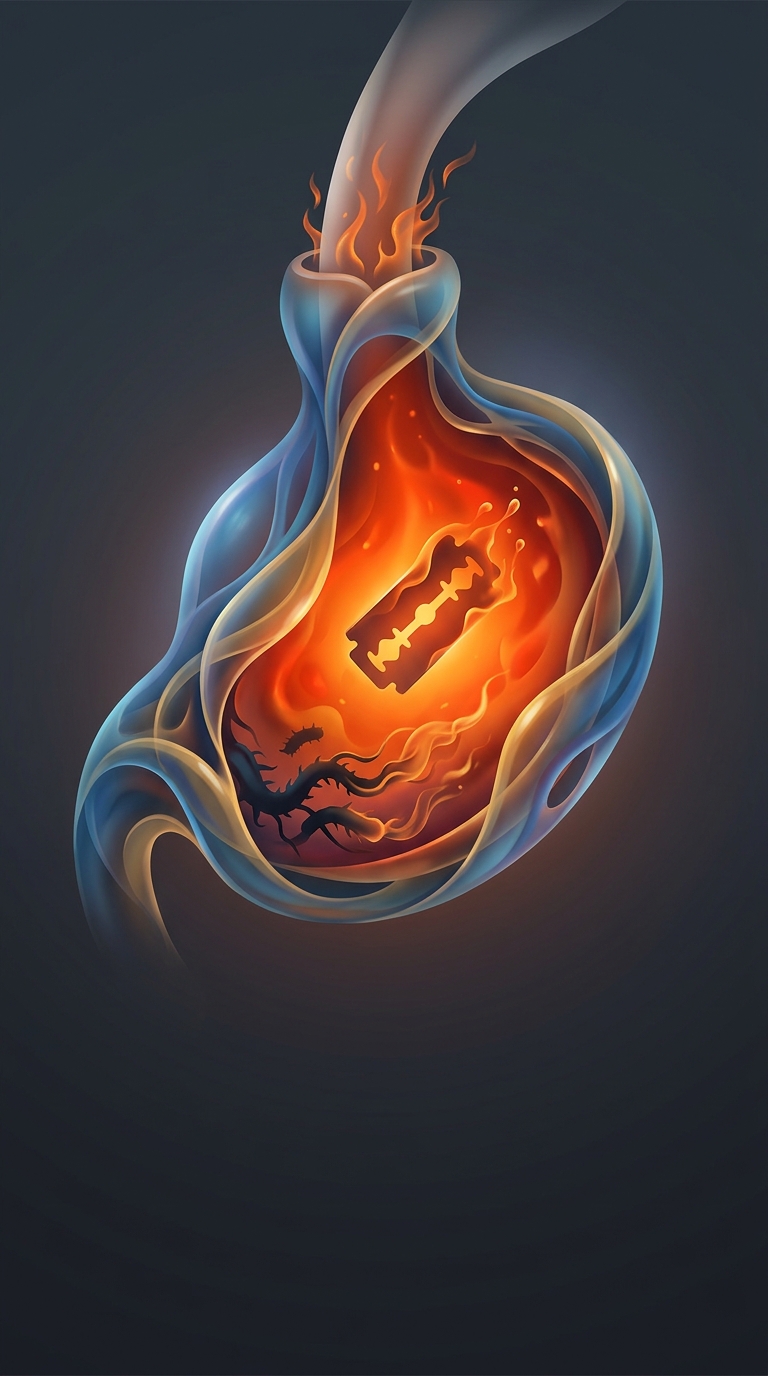
Stomach acid helps unfold proteins so digestive enzymes can cut them into smaller pieces. But the stomach’s protection is not simply a coating of mucus between acid and flesh. Its surface cells release mucus that traps bicarbonate, a mild base. Together, they create a thin zone at the lining where acidity is much lower than in the stomach’s contents.
The cells themselves also fit tightly together, limiting the paths acid can take into deeper tissue. They are replaced rapidly, helping the surface recover from routine wear. This is a coordinated barrier, not a single layer that can safely be scraped away.
Why Reflux Burns
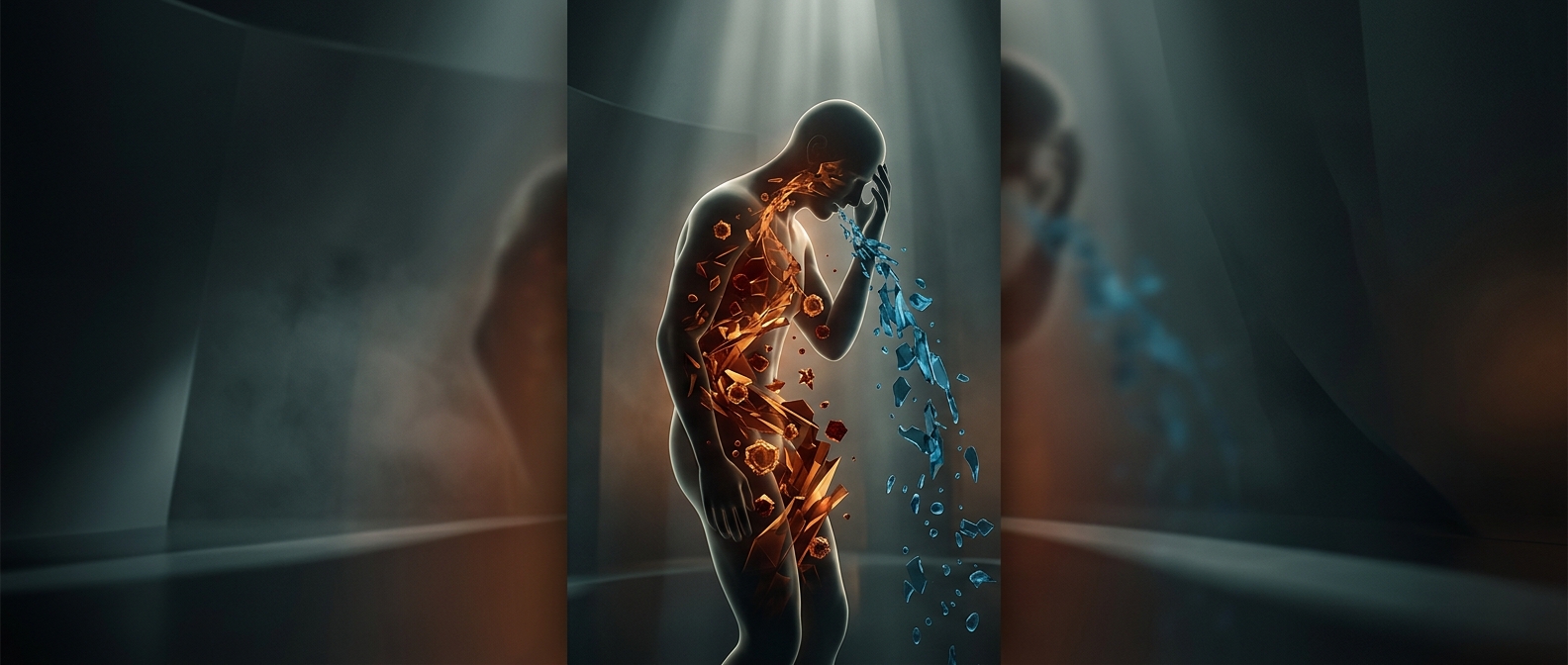
The esophagus—the tube carrying food to the stomach—does not have the same protective arrangement. A ring of muscle at its lower end usually helps keep stomach contents from flowing backward. If acid and digestive juices do rise, they can irritate the esophageal lining, producing the burning sensation called heartburn.
That sensation is not evidence that the esophagus is being melted like metal in a chemical demonstration. It is a pain signal from irritated tissue. Even so, repeated exposure can inflame the lining: the stomach’s defenses are designed for its own environment, not for acid washing up the esophagus.
The practical distinction is simple: acid is useful where the stomach can contain it, but uncomfortable and potentially damaging where it does not belong.