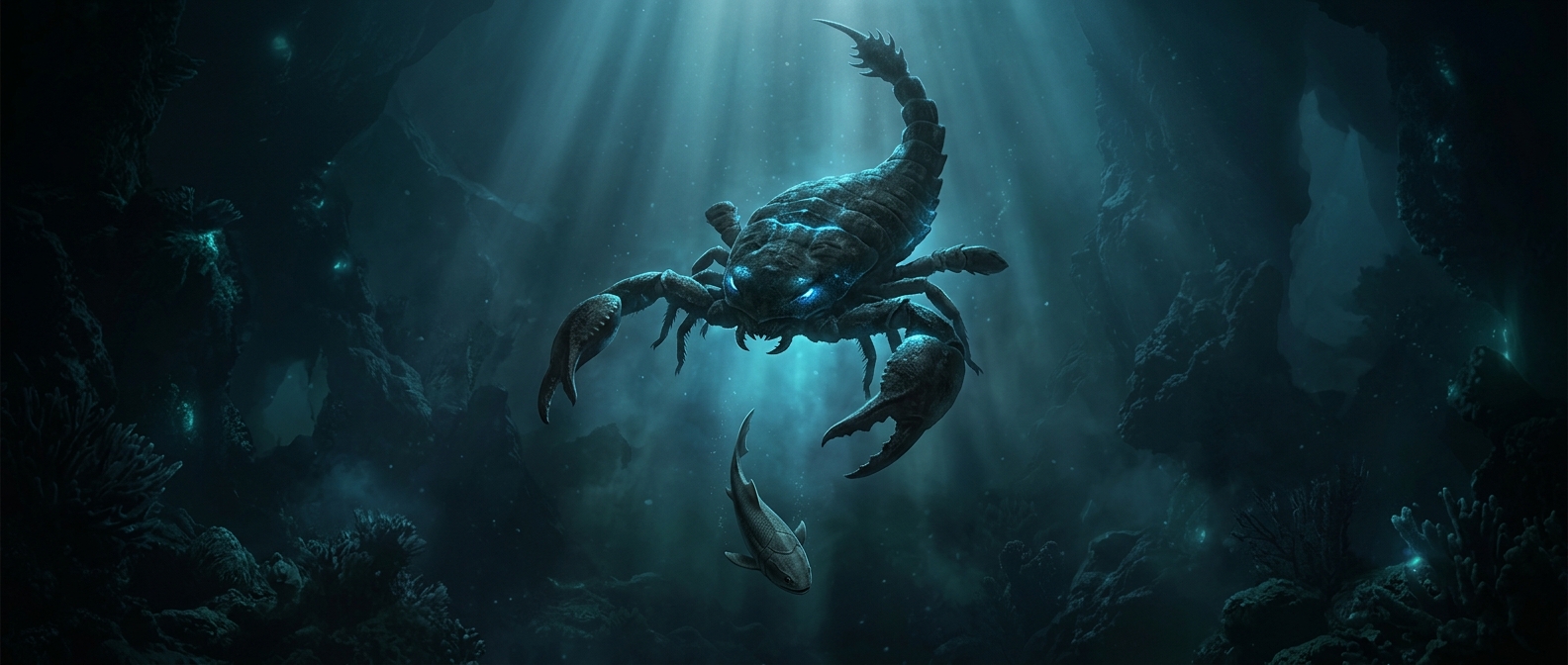
How Sea Scorpions Reached Such Impressive Sizes
Sea scorpions, or eurypterids, were aquatic relatives of modern spiders and horseshoe crabs—not true scorpions. They lived hundreds of millions of years ago, and the group included animals ranging from small crawlers to giants. The largest known forms are estimated to have approached 2.5 meters (about 8 feet) long, though those estimates rely on incomplete fossils, including oversized grasping limbs.
Their bodies were built for life in water. A hard outer covering protected them, while jointed legs helped them move along the bottom. In some species, the rear legs were broad and paddle-shaped, providing thrust for swimming. Large pincers could seize prey; in other forms, the front appendages were more like hooked arms than crushing claws.
Giants in Changing Waters
Eurypterids thrived in Paleozoic waterways, including coastal seas, estuaries, and—in some cases—freshwater habitats. That range matters: “sea scorpion” is a familiar name, but it can give the misleading impression that every species hunted in open ocean. Many lived in environments where water depth, salinity, and available prey changed over time.
Their size and predatory equipment suggest that the biggest species could take substantial prey, but a fossil rarely preserves a full meal or a complete view of an ecosystem. Their story is clearer at the group level: eurypterids diversified for millions of years, then disappeared by the end of the Permian Period, around 252 million years ago. The largest ones were not just oversized oddities; they were part of a once-thriving branch of aquatic life that ultimately vanished.