The level becomes the steering wheel
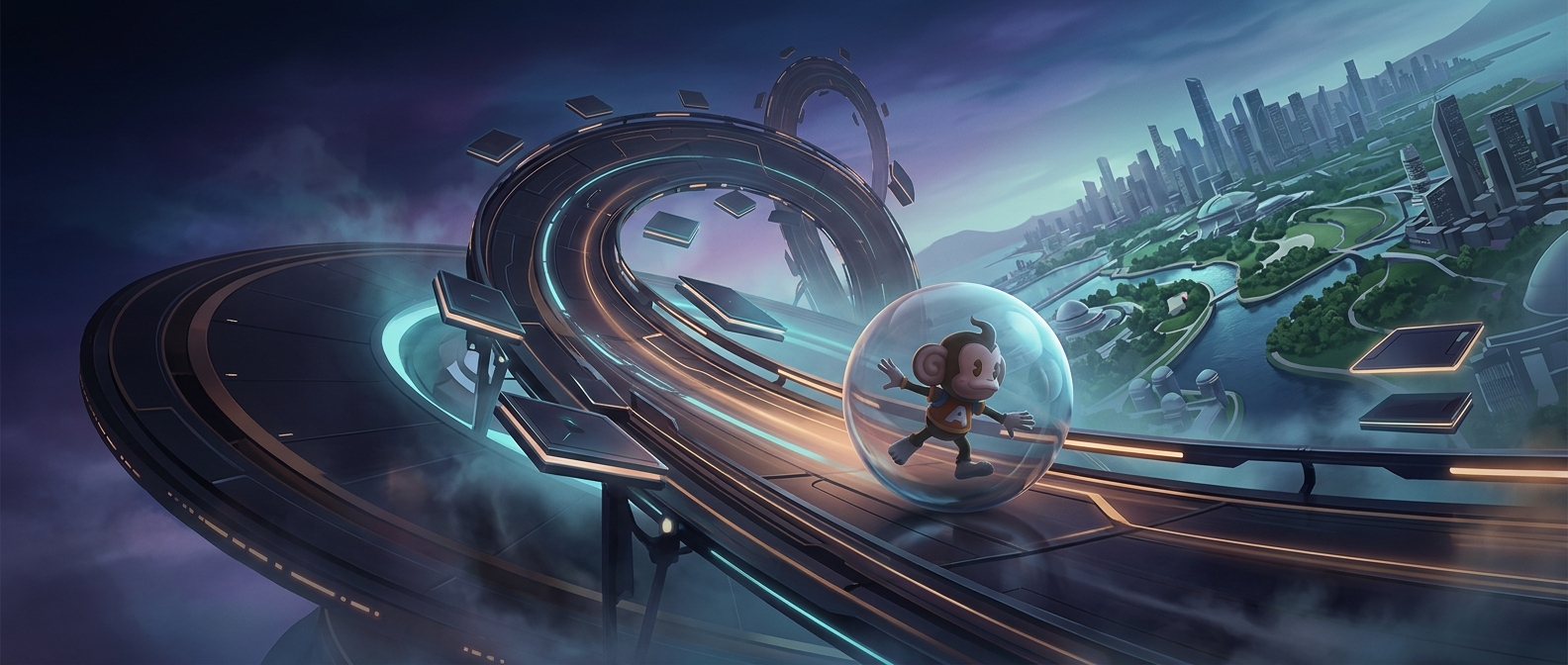
In Super Monkey Ball, the player does not turn the monkey toward a direction. Instead, each input changes the platform’s angle. That angle changes which way gravity pulls the sphere, and the sphere rolls in response. The control is indirect: you steer by reshaping the slope beneath him.
That small reversal changes how movement feels. With direct character controls, a button can make a character move at a chosen speed. Here, tilting creates acceleration. The sphere can keep rolling after the platform is leveled, so stopping or changing course takes anticipation rather than a last-second turn. The player is managing momentum as much as direction.
Every correction has a cost
The platform is both path and control surface. A shallow tilt may build speed gradually; a sharp one can send the sphere racing toward an edge. On narrow routes, the challenge is to make corrections early and precisely, without oversteering. The player must read the track as a physical surface, judging how its slopes will carry the ball.
This design makes the monkey feel less like a vehicle with a steering wheel and more like a marble on a tray. The crucial skill is not aiming the character, but controlling the forces that move him—a distinction that turns even a simple straightaway into a test of timing and restraint.