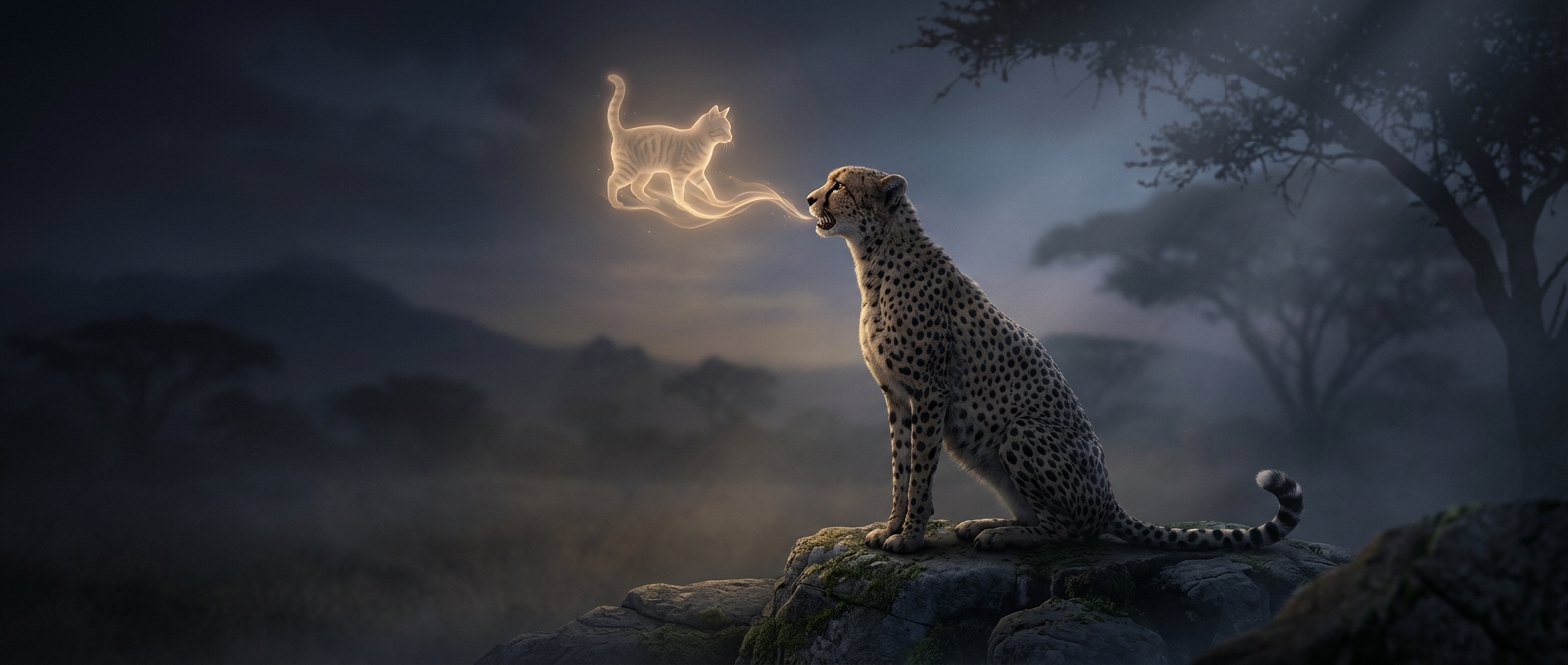
The chase leaves a vulnerable pause
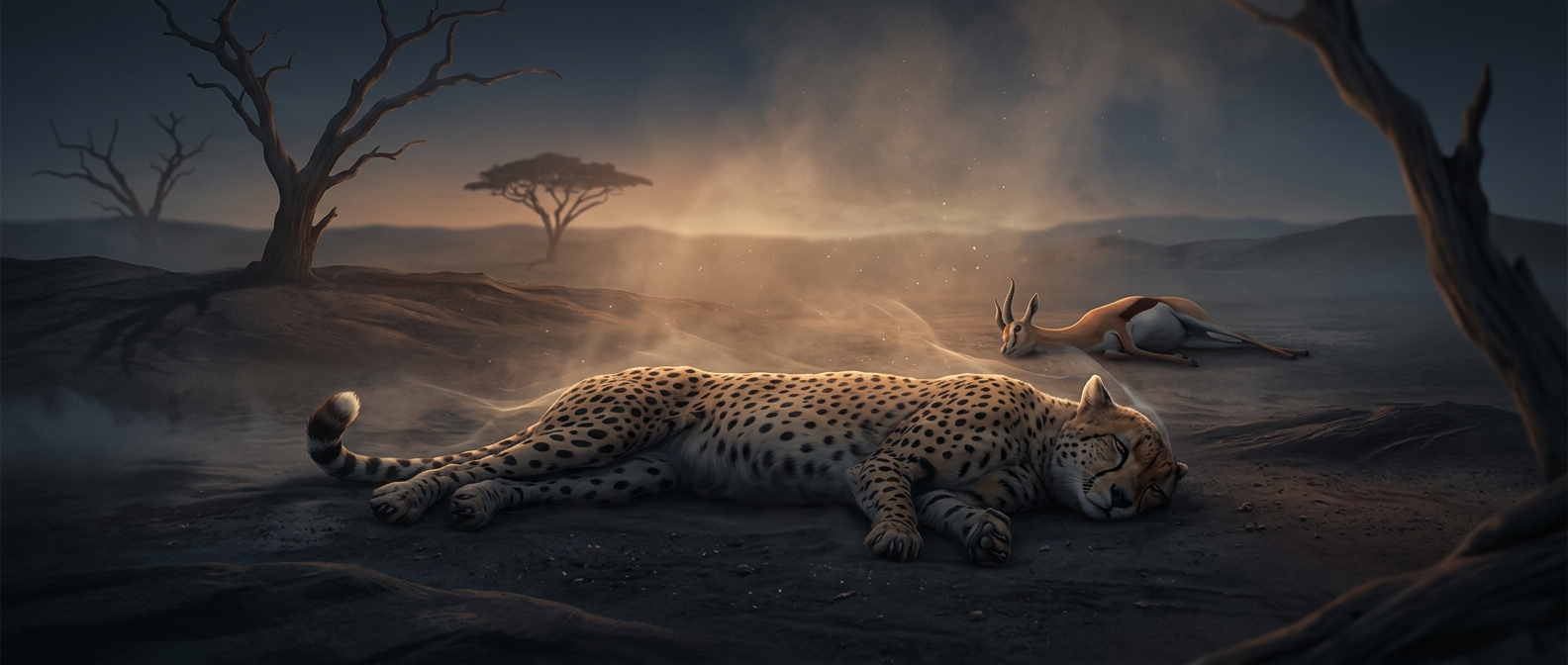
A cheetah’s sprint is a burst of extreme exertion, not a pace it can sustain. After bringing down prey, it needs time to recover from the chase—panting as its breathing and body settle before it can feed. The kill may be right in front of it, but eating cannot erase the physical cost of catching it.
A meal is also a signal
That pause gives other scavengers an opening. Hyenas can overpower a cheetah at a carcass, while vultures circling overhead can draw attention to the kill. The cheetah may try to move its prey toward cover, but doing so takes effort and cannot always keep competitors away.
Cheetahs are built for acceleration and speed, not for prolonged fights over food. A larger rival can make defending a fresh kill too risky, even after the cheetah has done the hardest part of the hunt.
Winning the chase is only half the hunt
The outcome depends on more than whether the cheetah catches its prey: it must also recover, feed, and avoid losing the carcass. That makes the pause after a successful sprint a crucial—and exposed—part of the hunt. A cheetah can finish the chase with dinner within reach and still have to leave it behind.