A message made one impression at a time
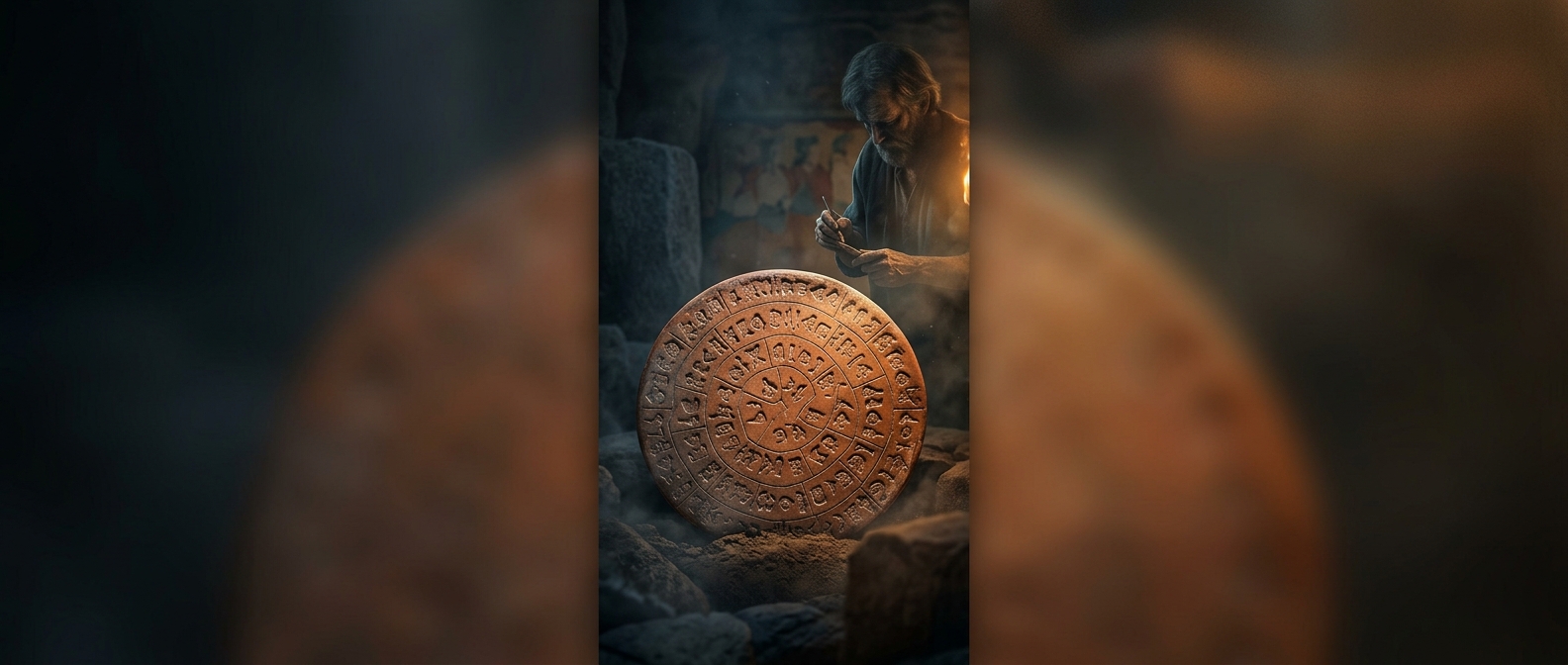
The disc’s symbols were not cut into the clay with a stylus. Each was pressed in using a separate seal, leaving a clean impression. That changes how the object was made: instead of drawing every sign by hand, its maker could reuse a prepared stamp and place signs one after another along the spiral.
This is why the disc is compared with movable type—the reusable pieces resemble individual printing characters. But the comparison has limits. The impressions are on a single clay object, not pages printed from a rearrangeable set of type, and the stamps’ use does not reveal what the text says.
Why the signs remain unread
To decipher a script, researchers need more than recognizable-looking symbols. They need clues about how signs function and what language they encode. A longer collection of texts, repeated phrases, or a bilingual inscription can provide those clues. The disc offers no clear translation key, and its signs do not match a known writing system closely enough to supply one.
Even repetition can be ambiguous: a recurring mark might represent a sound, a whole word, or something else. Without enough related examples, proposed readings cannot be checked against a broader body of writing. The result is a rare combination: a carefully organized text whose production method is easier to discuss than its meaning.
A trace of a vanished process
The stamps preserve evidence of planning and reuse, but not the identities of their maker or intended readers. If more objects bearing the same signs were found, they could reveal whether the disc records a language, a ritual text, or something else. For now, its spiral carries a message whose physical construction is visible while its words remain beyond reach.