Why Islamic holidays travel across the seasons
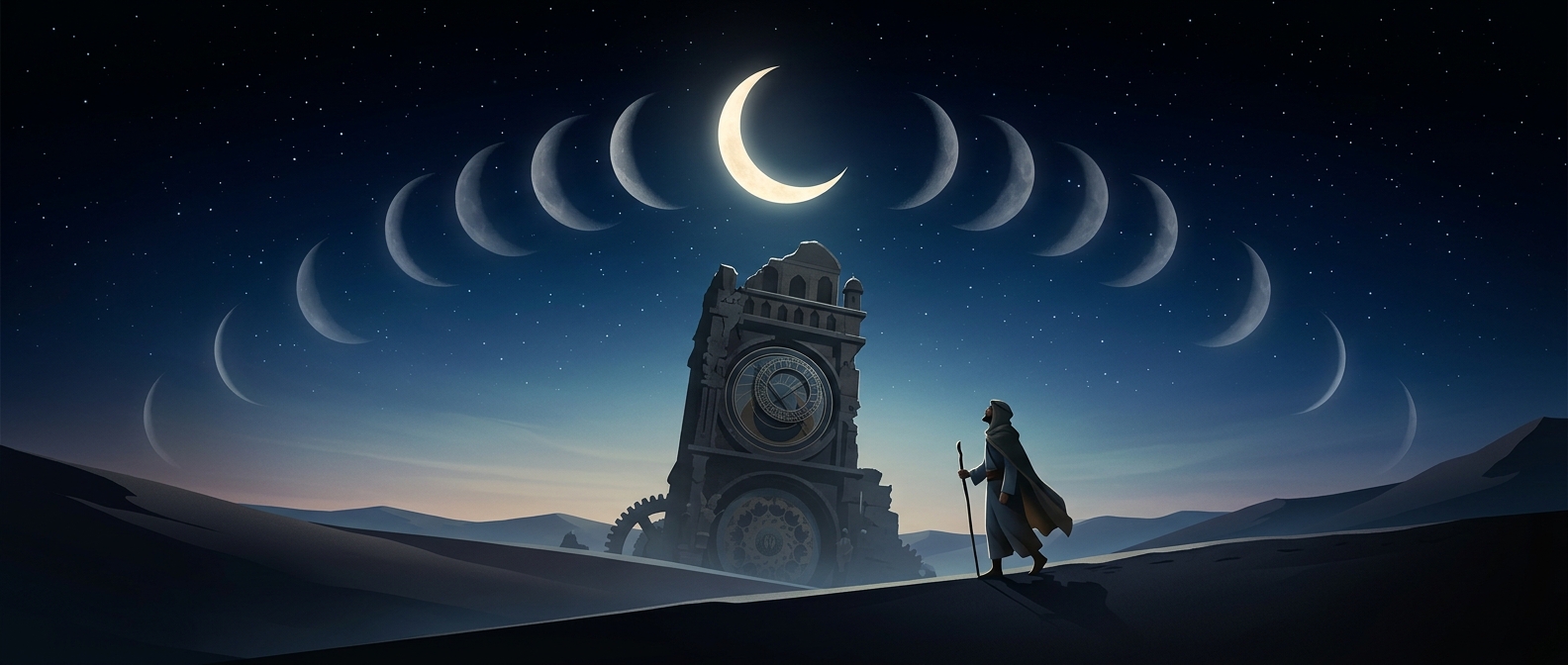
The Islamic religious calendar counts time by lunar months. Each month begins with the sighting of the new crescent moon, or, in some communities, by a calculated date. A lunar month averages about 29½ days, so twelve months make a year of roughly 354 days—about eleven days shorter than the solar year used by the Gregorian calendar.
Why the calendar does not catch up
A calendar tied to the seasons can add time to keep its months aligned with the sun. The Islamic calendar does not add a month for that purpose: its months follow the moon rather than the agricultural or seasonal year. As a result, a date on the Islamic calendar falls earlier against the Gregorian calendar each year. The exact Gregorian date can vary slightly among communities because month beginnings may be determined differently.
The shift accumulates. Over roughly 33 solar years, an Islamic calendar date passes through the full cycle of seasons. Ramadan, for example, can occur in long summer days in one period and short winter days in another. That changes the length of daylight during which Muslims who are fasting abstain from food and drink, making the calendar’s lunar structure visible in everyday religious practice.