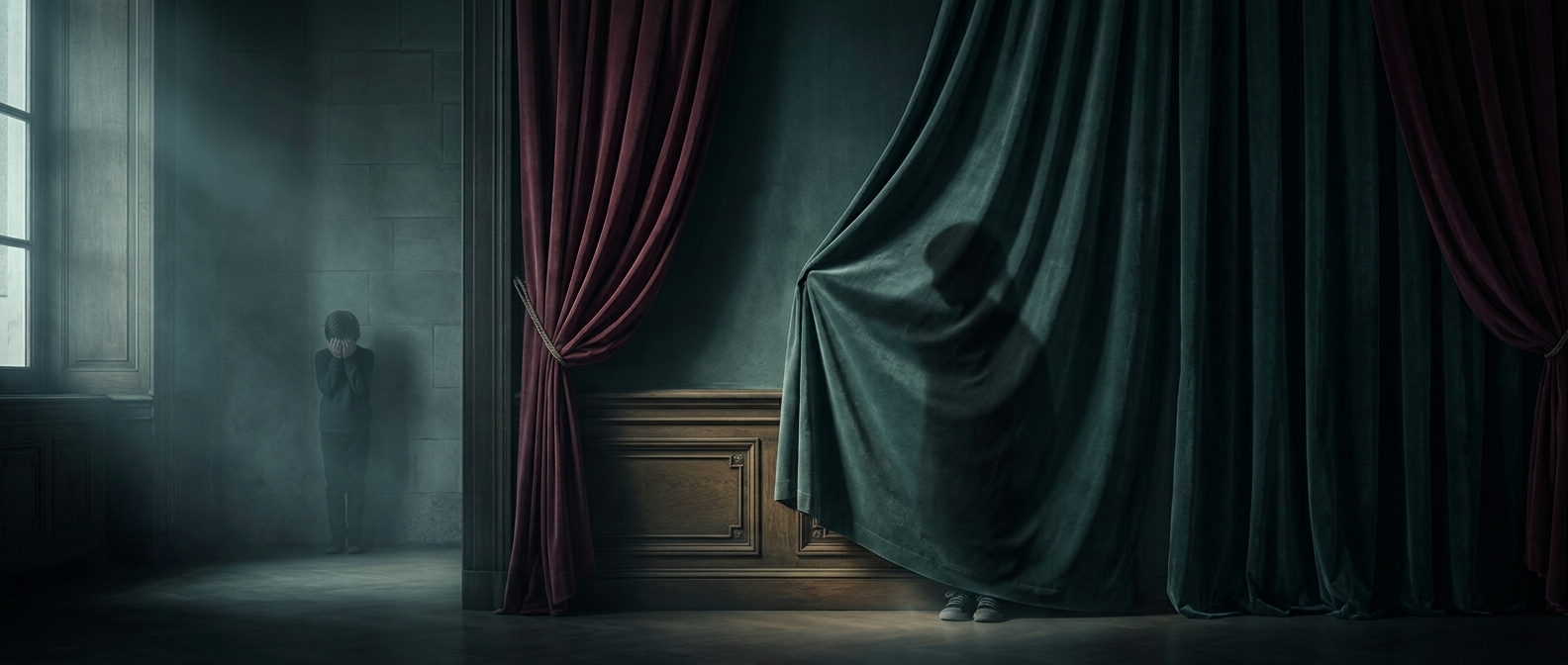
Why a Curtain Can Feel Like a Perfect Hiding Place
Hide-and-seek runs on a useful illusion: if the seeker cannot see you, you feel temporarily removed from the game. A curtain offers a quick way to create that illusion without finding a truly hidden space. It breaks up the room’s outline, and a child standing very still may mistake “covered” for “invisible.”
The hiding spot also works because the game’s rules are interpreted generously. In many childhood rounds, players are not testing how completely a person can disappear; they are testing whether the seeker notices them before the search reaches their corner. A curtain can delay recognition just long enough to make the hiding feel successful.
The Countdown Changes the Room
While the seeker counts, the hider has a brief, clearly marked window to choose a spot. The loud count makes the deadline audible, but it also gives away when searching will begin. That creates the game’s small strategic tension: use the seconds to move somewhere better, or stop moving before the seeker turns around.
Once the search starts, a curtain becomes a test of attention. A bulge, a shifting hem, or feet visible beneath the fabric can expose what the cloth conceals. The same hiding place can therefore feel brilliant from inside and obvious from across the room—a compact lesson in the difference between feeling hidden and being hard to find.