DNA decays long before dinosaurs become fossils
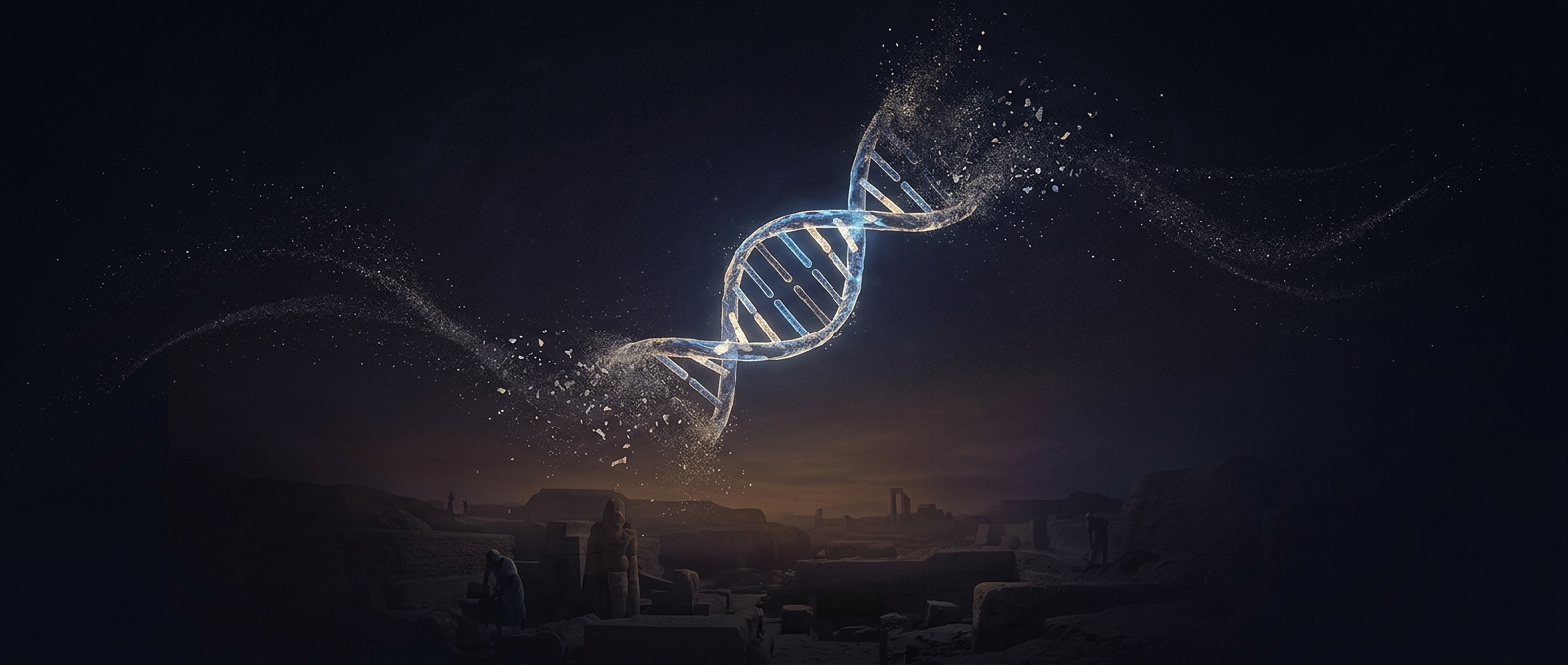
DNA is a long molecule made of linked chemical units. After an organism dies, water and other chemical reactions gradually break those links, while microbes and heat can speed the damage. A reported half-life of about 521 years describes how quickly DNA bonds break under particular conditions; it does not mean a complete genome survives intact for a few thousand years and then suddenly disappears. The molecule becomes increasingly fragmented, and its chemical building blocks can also be altered or lost.
That leaves a sharp distinction between a fossil and a preserved body. Fossilization can retain a bone’s shape or replace much of its material with minerals, but it does not preserve the living cells—and their complete genetic instructions—needed for cloning. Even unusually favorable preservation cannot bridge the immense span between the age of dinosaurs and the present with usable dinosaur DNA.
Why fragments would not be enough
Cloning requires far more than finding a recognizable piece of DNA. Scientists would need a sufficiently complete set of genetic instructions to build a genome, then a way to place that genome into a compatible egg cell and support the embryo’s development. A few surviving fragments could not specify an entire dinosaur, and no living dinosaur species exists to provide a close biological match for that process.
The amber-mosquito idea in Jurassic Park makes a vivid story: an insect feeds on a dinosaur, gets trapped in tree resin, and preserves the blood. But trapping an insect is not the same as sealing its blood’s DNA unchanged for tens of millions of years. Any genetic material would still face chemical decay and contamination, and the movie’s genetic patchwork cannot substitute for a complete, authentic genome. The fossils can tell us a great deal about dinosaurs; they cannot supply the intact molecular blueprint that cloning would require.