A veve makes a spirit’s presence legible
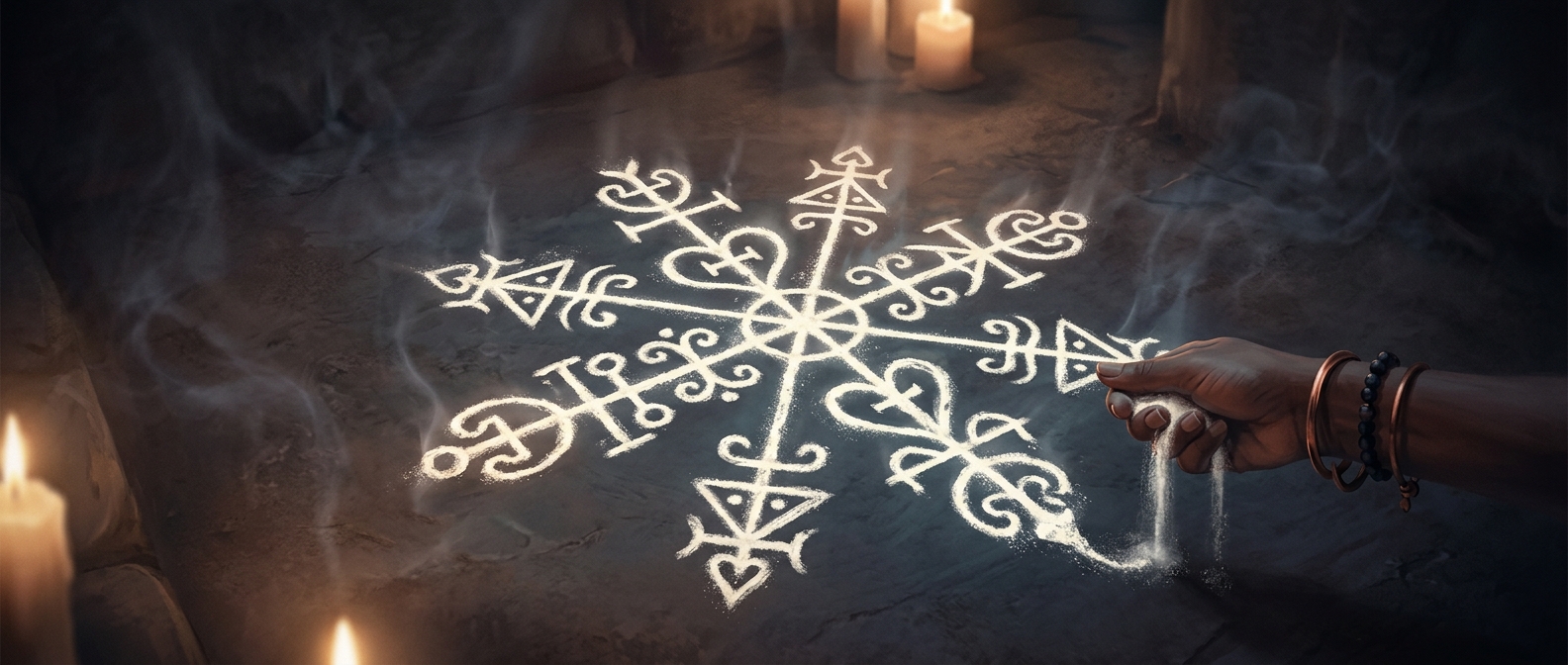
In Haitian Vodou, a lwa is a spirit with its own identity and relationships to people. A veve is a distinctive emblem associated with a particular lwa. During a ceremony, drawing that emblem on the floor gives the ritual a visible point of focus: practitioners understand it as a way to address or invite the spirit, not as a picture meant simply to decorate the room.
The designs are made from lines of powdered material—often cornmeal, ash, or brick powder. Their intricacy matters because the arrangement of lines distinguishes one emblem from another. Recognizing the veve helps make clear which lwa the ceremony is directed toward.
A temporary design with a ritual job
A veve is drawn directly into the space where a ceremony takes place, rather than displayed as a permanent image. That makes its creation part of the ritual itself: the emblem takes shape on the floor, where participants can gather around it and orient their attention. The powdery materials also make the design temporary; it can be disturbed or cleared away when the ritual space is used again.
Calling a veve a “beacon” describes its role within practitioners’ beliefs: it marks a spiritual presence and helps focus an encounter with a particular lwa. The striking detail is that the symbol is both an identifier and an action—its lines name the spirit in the ritual space, then disappear with the ceremony.