A garment redesigned for the ironworks
The kilt’s familiar form has a surprisingly practical origin story. In the early 18th century, many Highlanders wore the belted plaid: a large length of wool cloth gathered and secured around the body. It could serve as clothing, a cloak, or bedding, but its loose folds were awkward around industrial equipment.
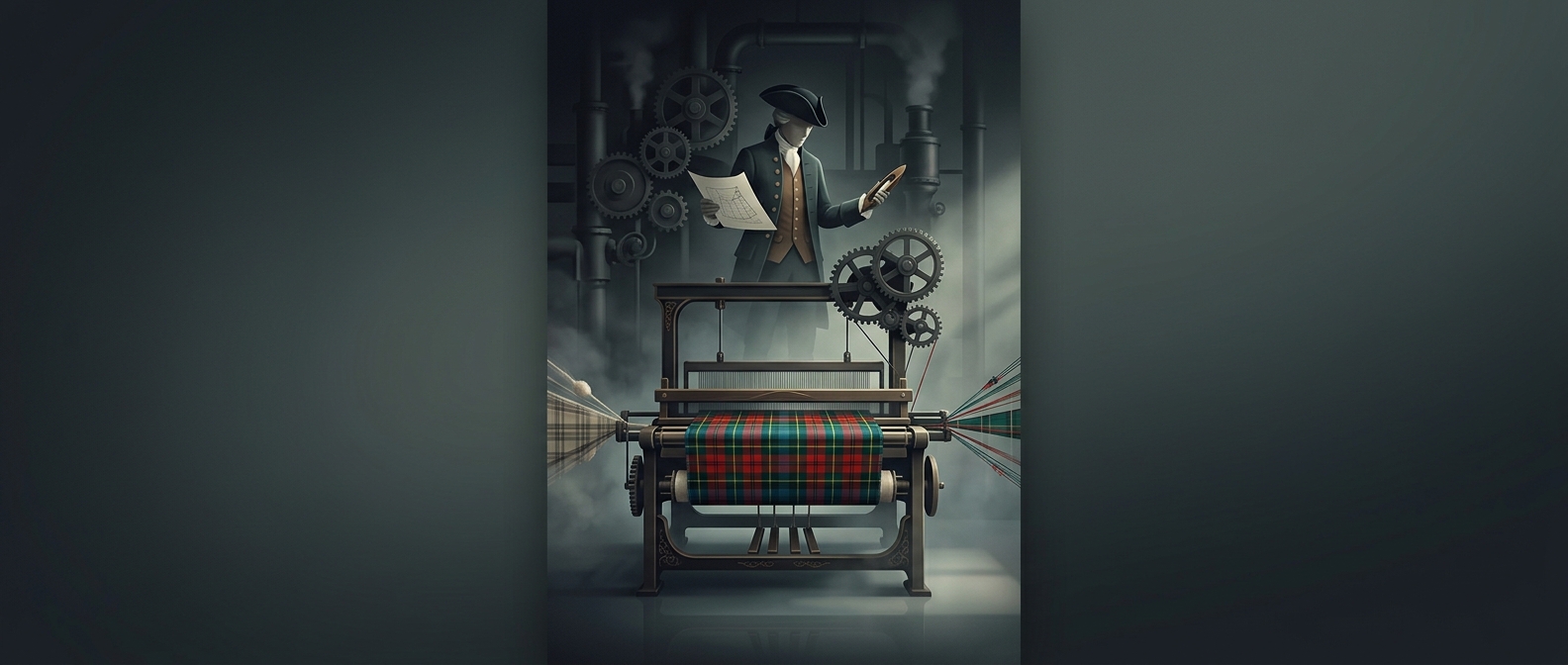
Thomas Rawlinson, an English ironworks owner working in the Scottish Highlands, is credited with adapting that garment for workers at his ironworks in the 1720s. The shorter design retained pleats but separated the lower garment from the upper cloth, making it easier to move and less likely to snag while working.
From workwear to a national symbol
The change was not simply a matter of shortening fabric. The belted plaid depended on draping and arranging a large piece of cloth; the redesigned version was shaped as a garment that could be put on in a consistent way. That made it more practical for workers who needed freedom of movement through a long, demanding shift.
Over time, the kilt acquired meanings well beyond the workplace. Its association with Highland dress and Scottish identity helped turn a functional piece of clothing into a symbol of tradition. The contrast is striking: a garment now often worn for ceremonies and celebrations is linked to an industrial need for clothing that would stay out of the machinery.