Why cooking water matters
When vegetables boil, water-soluble nutrients—including vitamin C and some B vitamins—can move out of the food and into the surrounding water. The heat does not make them vanish; some end up in the pot. If that water is poured down the drain, those nutrients go with it. If it becomes part of a soup or sauce, much of what leached out is still in the meal.
Less water, less opportunity to leach
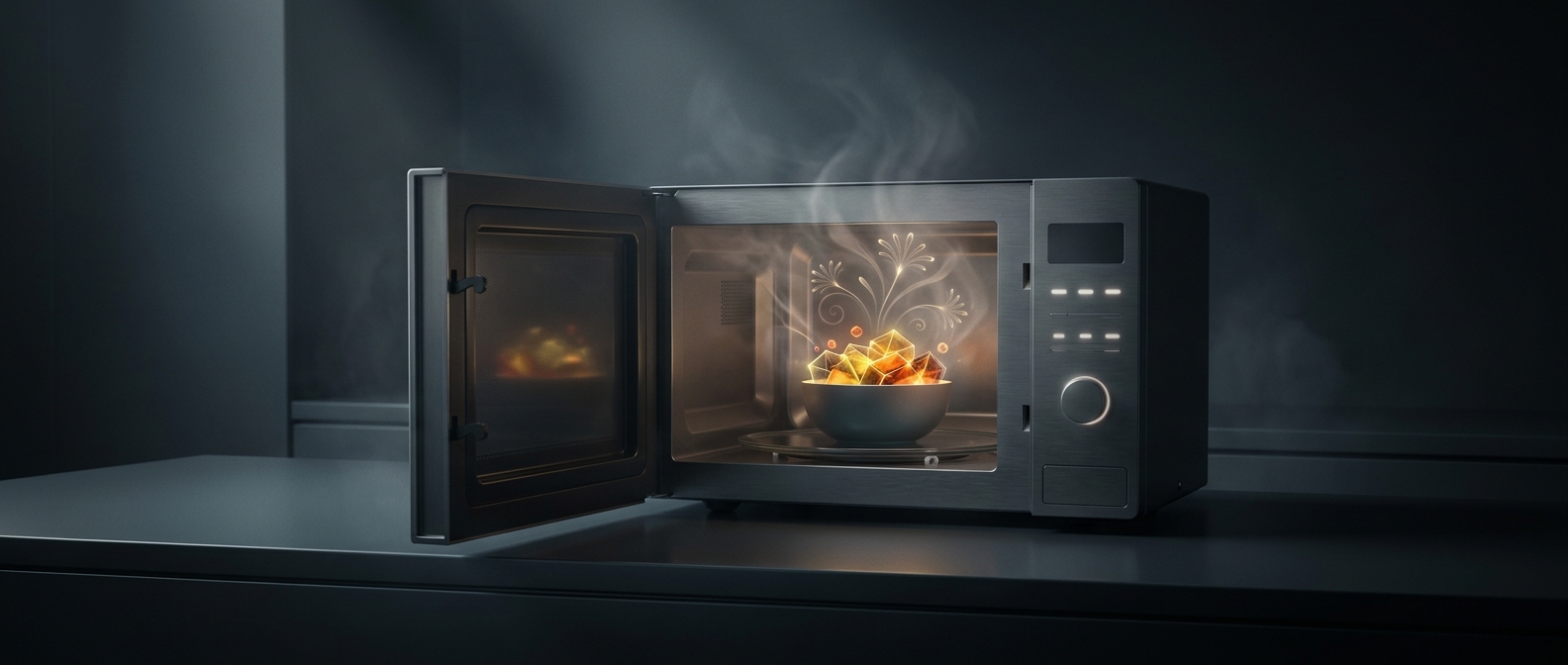
Microwaving often uses only a small amount of water, or none at all, and can cook food quickly. That leaves less water for nutrients to dissolve into and may shorten their exposure to heat. The advantage comes from the cooking conditions, not from microwave radiation acting as a nutrient shield. A short steam or other quick cooking method with little water can offer a similar benefit.
The result depends on the food and the method
Nutrient retention varies with the vegetable, its size, the amount of water, and how long and intensely it is cooked. Microwaving is not automatically better if food is cooked for a long time or in plenty of water, and boiling need not waste nutrients when the cooking liquid is eaten. The practical choice is simple: use only as much water as needed, avoid unnecessarily long cooking, and keep the liquid when it belongs in the dish.
That is why a bowl of vegetable soup can retain nutrients that would be lost when the same vegetables are boiled and drained.