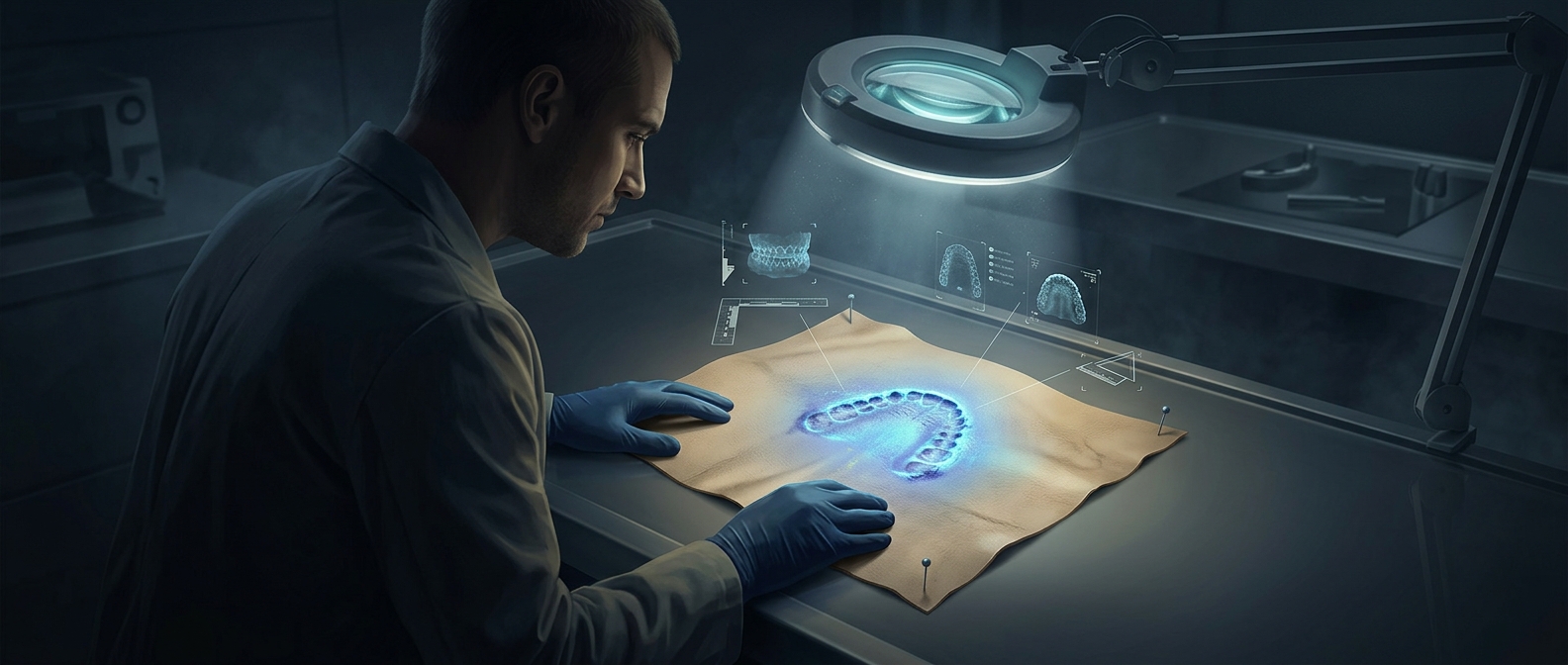
Why skin is a poor dental record
Teeth are rigid, but the surface they bite is not. Skin stretches, shifts over underlying tissue and springs back unevenly. The resulting bruise or broken skin can therefore distort the spacing and outlines of the teeth that made contact. Pressure, movement during the bite, and the body part involved all affect what appears on the skin.
The mark also changes with time. Swelling and bruising can alter its shape, while healing may blur or erase details. A photograph freezes only one view of an injury at one moment; it cannot recover the exact tooth positions or force that produced it.
What a comparison can—and cannot—show
In forensic odontology, an examiner may compare a bite injury with a person’s dental patterns, such as tooth arrangement or distinctive wear. Those features can look suggestive, but the skin mark is an unstable and incomplete impression. Different teeth can produce similar-looking marks, and the same teeth can leave different marks under different conditions.
That makes a bite mark fundamentally unlike a clear impression in a material that holds its shape. A visual resemblance is not a dependable individual identifier. A mark may still be documented and assessed as an injury, but matching it to a particular person from its pattern alone is not a scientifically reliable conclusion.
The practical consequence is important: a tooth pattern that seems to fit can be compelling to the eye, even when the injury itself cannot preserve enough detail to support that identification.